Dark colours use less energy on the screen than light colours. The theme colour does not affect the colours of videos or other media content. Keeping dark mode enabled helps save energy and may also be more comfortable on the eyes.

Display website images in lighter versions. Smaller image files make the website lighter to load.

Turn off animations and motion effects on the website. This gives you a simpler and calmer browsing experience.

EU invests in securing critical raw materials – high expectations for recycling
EU invests in securing critical raw materials – high expectations for recycling

Critical battery minerals such as lithium, cobalt, nickel, and graphite are expected to face global shortages in the coming years as the number of electric vehicles (EVs) and battery energy storage systems grows rapidly. The situation is further complicated by the fact that the production of these minerals, particularly their refining into battery materials, is heavily concentrated in China, increasing supply risks in the current geopolitical landscape. Since ramping up mining production is challenging in the short term, attention is turning to battery recycling. In the longer term, by 2040, recycling is expected to meet about 10–30% of the battery industry’s raw material demand.

High expectations for recycling and market challenges

Despite high expectations for recycling, economic and political challenges hinder progress. The prices of battery minerals have remained low due to oversupply and lower-than-expected EV sales, particularly in Europe. This has made it difficult for new recycling industry players to compete, as recycled materials must compete with exceptionally cheap virgin raw materials.

In Europe, many battery factory projects have been delayed or canceled, reducing the amount of production waste available for recycling and weakening the business prospects of recycling operators. Additionally, a significant portion of European battery factories are owned by Chinese or Korean companies, which typically have their own recycling companies or established partnerships in Asia.

Investment needs and the black mass challenge

Investments in the recycling market are necessary to ensure sufficient capacity in Europe when large numbers of EV and hybrid batteries begin to reach end-of-life. Given the high number of electric vehicles and the large size of their batteries, this segment is crucial for the recycling market. Battery energy storage systems will also generate significant recycling volumes, and even the batteries used in smaller electric mobility devices require dedicated recycling solutions.

However, these investments depend on whether new players can secure contracts for recyclable materials (“feedstock”) and find buyers for their recycled materials. Estimates suggest that 44% of the announced battery recycling capacity in Europe is currently on hold or facing uncertainty regarding implementation.

Europe faces challenges regarding “black mass,” the intermediate product of battery recycling. Exporting black mass outside the OECD is not permitted, even though there is an oversupply in Europe and insufficient processing capacity. At the same time, China has low utilization rates at its battery recycling plants, meaning there is demand for European black mass. However, the EU aims to keep black mass in Europe to support its self-sufficiency in critical materials.

Impact of new regulations and benefits of recycling

The EU has been proactive in regulating battery and raw material recycling. The Battery Regulation (2023) and the Critical Raw Materials Act (CRMA, 2024) set strict requirements for recycling and material recovery. According to the Battery Regulation, at least 65% of lithium-ion batteries must be recycled by 2026, increasing to 70% from 2031. Additionally, new batteries must include a minimum amount of recycled raw materials, such as 6% recycled lithium by 2031 and 12% by 2036.

Currently, about 80% of recycling materials for the battery industry come from production scrap at battery factories. This trend will continue, as recycling volumes from EVs and plug-in hybrids are expected to rise significantly only around 2035. Recycling could reduce energy consumption by up to 75% and water consumption by 80% compared to traditional mining and refining. However, challenges remain in terms of expertise, technology, and financing.

Balancing regulation and future prospects

The EU’s ambitious regulatory efforts pose challenges for companies. Critical raw materials are regulated not only by battery and raw material laws but also by other legislation, such as regulations on waste electrical and electronic equipment (WEEE) and end-of-life vehicles (ELV). The workload caused by these regulations has been acknowledged in the new European Commission’s agenda.

When drafting Finland’s national battery strategy in the fall of 2020, companies advocated for strict requirements for the European battery industry, seeing them as a way to improve competitiveness. Time will tell whether these expectations were met.

A major challenge for regulation is the rapid evolution of battery technology. When the Battery Regulation was being drafted, the market share of lithium iron phosphate (LFP) batteries in Europe appeared to be growing slowly. However, the rise of large-scale battery energy storage systems and the wider adoption of LFP batteries in the EV industry have changed the situation rapidly. Maintaining technological neutrality should remain a key goal.

Final thoughts from the guest columnist

European battery recycling needs clear and long-term regulations that do not impose an unreasonable burden on businesses. Policymakers and regulators must act wisely and cautiously to ensure that regulations remain practical and that targets are not raised like bids in an auction. For regulations to be credible, their goals must be realistic and achievable. The relative competitiveness of recycled materials must be promoted through both incentives and regulatory measures, as the existing system is unlikely to relinquish its established position easily.

Jarkko Vesa is an expert in critical minerals and battery markets with extensive experience in strategic consulting and market analysis. He coordinated Finland’s battery strategy and has conducted background research on critical mineral supply for organizations such as the IEA through his company, Not Innovated Here.

Jarkko’s popular LinkedIn groups, Critical Materials and Battery Strategy 2030, have attracted thousands of active followers. Follow them and join the discussion!

Europe needs a comprehensive battery recycling ecosystem

Europe needs a comprehensive battery recycling ecosystem

The demand for batteries and their critical raw materials is rapidly increasing, while the number of batteries reaching the end of their lifecycle is also rising quickly. This means a dramatic growth in hazardous waste. Currently, Europe is highly dependent on imported battery materials, and the handling of battery waste lacks transparency by any measure. Europe needs to increase its domestic production of battery materials and establish a sustainable solution for managing battery waste.

Electrification of transport is impossible without recycling

The EU Battery Regulation (Batt2), which came into force in February 2024, sets the framework for a functional circular economy for batteries. According to the regulation, by 2028, 50% of the copper, nickel, and lithium, as well as 90% of the cobalt used in batteries in the EU, must come from recycled materials.

To achieve these goals, a well-functioning European value chain for recycled materials is needed. European car manufacturers must invest in responsibility and the strengthening of European value chains, despite price pressure from Chinese competitors. The demand for recycled materials must increase significantly; otherwise, the export of valuable raw materials to China may accelerate further, weakening the EU’s self-sufficiency in raw materials.

The current divide between different battery technologies complicates recycling. Europe already has recycling systems for nickel-based batteries, but there is no equivalent infrastructure for lithium iron phosphate (LFP) batteries, commonly used in lower-cost electric vehicles. Recycling LFP batteries is economically less attractive because, apart from lithium, they contain very few valuable materials.

The Battery Regulation is an important step, but not a cure-all

The EU Battery Regulation, with its recycling quotas, accelerates the circular economy but does not solve all challenges alone. The traceability of raw materials will be improved through reporting obligations for manufacturers and the introduction of a digital battery passport from 2027. However, strengthening European battery manufacturing and recycling requires investment in research and development. In addition, permitting processes must be accelerated.

Sustainable electrification of transport is a complex challenge that can only be solved through cooperation. Achieving the objectives of the Battery Regulation critically depends on how well all stakeholders—from raw material extraction to recycling—are integrated into a shared process. Europe must act now to harness the opportunities of the circular economy and establish itself as a global leader in battery recycling.

Recycling is not recycling without a high-quality end product

For us, the recycling loop is only complete when we provide our customers with a high-quality end product. Collection alone is not recycling, and recycling cannot mean simply increasing the amount of waste.

Fortum Battery Recycling is the only operator offering a fully European solution for the entire battery lifecycle, from collection and pre-processing to refining. We currently operate Europe’s largest closed-loop hydrometallurgical battery recycling facility in Harjavalta.

Our efficient, sustainable, and safe process is based on decades of experience in Nordic clean energy production and circular economy solutions.

Our battery recycling solution produces high-quality recycled metals with minimal waste. We already exceed the Battery Regulation’s recycling rate requirements for cobalt, copper, and nickel.

Fortum Battery Recycling

Fortum Battery Recycling is part of Fortum’s business portfolio and specializes in recycling valuable metals from electric vehicle batteries. We provide a fully European solution for the entire battery lifecycle, from collection and pre-processing to refining.

Contact information

Jaakko Savolainen,
Commercial Director, Battery Sales, Fortum Battery Recycling

jaakko.savolainen [at] fortum.com
tel. +358 40 501 4836

Pictures and text: Fortum

Commission guidelines on the removability and replaceability of portable batteries and light means of transport (LMT) batteries

Commission guidelines on the removability and replaceability of portable batteries and light means of transport (LMT) batteries

The European Commission has published guidelines aimed at clarifying the uniform application of regulations concerning the removability and replaceability of portable batteries and light electric vehicle batteries (LMT batteries) under the EU Battery Regulation (EU) 2023/1542. The guidelines provide technical recommendations and illustrative examples that are not legally binding. Article 11 of the regulation will apply from February 18, 2027. The purpose of the guidelines is to ensure sustainable and safe practices for handling and replacing batteries throughout the product’s lifecycle.

Key principles of battery removability and replaceability

Under Article 11, anyone placing products equipped with portable batteries or batteries on the market must ensure that the batteries can be easily removed and replaced by the end user throughout the product’s entire lifespan. However, this requirement does not apply to individual cells or other components of battery units.

The requirements for LMT batteries differ from the above. Those placing products with LMT batteries on the market must ensure that both the batteries and individual battery cells within the battery unit can be easily removed and replaced by independent professionals throughout the product’s entire lifespan.

  • Removability means that the end user or an independent professional can safely remove the battery without damaging the device or the battery itself.
  • Replaceability requires that the battery can be replaced without causing damage, maintaining the device’s performance and safety.

Exceptions to the removability requirements

In certain cases, the end user does not need to be able to remove and replace the battery themselves. These exceptions include:

  • Devices operating in wet environments, such as those exposed to washing water.
  • Professional medical imaging and radiation therapy devices, as well as in vitro diagnostic devices.
  • Devices requiring continuous power supply for user safety or data integrity, such as certain medical devices and equipment that continuously collect and transmit data.

Exceptions apply only if redesigning the device does not allow for safe battery replacement by the end user.

Additional considerations

Compatible batteries

A compatible battery or battery unit must:

  • Not pose a safety risk to the user or device.
  • Allow the device to function as intended.
  • Match the original battery in technical parameters, such as capacity and chemical composition.

If the device falls under the type-approval requirements of Regulation (EU) No 168/2013, battery replacement is permitted only if it does not affect type-approval definitions. For LMT vehicles that do not require type approval, battery replacement must comply with the manufacturer’s safety protocols.

Software restrictions

Software must not prevent the replacement of compatible batteries. For example, “parts-pairing” practices, where a battery is software-locked to a specific device, are not allowed. However, software may ensure secure communication between the device and the battery to guarantee safety and functionality.

Under Regulation (EU) 2023/1670, which sets ecodesign requirements for smartphones and tablets, manufacturers must provide professional repairers with non-discriminatory access to software and tools ensuring the full functionality of spare parts. If both regulations (EU) 2023/1542 and (EU) 2023/1670 apply to the same product, the requirements of both must be followed.

Availability of spare parts

Under Article 11(7), portable batteries and LMT batteries must be available as spare parts for at least five years after the last model of the device is placed on the market. These must be offered at a reasonable and non-discriminatory price to independent professionals and end users. Spare parts, such as fasteners, must be delivered within five working days of ordering. If fasteners are not reusable, they must be provided separately. This requirement does not apply to products placed on the market before February 18, 2027.

Under Regulation (EU) 2023/1670, from June 20, 2025, phone manufacturers, importers, or authorized representatives must ensure that portable batteries and necessary fasteners remain available for professional repairers and end users for at least seven years after the last model of the device is placed on the market. If both regulations (EU) 2023/1542 and (EU) 2023/1670 apply to the same product, both must be complied with simultaneously to ensure the availability and compatibility of spare parts.

Recommendations

  • User manuals: Instructions should provide clear guidance on removing and replacing batteries, as well as technical specifications for compatible alternatives. If necessary, manuals should reference EU or international standards to ensure safety.
  • Recycling: Users should receive clear instructions on the proper recycling of batteries, especially small lithium batteries and lithium-ion batteries used in products such as greeting cards and e-cigarettes, as these pose a fire hazard in waste treatment facilities.

Link to the Commission’s guidelines

Commission Notice – Commission guidelines to facilitate the harmonised application of provisions on the removability and replaceability of portable batteries and LMT batteries in Regulation (EU) 2023/1542

Read our previous articles:

#BatteryRegulation: An Intense Year of Battery Regulation Behind – and a New One Ahead – Paristokierrätys

#BatteryRegulation: The battery passport is real and full of potential – Test the battery passport using the QR code in the article! – Paristokierrätys

#BatteryRegulation: Review Product and Labeling Requirements Effective August 18, 2024 – Paristokierrätys

#BatteryRegulation: The Battery Passport is Coming – Are You Ready? – Paristokierrätys

New EU Battery Regulation Changes the Market – Eucobat Makes Finnish Producers’ Voice Heard in Brussels – Paristokierrätys

#BatteryRegulation: Distributors of batteries, are you aware of your new responsibilities? – Paristokierrätys

#BatteryRegulation: Webinar answers – How does the battery regulation change the obligations of manufacturers and importers?

This article is a part of the joint communications of the battery producer organisations Recser Oy and Akkukierrätys Pb Oy concerning the EU Batteries Regulation. You can also subscribe to our newsletter to receive the latest news on the subject.

An intense year of battery regulation behind – and a new One ahead

An intense year of battery regulation behind – and a new One ahead

Akkukierrätys Pb and Recser Oy support battery producers in the implementation of the new EU Battery Regulation. In 2025, we will continue our popular webinar series on the new battery regulation.

The battery producer organizations Recser Oy and Akkukierrätys Pb began their communication collaboration in 2023 to inform stakeholders about the obligations introduced by the new EU battery regulation and to provide support in complying with them. In 2024, we intensified our communication efforts regarding the battery regulation.

Various events and online articles have played a central role in our producer organizations’ battery regulation communication. A key communication channel in 2024 was our webinar series, which attracted nearly a thousand participants across four webinars.

Topics covered in the webinars included new sustainability, safety, labeling, and information requirements, as well as the obligations of importers, manufacturers, and distributors, and the battery passport. Expert speakers represented the Ministry of the Environment, TUKES, the Pirkanmaa ELY Center, VTT, the Finnish Tax Administration, the Finnish Commerce Federation, and members of battery producer organizations.

During the webinars, we collected audience questions about the battery regulation, and authorities provided answers to nearly 100 questions afterward. These answers are available in the webinar summary articles.

Participants gave excellent feedback on the webinars, with an average rating of 8.75. This reflects strong engagement and interest in the topic. One participant praised the organizers with the following open feedback: “An excellently organized webinar series. I have listened to all sessions and will continue to do so in the future!”

Battery Regulation newsletter – subscribe for updates

In 2024, producer organizations published nine online articles providing in-depth information about the battery regulation. These articles were compiled into battery regulation newsletters, which reached 1,700 different stakeholders. A total of three newsletters were sent in 2024.

Many subscribers are members of the battery producer organizations, but the topic also clearly interests authorities, waste management professionals, and other stakeholders. The newsletters serve as a key information-sharing channel for companies wanting to stay updated on regulatory requirements.

Recser Oy and Akkukierrätys Pb have also released a battery regulation tool (in Finnish) to help various stakeholders assess the new regulation’s requirements. This tool is available exclusively for producer organization members.

In September, Recser also launched a battery regulation chatbot, which has sparked discussions and inquiries. The chatbot has hosted 124 conversations, generating a total of 366 question-answer pairs.

Stay updated on the Battery Regulation

Recser Oy and Akkukierrätys Pb’s efforts to address the obligations of the battery regulation and support companies have proven to be highly valuable. Through this work, we aim to ensure that all stakeholders are prepared to meet the regulation’s requirements and potential challenges.

The EU battery regulation came into effect in August 2023, with its application starting in February 2024. However, the new producer responsibility provisions will not take effect until August 17, 2025.

Our communication on the battery regulation will continue in 2025, as we organize new webinars and actively share information through our channels. If your organization needs more details or wishes to participate in upcoming events, follow our producer organizations on LinkedIn (Akkukierrätys Pb, Recser), visit our websites, and subscribe to the battery regulation newsletter.

Read our previous articles:

#BatteryRegulation: The battery passport is real and full of potential – Test the battery passport using the QR code in the article! – Paristokierrätys

#BatteryRegulation: Review Product and Labeling Requirements Effective August 18, 2024 – Paristokierrätys

#BatteryRegulation: The Battery Passport is Coming – Are You Ready? – Paristokierrätys

New EU Battery Regulation Changes the Market – Eucobat Makes Finnish Producers’ Voice Heard in Brussels – Paristokierrätys

#BatteryRegulation: Distributors of batteries, are you aware of your new responsibilities? – Paristokierrätys

#BatteryRegulation: Webinar answers – How does the battery regulation change the obligations of manufacturers and importers?

#Aalto University: BATCircle2.0 continued Finland-based battery metals and recycling research – Paristokierrätys

#BatteryRegulation: The webinar gave additional information about the requirements of the Battery Regulation (paristokierratys.fi)

#BatteryRegulation: The updated guide regarding battery passports has been released – Paristokierrätys (paristokierratys.fi)

#BatteryRegulation: The application of the EU Battery Regulation begins on 18 February 2024 – preparations in Finland (paristokierratys.fi)

This article is a part of the joint communications of the battery producer organisations Recser Oy and Akkukierrätys Pb Oy concerning the EU Batteries Regulation. You can also subscribe to our newsletter to receive the latest news on the subject.

The battery passport is real and full of potential – Test the battery passport using the QR code in the article!

The battery passport is real and full of potential – Test the battery passport using the QR code in the article!

The EU Battery Regulation introduces new obligations across the entire battery value chain. Battery producer organizations Recser Oy and Akkukierrätys Pb Oy, in collaboration with VTT, organized a webinar addressing the battery passport, a new digital record required for certain batteries. We have compiled the key takeaways from the webinar into this concise article.

The Battery Passport Webinar was held on December 4, 2024. It marked the fourth part of the producer organizations’ webinar series on the Battery Regulation and attracted nearly 150 participants from various organizations. Based on a poll conducted during the webinar, the majority of attendees represented importers of standalone batteries, portable batteries, and electrical and electronic devices. Other participants included manufacturers and waste management operators.

The producer organizations aim to support companies in meeting the new Battery Regulation requirements through webinars. Links to previous summary articles are available at the end of this article.

The battery passport: A digital record for battery data

The battery passport refers to an electronic record that provides key information about a battery. It will be made available through a QR code. The battery passport will become mandatory starting February 18, 2027, for batteries in light means of transport (e.g., electric scooters), traction batteries for electric vehicles, industrial batteries with a capacity exceeding 2 kWh.

The economic operator placing the battery on the market is responsible for the battery passport. This could include the manufacturer, importer, or a company preparing a battery for reuse. However, the market operator can delegate responsibility for maintaining the data and ensuring its accuracy to another party.

“All operators within the EU market must actively ensure their products comply with the requirements. If the manufacturer has not taken care of this, the responsibility falls to the importer,” explained Kati Suomalainen, Senior Specialist at the Ministry of the Environment, during the webinar.

When a battery’s purpose changes, the responsibility for the battery passport data transfers to the entity reintroducing it to the market. At that point, a new battery passport linked to the original will be created. Once a battery is classified as waste, the responsibility shifts to the producer organization or its chosen waste management operator. The battery passport ceases to exist only after the battery has been recycled.

Extensive data requirements for the battery passport

Suomalainen outlined the EU Battery Regulation’s content requirements for battery passports during the webinar.

“The battery passport will include a significant amount of information. Some data will be publicly available, while other data will be restricted to specific stakeholders,” Suomalainen said.

Information on battery models

Basic information about battery models, such as the manufacturer, battery category, place and date of manufacture, weight, capacity, and chemical composition, will be publicly available. Public information will also include data on carbon footprint, responsible sourcing, recycled and renewable content, expected lifespan, original performance capacity, and commercial warranty details.

More detailed information, such as test reports and precise compositions, will be accessible only to market surveillance authorities, notified bodies, and the European Commission. Additionally, stakeholders involved in battery waste processing or reuse will have access to disassembly instructions and component details. Information on the exact composition, component part numbers, and disassembly instructions will also be available to parties that require this data, such as those involved in battery waste processing or reuse. The Commission will issue an implementing regulation specifying the entities that will have access to this information.

Information on individual batteries

In addition to battery model data, the passport will include information specific to individual batteries. This data will be restricted to stakeholders with justified needs, such as waste handlers and reuse operators, as defined by the European Commission’s implementing regulations.

Individual battery data will include operational status, accident history, and whether the battery is original, repurposed, reused, or classified as waste.

Participate in policy development on Have Your Say

The European Commission regularly seeks input on regulatory proposals. Suomalainen encouraged stakeholders to visit the Have Your Say platform to contribute to the development of regulations related to the battery passport and digital product passports under the Ecodesign Regulation.

Sandvik leads the way with a battery passport pilot
“The battery passport is feasible and full of opportunities!“

Sandvik Oy, a manufacturer of mining equipment, has already piloted a battery passport prototype for one of its drilling equipment models in collaboration with Ioxio Oy.

“Data is becoming, if not already, a key value driver. Sharing data openly isn’t a limitation but a foundation for creating new value. Major mining customers worldwide are demanding this data to meet their own emissions reduction targets,” explained Eero Kauko, Research Engineer at Sandvik, during the webinar.

Sandvik’s proof-of-concept model, which may be the first product passport in the mining sector, received positive feedback when presented at international mining trade shows, such as in Las Vegas.

“The creation of the battery passport is achievable! You can test our demo version on your phone,” Kauko encouraged webinar participants.

The pilot aims to understand data flow between interfaces and ensure readiness for compliance with the Battery Regulation by 2027.

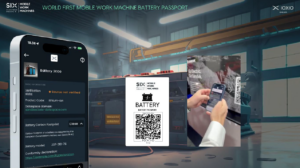
Battery passport test model (Sandvik and Ioxio) – Test the QR code in the image! Screenshot from Eero Kauko’s webinar presentation on December 4, 2024.

Practical guidance on the way
Join the FINNPASS final seminar

The EU’s Ecodesign Regulation introduces digital product passports across industries, with the battery passport as the first implementation. Initiatives like VTT’s FINNPASS project and the Ministry of Finance’s MiniSuomi.fi platform have been preparing for the rollout.

FINNPASS

“We launched the FINNPASS coordination project because product passports are a significant upcoming requirement. There’s a huge demand for information,” said Jaana Keränen, Researcher at VTT.

The project has organized a workshop related to the battery passport, where data points across battery value chains were gathered.

“During the discussions, it became clear that a lot of data about batteries is already being collected, so we definitely don’t have to start from scratch when compiling information for the battery passport,” said Keränen.

The FINNPASS project will publish a practical Digital Product Passport Playbook in February 2025, tailored to SMEs. It will be launched at the project’s closing seminar.

“I invite everyone to join! Follow the LinkedIn group where the exact date and registration details will be published. (FINNPASS – The Digital Product Passport (DPP) Group for Finland),” suggests Keränen.

Test the MiniSuomi platform

On the MiniSuomi.fi platform, the public sector is testing new technologies, including digital wallets for identity verification alongside the battery passport.

“MiniSuomi is an open co-development platform available at minisuomi.fi,” highlighted Mikael af Hällström, Development Specialist at the Finnish Tax Administration.

The battery passport can remain in use for years after its manufacturer has ceased operations. As a technical solution, the publication of the product passport on a blockchain was tested, making it practically permanent. A blockchain is a database that stores digital information on servers operating in a decentralized network. A digital wallet can provide a solution for identifying the creator of digital product passports published on a blockchain.

Battery Regulation webinars continue in 2025

We will continue hosting Battery Regulation webinars next year, including one focusing on due diligence. Follow our website for updates, or subscribe to our newsletter to receive information about upcoming events.

See the questions and answers presented in the webinar.

View presentations from the webinar speakers (in Finnish):

Kati Suomalainen (Ympäristöministeriö): EU:n akkuasetuksen vaatimukset akkupassille
Jaana Keränen (VTT): FINNPASS -hankkeen ja akkupassityöpajan tulosten esittely
Mikael af Hällström (Verohallinto): Minisuomi.fi – kokeiluympäristö
Eero Kauko (Sandvik): Kilpailukykyä digitaalisilla tuotepasseilla

Read our previous articles:

#BatteryRegulation: Review Product and Labeling Requirements Effective August 18, 2024 – Paristokierrätys

#BatteryRegulation: The Battery Passport is Coming – Are You Ready? – Paristokierrätys

New EU Battery Regulation Changes the Market – Eucobat Makes Finnish Producers’ Voice Heard in Brussels – Paristokierrätys

#BatteryRegulation: Distributors of batteries, are you aware of your new responsibilities? – Paristokierrätys

#BatteryRegulation: Webinar answers – How does the battery regulation change the obligations of manufacturers and importers?

#Aalto University: BATCircle2.0 continued Finland-based battery metals and recycling research – Paristokierrätys

#BatteryRegulation: The webinar gave additional information about the requirements of the Battery Regulation (paristokierratys.fi)

#BatteryRegulation: The updated guide regarding battery passports has been released – Paristokierrätys (paristokierratys.fi)

#BatteryRegulation: The application of the EU Battery Regulation begins on 18 February 2024 – preparations in Finland (paristokierratys.fi)

This article is a part of the joint communications of the battery producer organisations Recser Oy and Akkukierrätys Pb Oy concerning the EU Batteries Regulation. You can also subscribe to our newsletter to receive the latest news on the subject.

Review Product and Labeling Requirements Effective August 18, 2024

Review Product and Labeling Requirements Effective August 18, 2024

The EU Battery Regulation came into force on February 18, 2024, introducing new rules for the supply chain/lifecycle of batteries. The regulation includes 97 articles and multiple transitional periods for different requirements. Significant changes took effect on August 18, 2024, with the application of Article 17 and Chapter VI of the regulation. The next major set of requirements will come into effect in August next year, focusing on waste management and producer responsibility as outlined in Chapter VIII.

This article highlights the key obligations that came into force in August for manufacturers, importers, and distributors.

Are You a Manufacturer, Importer, or Distributor?

Each actor in the battery supply chain has its own responsibilities. Article 3 of the Battery Regulation defines the roles of manufacturers, importers, and distributors as follows:

  • ‘Manufacturer’: Any natural or legal person who manufactures batteries, or has them designed or manufactured, and markets them under their own name or trademark or uses them for their own purposes.
  • ‘Importer’: Any natural or legal person established in the Union who places on the market a battery from a third country.
  • ‘Distributor’: Any natural or legal person in the supply chain, other than the manufacturer or importer, who makes a battery available on the market.

Manufacturers Must Add New Labels to Batteries

Manufacturers must ensure the following for batteries:

  • CE Marking: All batteries must now carry a CE marking (Article 38). This requirement has already been mandatory for electrical devices and toys.
  • Identification Details: Batteries must include a model identifier, batch or serial number, or product number, as well as the manufacturer’s name, registered trade name or trademark, a postal address of one contact point, and, if available, website and email addresses (Article 38).
  • Specific Markings: Markings required under national regulations, such as separate collection, heavy metal, and capacity markings.

Importers Must Verify and Add Their Own Information

Importers must ensure that the required markings are present on imported batteries. If the markings do not meet the requirements, the products cannot be placed on the market until they are corrected.

In addition, importers must add their own information to the battery:

  • Importer’s name
  • Registered trade name or trademark
  • A postal address of one contact point
  • Website and email addresses, if available

Distributors (Resellers) Have Inspection Duties

Distributors must check that batteries comply with requirements before placing them on the market. If markings are incomplete, the products cannot be marketed until the deficiencies are rectified. Distributors must also ensure that the storage and transportation conditions of the batteries they handle do not compromise compliance.

You can read more about the responsibilities of manufacturers, importers, and distributors on Tukes’ website (note: the table has not yet been updated to reflect the Battery Regulation): The obligations of economic operators as a table | Finnish Safety and Chemicals Agency (Tukes).

Other Provisions Effective August 2024

Performance and Durability Requirements

Industrial batteries over 2 kWh, batteries for light electric vehicles, and electric vehicle traction batteries must include documentation of their electrochemical performance and durability as of August 18, 2024.

Safety Requirements for Energy Storage

Stationary energy storage systems must meet safety standards during normal use and operation. Annex VIII of the Battery Regulation outlines the conformity assessment procedure for this.

Restriction on Portable Lead-Acid Batteries

Portable batteries containing more than 0.01% lead by weight cannot be marketed. An exception applies to zinc-air button cells, where the restriction will take effect on August 18, 2028. However, lead-acid industrial and vehicle batteries can still be marketed.

[1] Finnish Government Decree on Batteries 520/2014, Section 14: Finnish Government Decree on Batteries 520/2014 – Original Regulations – FINLEX®

Further Reading

This article is a part of the joint communications of the battery producer organisations Recser Oy and Akkukierrätys Pb Oy concerning the EU Batteries Regulation. You can also subscribe to our newsletter to receive the latest news on the subject.

The Battery Passport is Coming – Are You Ready?

The Battery Passport is Coming – Are You Ready?

Battery producer organizations Akkukierrätys Pb and Recser Oy, together with VTT’s FINNPASS project, organized a workshop on the battery passport for their members and regulatory authorities on October 22, 2024. The goal of the workshop was to bring together stakeholders from different phases of the battery value chain to deepen understanding of the significance and opportunities of the battery passport, which will become mandatory under the new Battery Regulation, and to discuss best practices for data management.

The workshop examined the battery passport from the perspectives of various battery types, including industrial batteries, traction batteries, and e-bike batteries. This approach provided practical insights into preparing for the implementation of the battery passport and its use for these specific battery types. A total of 23 representatives from the battery value chain were invited, including importers, manufacturers, reuse preparers, distributors, recycling operators, battery passport data users, and regulatory authorities. This was the first workshop of its kind jointly organized by battery producer organizations. The discussions were lively, and the need for sharing knowledge, experiences, and ideas was evident.

During the workshop, participants discussed what information the battery passport will include, who is responsible for providing this data, and how different stakeholders can utilize the information contained in the battery passport. We also explored what potentially useful data might be missing from the battery passport and the various roles stakeholders will play in contributing to and using its data. The results of the workshop will be presented in our Battery Passport Webinar on December 4.

The Battery Passport

The battery passport is a digital information tool that contains key details about batteries, such as manufacturing processes, material composition, lifecycle, and recycling-related information. Under the new EU Battery Regulation, the battery passport will be required starting in February 2027 for batteries in light electric vehicles, electric vehicle traction batteries, and industrial batteries with a capacity of over 2 kWh.

Learn more about the battery passport:

Guide to the Battery Passport (updated)

How Valmet Automotive is Preparing for the Digital Battery Passport

Join our Battery Passport Webinar on December 4 (The webinar will be held in Finnish).

FINNPASS Project (in Finnish): National Coordination of Product Passports – FINNPASS

This article is a part of the joint communications of the battery producer organisations Recser Oy and Akkukierrätys Pb Oy concerning the EU Batteries Regulation. You can also subscribe to our newsletter to receive the latest news on the subject.

New EU Battery Regulation Changes the Market – Eucobat Makes Finnish Producers’ Voice Heard in Brussels

New EU Battery Regulation Changes the Market – Eucobat Makes Finnish Producers’ Voice Heard in Brussels

Eucobat is a collaboration and advocacy organisation of European battery producers in Brussels. During his visit to Finland, Secretary General Eric Ruyters opened the association’s activities from the perspective of Recser’s producers. How does a Finnish battery producer benefit from Recser’s Eucobat membership?

In Finland, the recycling of batteries is organised by Recser Ltd, a non-profit producer responsibility organisation. It represents more than 1000 companies that import, manufacture or distant sell batteries of different sizes, and chemistries, to Finland. In different EU countries, the collection schemes for batteries are managed by the respective national associations.

The new EU Battery Regulation introduces significant changes to the battery industry. Unlike the previous legislation based on a directive, the Batteries Regulation covers the whole lifecycle of batteries and has therefore introduced new collection and recycling requirements for producers. 

As EU regulations apply uniformly in all Member States, the challenges faced by producer responsibility organisations in implementing the Regulation are similar regardless of the country. This has led to closer collaboration between operators in Europe.

– The Battery Regulation has brought a big change to Eucobat’s operations. Our association now has a dedicated office, in support of the members, says Eric Ruyters. 

– We have doubled the team! This means that, instead of one person we are now two. We have a dedicated office of two people, Zina Nazarenko recently joined, she is the Relation and Development Director responsible for public affairs and members, he continues in a good mood. 

Eucobat, the European Association of National Collection Schemes for all waste Batteries, was established in 2012. It has 30 member organisations from 24 countries. The members are producer associations that run national collection schemes in different EU countries. Many of the member organisations were established 20-25 years ago, so they have existed for longer than Eucobat. 

European Colleagues Supporting Each Other

Recser and other European organisations are supporting battery producers with the changes required by the new obligations. 

– When a new regulation comes into force, the implementation is not like you turn on a switch of light and it is implemented, Ruyters illustrates. 

Eucobat enables the sharing of experiences and information. For example, the Eucobat Community Platform facilitates direct questions to representatives of member organisations in other countries. 

Liisa-Marie Stenbäck, Managing Director of Recser Ltd, describes the employees of Eucobat member organisations as colleagues with whom to brainstorm, develop activities and share best practices. She says this is important because most producer responsibility organisations have small teams.

– Sometimes it happens that you haven’t even had time to think about the whole issue yet, while someone else has already solved it, says Ruyters, describing the collaboration between Eucobat member organisations.

– We are non-profit organisations, and collaboration is an important strength. Producer responsibility organisations do not compete. Recser is responsible for collection in Finland, not, say, in Spain, he continues.

Producers’ Voice Make an Impact

Another role of Eucobat is to act as the voice of its members in Brussels. EU bodies are currently advancing the implementation of the Battery Regulation.

– In Brussels, one voice would not necessarily be heard, but by organising ourselves as a group, we have been able to be part of the formulation of the regulation from the start, says Ruyters. 

– Influencing in Brussels also requires an understanding of EU policymaking, he continues.

In advocacy, collaboration between Eucobat member organisations goes far beyond sharing their own experiences. Members organise themselves in working groups to form a joint position. Eucobat’s role is to take that forward.

– The position is then not only just Recser’s position but also other Eucobat members’ position. This makes it stronger.

– Joint positions are also important because many Finnish producers are active in other EU countries. In this case, it is good to share a common vision with producer responsibility organisations in these countries, says Ruyters.

In line with the EU’s political decision-making system, the positions that Eucobat takes forward to the European Commission and other bodies also reach decision-makers in Finland and other national governments.

– There are multiple ways to make the voice of the producer heard. This is another reason why you should join Recser, says Ruyters.

Eucobat’s Work is Reflected in the Regulation

The work of Eucobat and the producer responsibility organisations on the new Battery Regulation started in 2019 with the first consultations. The advocacy work of the past years is now reflected in the formulation of the Regulation in favour of producers. The main changes concern the classification of batteries and the way collection targets are calculated. 

The Regulation now divides batteries into five categories: Portable batteries, Batteries for light means of transport (LMT), Automotive batteries, Industrial batteries and Traction batteries for electric vehicles. This classification is crucial as the Regulation obliges producers to collect and recycle decommissioned batteries in their respective categories. 

The Light Means of Transport category is a completely new addition to the legislation. Originally, electric bicycles and scooters were only supposed to be a sub-category of portable and small batteries. As LMT has grown into a very significant category in terms of numbers, Eucobat started to promote the joint position of the producer organisations of a separate category in the EU decision-making bodies. As a result of advocacy, this goal was achieved.

The calculation methodology for collection targets in the Battery Regulation is another important point where the work of producer responsibility organisations and Eucobat is reflected. The calculation methodology will be based on the so-called “Available for collection” principle. It includes the idea that producers want to collect more but can only collect what is available.

This is a significant improvement on the current model, where the collection obligation is calculated as a three-year average of the quantity that the producer has put on the market. 

– Alkaline batteries can have a lifecycle of five years. It is good that we do not need to innovate batteries that last only three years! That would have been completely against the spirit of the Green Deal, Ruyters chuckles.

The Regulation is part of a major EU project, the European Green Deal strategy. The programme represents a new form of regulation emphasizing the products’ entire lifecycle and aiming to extend it by reusing materials. The aim of the programme is to move towards a circular economy.

Tackling the Challenge of Free Riders

“Free ridership”, or the disregard of producer obligations, has been a much-discussed issue in Finland, says Stenbäck. The subject is also discussed in other EU countries. 

– It has been a problem, and it will continue to be a problem. However, the regulation will help to meet this challenge. Anyone who puts a battery for the first time on the market is a producer and the producer is subject to the producer’s obligations, says Ruyters. 

According to the Battery Regulation, all producer responsibility organisations must be recognised by a national supervisory authority and all producers must belong to these organisations. In this way, all operators will be registered. Eucobat will closely monitor the implementation of this requirement and will inform the European Commission at the Implementation Monitoring Meetings.

But monitoring also requires accountability from national governments. 

– The shortage of staff in the supervisory authorities is an issue in every country. Most have recruited additional staff to carry out the tasks required by the Regulation, says Ruyters, illustrating the practical implementation of controls. 

Repurposing is an Opportunity for Pioneers

– The new battery regulation brings not only challenges but also opportunities. Repurposing, for example, is an opportunity brought by the regulation, says Ruyters.

– With the battery directive the collected waste batteries could only be recycled. Now, with the new Battery Regulation, the collected waste batteries can be re-used in a second-life solution. For example, collected waste LMT and /or EV batteries of electronic vehicles can have longer lifecycle when repurposed to industrial energy storage solutions, he continues.

The reuse of materials is one of the key requirements of the Regulation. Collected, decommissioned batteries are no longer seen only as waste but as raw materials to be repurposed. The market dynamics will change as the mixing requirement of the Regulation will increase the demand for different raw materials. 

Advocacy Continues for the Potential of the Battery Pass

The Battery Regulation includes a requirement for a new digital Battery Passport, an electronic record that comes with the battery and provides information on it. The Battery Passport is due to be introduced in February 2027 for Large industrial batteries, LMTs and Electric vehicle traction batteries.

Eucobat is working to ensure that the passport guidelines include labelling requirements that benefit producers. The Commission is currently working on complementary regulations for battery passports.

– The Battery Passport would be enormously beneficial if it could provide information on the the battery’s ingredients, manufacturer, battery category, and lifecycle stage. This would bring transparency to the market, says Ruyters, describing Eucobat’s objectives.

The work for European battery producers will therefore continue at Eucobat with a dedicated small team and with the strength of the collaboration between active producer responsibility organisations.

Eric Ruyters

EUCOBAT is the European association of not-for-profit collection schemes for waste batteries. EUCOBAT members strive for a better environment by collecting ever more used batteries and by recycling them ever better. EUCOBAT members ensure to organize the collection, repurposing, and recycling of used batteries as easily and efficiently as possible.

In September 2020, Eric joined EUCOBAT, and supported the Policy Working Group of EUCOBAT on public affairs and strategic activities. Since he started at EUCOBAT the new Battery Regulation has been published and he has been fully involved in the process of the new Battery Regulation, both on an European level with EUCOBAT and EU Member States and on a national level as director of Stichting Batterijen, the PRO for portable batteries and director of Stichting EPAC, the PRO for e-bikes batteries in the Netherlands.

Before joining EUCOBAT and the national PRO, Eric has a long industrial experience in the field of Consumer Electronics with Canon as European Sales Director and as Country Director of the Netherlands.

In the field of batteries, Eric was General Manager of Varta Consumer Batteries Benelux, in which he also was chairman of the board at Stichting Batterijen in the Netherlands, and director of the board of Bebat in Belgium.

Since November 2023 Eric has been appointed the Secretary General of EUCOBAT to support all their members across Europe with the implementation of the new Battery Regulation.

Distributors of batteries, are you aware of your new responsibilities?

Distributors of batteries, are you aware of your new responsibilities?

The EU’s new Battery Regulation imposes additional obligations across the entire battery value chain. Battery producer organizations Recser Oy and Akkukierrätys Pb Oy, in collaboration with the Finnish Commerce Federation, organized a webinar specifically addressing the responsibilities of distributors—retailers and resellers of batteries. We’ve compiled the key insights from the webinar into this article as a concise information package.

The “Distributor Responsibilities” webinar was held on October 23, 2024. It was the third part of a webinar series organized by producer organisations focusing on the Battery Regulation, attracting over 250 representatives from various organizations. Interest was high, and the discussion in the webinar’s chat was very active. These webinars aim to support businesses in complying with the new requirements of the Battery Regulation. Links to recordings and summary articles of previous webinars can be found at the end of this article.

“In preparing for this webinar, I looked at my desk and noticed that within a four-meter radius, I had nine items containing batteries,” illustrated Petri Käyhkö, chairman of the Finnish Commerce Federation’s Safety Committee, highlighting the prevalence of batteries.

The number of batteries is expected to double within the next two to three years. This makes the Battery Regulation and battery safety increasingly important.

The EU’s new Battery Regulation applies to the entire life cycle of batteries. Distributors are responsible for conducting checks and verifications before products are placed on the market. The obligation to accept used batteries is expanding to include all batteries sold by the distributors. Additionally, the regulation requires distributors to provide information on the prevention of battery waste and waste management.

Products must have proper labeling

The Battery Regulation defines separate responsibilities for distributors, manufacturers, and importers. A distributor refers to a company that sells products manufactured in the EU or previously imported into the EU market. Distributors include retailers, wholesalers, and second-hand goods dealers who operate as businesses.

Seppo Niemi, a senior expert from the Finnish Safety and Chemicals Agency (Tukes), explained the definition and obligations of distributors from a market surveillance perspective in the webinar.

“From a market surveillance perspective, the obligation of distributors of batteries is to ensure that the product has the required labeling, model and batch identifiers, and contact information of the manufacturer and importer, along with relevant documentation. User instructions must be available in Finnish and Swedish, although documents submitted to Tukes can be in English,” Niemi stated.

Distributors must also ensure that transportation or storage does not jeopardize product compliance, and they must take action if they encounter non-compliant products. Distributors must retain information on companies within the distribution chain for ten years.

Inventory acquired before the Battery Regulation takes effect can be sold without changes.

Defining a distributor can be challenging.

Products sold under a private label are considered to be manufactured by the distributor if the original manufacturer no longer claims the product, for example, due to a change in the product’s features. In such cases, the distributor assumes the responsibilities of a manufacturer.

Expanded distributor obligations in communication and battery waste collection

Starting in August 2025, the Battery Regulation will introduce new obligations for distributors at the end of the battery lifecycle.

“The Battery Regulation includes highly ambitious collection and recycling goals: the aim is to recover and reuse materials,” said Kati Suomalainen, Senior Specialist at the Ministry of the Environment, in the webinar.

Distributors are responsible for accepting waste batteries in their product categories from end-users without charge or obligation to purchase a new battery. This collection obligation also applies to online sellers.

“Guidelines for organizing the collection are being prepared. For example, there will be instructions on the article section that mandates the acceptance of portable batteries at retail outlets or in their immediate vicinity,” Suomalainen said.

Distributors must hand over waste batteries to producers or producer organisations, or to waste management operators designated by them, for processing.

Collection safety is a shared responsibility

In his speech, Petri Käyhkö from the Finnish Commerce Federation’s Safety Committee emphasized the fire risk associated with accepting returned batteries. Defective or mishandled items returned by customers can ignite at retail locations. Fires involving lithium-ion batteries are challenging to manage due to smoke, even if the battery is small.

However, the safe collection of used batteries and products containing them is entirely feasible.

“The most important considerations are the placement of recycling bins and assigning responsibility for their monitoring. It is helpful to offer taping supplies for customers returning batteries. Attention should also be given to the location of separate containers for the received batteries. Safety can be significantly enhanced through fire detectors and technical and structural solutions related to the space,” Käyhkö advised.

He stressed that training employees on the risks associated with batteries is vital in the retail and logistics sectors. He also noted that research indicates consumers still need clear and easily understandable information on this topic.

Checking producer responsibility is easy!

The Battery Regulation requires distributors to verify that they are dealing with battery producers who are registered in the producer register and fulfill their producer responsibilities.

Producer responsibility means that certain product manufacturers, importers, remote sellers, and packagers are legally obliged to arrange for the waste management of their products once they are no longer in use. The easiest way to fulfill producer responsibility is to join a producer organisation.

“In Finland, the producer register is available on the Waste Management Compass. It is best to search using the company’s business ID,” advised Senior Inspector Jaana Mäenpää from the Pirkanmaa Centre for Economic Development, Transport, and the Environment (ELY Centre) during the webinar. The Waste Management Compass can be found at jätehuoltokompassi.fi.

The ELY Centre for Pirkanmaa supervises producer responsibility nationwide across mainland Finland. Supervision ensures a sufficiently wide and dense collection network. On the ELY Centre’s website, there is a report form to notify about entities neglecting their producer responsibilities. If a company under producer responsibility has not fulfilled its obligations, the Pirkanmaa ELY Centre may impose a penalty.

National implementation of the Battery Regulation is well underway

Kati Suomalainen from the Ministry of the Environment also reviewed the progress of the national implementation of the Battery Regulation in Finland during the webinar. National implementation involves amending laws that conflict with the Battery Regulation and repealing sections covered by it.

“We are already well underway with implementing the Battery Regulation,” Suomalainen said.

The first phase is complete, with a new chapter added to the Waste Act addressing conformity assessment bodies for batteries, now in effect. No organizations have yet been approved or notified to the commission. Information on applying for notified body status is available on the Ministry of the Environment’s website.

The second and third phases of national implementation are currently in progress.

“The government proposal on market surveillance related to the Battery Regulation was submitted to Parliament in September. The preparation of the government proposal on battery and battery waste management and producer responsibility has been initiated. Stakeholder meetings will be held throughout the autumn, and the proposal will be sent for consultation at the beginning of the year,” Suomalainen said.

The Commission, for its part, has initiated the preparation of regulations and guidelines related to the Battery Regulation.

“All stakeholders involved throughout the life cycle of batteries should follow the progress of the Commission’s preparation of regulations and guidelines related to the Battery Regulation. Once they are finalized, they are as they are, and those will be the rules we follow. Field practitioners may have valuable insights on how certain aspects should be expressed in the regulations or guidelines—now is the time to influence,” Suomalainen encouraged.

Currently under preparation by the Commission are, for example, guidelines on the removability and replaceability of portable batteries and batteries for light means of transport. A public consultation on the supplementary regulation regarding the key recycling efficiency and material recovery goals of the Battery Regulation has recently concluded. Responses to this consultation are available in the “Have Your Say” portal, where a public consultation on changes to battery waste classification is also underway.

A draft guideline on due diligence policies is also expected from the Commission. The Ministry of the Environment will inform stakeholders when the Commission releases new proposals.

See the Ministry of the Environment’s, Tukes‘ and The Centres for Economic Development, Transport and the Environment (ELY Centres) presentations (in Finnish):

Kati Suomalainen (YM): Jakelijan vastuu paristojen ja akkujen keräyksessä ja tiedotuksessa (pdf)
Seppo Niemi (Tukes): Jakelijan velvollisuudet markkinavalvonnan näkökulmasta (pdf)
Jaana Mäenpää (Pirkanmaan ELY-keskus): Miten tarkistaa, onko tuottajavastuu hoidettu? (pdf)

See the questions and answers presented in the webinar.

Read our previous articles:

#Aalto University: BATCircle2.0 continued Finland-based battery metals and recycling research – Paristokierrätys

#BatteryRegulation: The webinar gave additional information about the requirements of the Battery Regulation (paristokierratys.fi)

#BatteryRegulation: The updated guide regarding battery passports has been released – Paristokierrätys (paristokierratys.fi)

#BatteryRegulation: The application of the EU Battery Regulation begins on 18 February 2024 – preparations in Finland (paristokierratys.fi)

Battery seminar: The Finnish battery value chain needs courage and investments – Akkukierrätys Pb Oy (akkukierratyspb.fi)

Battery seminar: Producers trust the new battery regulation – “A good thing in the long run, even though the workload increases now.” (paristokierratys.fi)

Battery seminar: the obligations of the EU’s new Battery Regulation will be further clarified in the coming years – Akkukierrätys Pb Oy (akkukierratyspb.fi)

The parliament adopted the new Battery Regulation on 14 June 2023 – what next? – Akkukierrätys Pb Oy (akkukierratyspb.fi)

#BatteryRegulation: The content of the upcoming Batteries Regulation has been published—specifications regarding producer responsibility incoming – Paristokierrätys (paristokierratys.fi)

#BatteryRegulation: The EU aims to tighten the collection rate of batteries and make the calculation methods more realistic – Paristokierrätys (paristokierratys.fi)

#BatteryRegulation: There is demand for recycling the rare metals used in lithium-ion batteries, but some batteries lack recycling solutions—what will happen to the increasingly demanding recycling targets of the EU? – Paristokierrätys (paristokierratys.fi)

The Batteries Regulation of the EU emphasises producer responsibility (akkukierratyspb.fi)

This article is a part of the joint communications of the battery producer organisations Recser Oy and Akkukierrätys Pb Oy concerning the EU Batteries Regulation. You can also subscribe to our newsletter to receive the latest news on the subject.

#Aalto University: BATCircle2.0 continued Finland-based battery metals and recycling research

#Aalto University: BATCircle2.0 continued Finland-based battery metals and recycling research

The demand for Li-ion batteries (LiBs) has grown significantly in recent years; consequently, Finland’s role as a European leader in the lithium-ion battery supply chain has become increasingly important. In order to support this development, BATCircle2.0, the Finland-based circular ecosystem of battery metals, focused on battery metals mining, refining, and recycling research past three years.

Waste battery cells. Aalto University, Eren Öztekin.

The use and demand for lithium-ion batteries (LiBs) has undergone an appreciable increase, as the number of electronic devices, electric vehicles and energy storage systems continues to rise. Such batteries require not only lithium, but also other key metals like cobalt, nickel, manganese, copper, aluminum as well as graphite and other anode materials. Consequently, it is important to create a European-wide battery industry which utilizes the enormous business potential of lithium-ion batteries throughout the whole value chain from mining to recycling including the use of recovered raw materials in the manufacture of new battery materials and eventually, battery cells. Additionally, European self-sufficiency in the battery sector is one of the major objectives as Europe is currently highly dependent on the supply of both raw materials and battery cells from overseas. These targets also coincide with the new EU Batteries Regulation[1] (adopted in 2023), which will be introduced gradually from 2025 onwards.

In 2021, Business Finland granted the BATCircle2.0 consortium €10.8 million as part of a total funding budget of almost €20 million. This three-year joint project targeted at adding value to the Finnish battery metals and materials sector, is currently coming to a successful conclusion, and is a sequel to the original BATCircle (2019-2021). In addition, BATCircle2.0 has been a key project in Business Finland’s Smart Mobility and Batteries from Finland programs. The consortium was built on the principles of collaboration and joint research interests between companies and research organizations. Led by Aalto University, the BATCircle2.0 consortium consists of six research organizations and 15 companies. This expertise has been further supplemented by an International Advisory Board whose activities expanded the impact of BATCircle2.0.

The joint research activities undertaken have helped achieve the goal of strengthening the collaboration between companies and research organizations within Finland, thereby providing support to the Finnish National Battery Strategy 2025[2] in the work to strengthen Finland’s competitiveness throughout the battery sector. On an international level, the overall aim is the creation of a competitive and sustainable European battery industry. In this case, Finland is among the global leaders in the Li-ion battery value chain, as reflected by Bloomberg’s[3] recent ranking. “We have already seen that the Finnish battery metals ecosystem promotes the growth of a European ecosystem following the principles of a circular economy and further strengthens Finland´s position in the lithium-ion battery supply chain” says Mari Lundström, Principal Investigator of BATCircle2.0 and Associate Professor at Aalto University, School of Chemical Engineering.

Prof. Mari Lundström. Aalto University, Anni Hanén

Battery research is currently a crucial topic that aims to solve challenges and knowledge gaps related to the significantly increasing demand of battery materials and battery recycling. Within this domain, BATCircle2.0 aimed at mitigating the effects of climate change by enhancing process sustainability in all steps of the battery metals and materials value chain. Lithium-ion batteries, especially Ni-rich and Co-low battery chemistries, were the major topic of interest. Co-innovation research topics were divided into 1) open research and 2) company specific R&D research. The open research was performed in research organizations through collaboration with industrial companies. Additionally, industrial companies focused on their own R&D projects related to their expertise. By using this twin approach, an increased understanding and the potential of circularity has been gained, which has created new innovations and business opportunities in the field.

Over the three years of the project, BATCircle2.0 has resulted in a substantial level of R&D activities in companies and academia, as well as in published research including > 80 peer-reviewed journal papers, > 25 conference presentations and papers, > 45 theses (doctoral, master’s and bachelor’s) and > 30 public reports. The open research of BATCircle2.0 has covered the whole battery value chain from battery material exploration and mining to battery active materials. For example, by working together the consortium has produced extensive research to support exploration for potential battery mineral deposits in Finland and studied opportunities for their more sustainable exploitation. In addition, the project has generated promising outcomes that can enhance the efficiency of the refining processes and recycling of lithium-ion battery raw materials. Furthermore, the production processes of battery materials have been improved and the properties of battery active materials have been developed.

Overall, the BATCircle research ecosystem aims to continue the great work, by promoting the standing of Finland as a world leading country in lithium-ion battery supply chain.

BATCircle2.0 consortium consisted of:

  • Aalto University, University of Eastern Finland, LUT University, University of Oulu
  • Geological Survey of Finland (GTK), VTT Technical Research Centre of Finland
  • Boliden Harjavalta Oy, Finnish Minerals Group Oy, Fortum Battery Recycling Oy, Metso Finland Oy, Norilsk Nickel Harjavalta Oy, Terrafame Oy, Umicore Battery Materials Finland Oy, AkkuSer Oy, BroadBit Batteries Oy, Grafintec Oy, FinnCobalt Oy, Keliber Technology Oy, Latitude 66 Cobalt Oy, Mawson Oy, X-Ray Mineral Services Finland Oy

Further information:

Mari Lundström, Associate Professor, Aalto University, School of Chemical Engineering
e-mail: firstname.lastname(a)aalto.fi

[1] https://environment.ec.europa.eu/news/new-law-more-sustainable-circular-and-safe-batteries-enters-force-2023-08-17_en
[2]https://julkaisut.valtioneuvosto.fi/bitstream/handle/10024/162685/TEM_2021_6.pdf?sequence=1&isAllowed=y
[3] https://www.bestmag.co.uk/canada-overtakes-china-in-global-lithium-ion-battery-ranking/

Battery producer organisations as members of the BATCircle advisory board

The BATCircle2.0 project is an excellent demonstration of how the entire battery value chain in Finland can work together for the success of the battery sector. We, the representatives of the Finnish battery producer organisations, were involved in the advisory board, bringing to it views on statutory producer responsibility and changes in battery legislation. Producer responsibility for batteries is not yet sufficiently widely known, and therefore it was a privilege to be involved in this project. We gained valuable information and new contacts from the project to support our work in the circular economy of batteries. We would like to thank the project management for the excellently implemented project and the valuable research, that was carried out as part of it.

Liisa-Marie Stenbäck, Managing Director, Recser Oy

Johanna Alakerttula, Managing Director, Akkukierrätys Pb Oy