Recycling in figures
Collection and recycling volumes for batteries
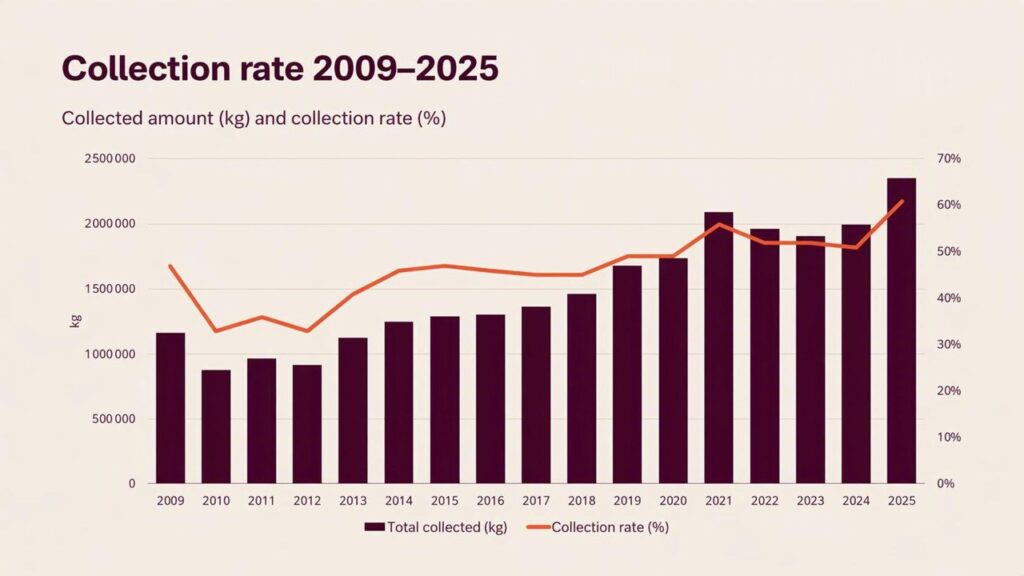
In Finland, the recycling of batteries and small accumulators has grown significantly over the last 15 years. The year 2025 was a record year: over two million kilograms of batteries and small accumulators were collected for recycling, and nearly one thousand tonnes of new raw materials were recovered from the collected materials.
This page summarises key information on batteries and small accumulators collected and recycled in Finland, as well as the utilisation of the materials they contain.
Key figures for 2025
8,000 units Registered collection points in Finland
2 million kg Over 2 million kilograms of batteries collected for recycling
417 g recycled batteries and batteries per person in Finland
952 tonnes Recyclable material recovered
Why is recycling important?
Using recycled metals consumes significantly less energy than mining new raw materials.
Recycling can:
- reduce greenhouse gas emissions
- conserve natural resources
- reduce the environmental impact of mining
- secure the availability of critical raw materials needed for manufacturing of batteries
This is particularly important in the case of cobalt, nickel and other materials contained in batteries that are needed for the green transition.
Finns are recycling more than ever
The volume of batteries and small accumulators collected in Finland has grown steadily since 2009. In 2025, the amount collected exceeded two million kilograms for the first time.
The statutory collection rate of 45 per cent set for portable batteries has been achieved in Finland every year. In 2025, the collection rate rose to almost 60 per cent.
What does the collection rate tell us?
The collection rate is calculated in relation to the batteries placed on the market over the previous three years. Consequently, the collection rate does not imply that all uncollected batteries end up in mixed waste.
Many batteries are still in use, for example in mobile phones, computers, power tools and other devices. Some are also stored in household drawers for several years before being recycled.
The number of lithium batteries is growing rapidly
In 2025, approximately 3.7 million kilograms of portable batteries were placed on the Finnish market.
The vast majority of products placed on the market were still single-use batteries, but the share of lithium-ion batteries is growing steadily as society becomes increasingly electrified.
- 75 per cent non-rechargeable batteries
- 23 per cent lithium-ion batteries
- 2 per cent other battery chemistries
Separate collection targets for batteries in light electric mobility devices
Under the EU’s new Battery Regulation, specific collection targets are being set for the first time for batteries in electric bicycles, electric scooters and other light electric mobility vehicles.
- 51 per cent by 2028
- 61 per cent by 2031
Alkaline batteries remain the largest group in collection
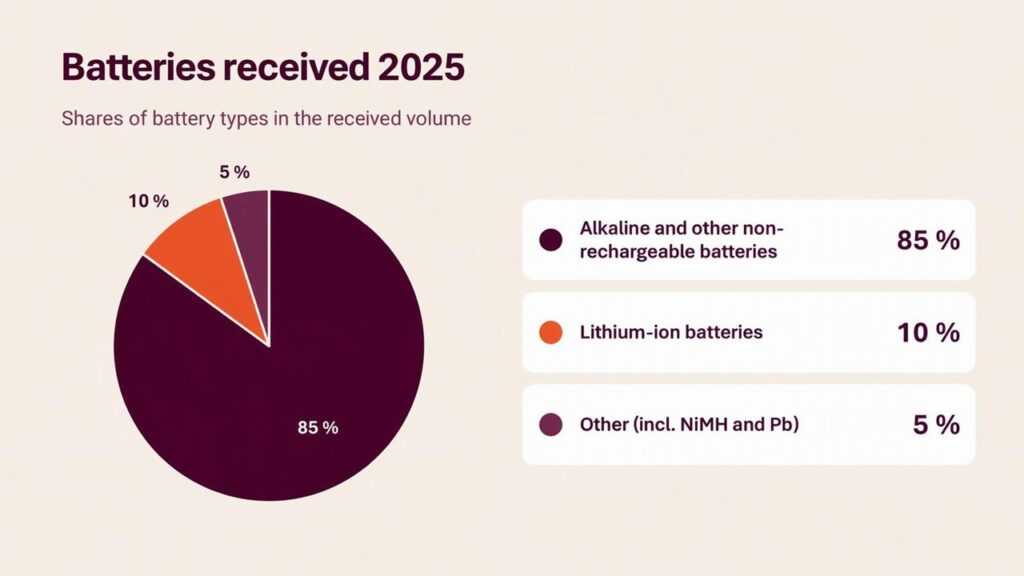
Although the number of lithium batteries on the market is growing, alkaline batteries and other single-use batteries still account for the largest share of those returned for collection.
Of the batteries and small accumulators collected in 2025:
- 85 per cent were alkaline batteries and other non-rechargeable batteries
- 10 per cent were lithium-ion batteries
- 5 per cent were other battery chemistries
Collection is supported by Finland’s extensive network of around 8,000 collection points.
Recycling returns valuable metals to use
Recycling batteries is not merely a matter of waste management. It is also about returning raw materials to industrial use.
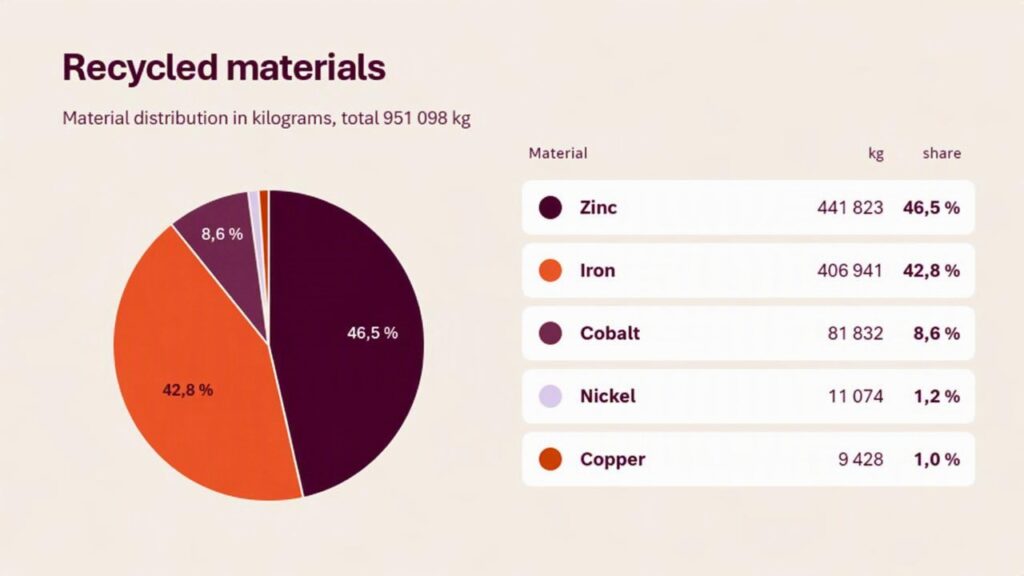
In 2025, a total of 952 tonnes of recyclable raw materials were recovered from collected batteries and small accumulators.
The largest material streams were:
- zinc
- iron
- copper
- nickel
- cobalt
Where does the data come from?
The statistics on this page are based on data compiled by Recser Oy on batteries and batteries placed on the market by registered producers, as well as those collected and recycled on their behalf.
The data is submitted to the Finnish Supervisory Agency, which compiles Finland’s official producer responsibility statistics and reports them to the European Commission.