Frequently Asked Questions
Here we have compiled a list of questions and points of curiosity that our customer service team regularly encounters in their work. We hope you find what you’re looking for!
Returns and collection points
Where can I return used batteries?
Batteries and small rechargeable batteries can be returned free of charge and without any obligation to purchase a new product at any shop or kiosk that sells batteries. So simply take them back to where you bought them.
Large lithium batteries, such as those for electric bikes, balance boards, mopeds, quad bikes and ride-on lawnmowers, can be returned to regional collection points.
What types of batteries can I recycle at shops?
You can return all portable and sealed batteries – such as those used in electronics, power tools, toys and small household appliances – to in-shop collection points. Batteries used in electric mobility devices, such as electric bikes and self-balancing scooters, are not accepted at in-store collection points. You can find your nearest collection point on the kierrätys.info website.

I can’t find a collection point in the shop. What should I do?
Ask a member of staff for help. In some shops and kiosks, it is not possible to place a collection box safely in the customer area, in which case batteries are collected at the till, for example.
I can’t remove the batteries from the device. Can I return the device as a whole, and where?
You can return the device, including the battery, to a collection point for electrical and electronic equipment (SE equipment). The battery will be removed from the device at the SE equipment pre-treatment facility, from where it will continue on to the batteries processing facility.
Why can’t I put batteries and small rechargeable batteries in mixed waste?
Batteries pose a fire risk in mixed waste. Furthermore, the raw materials they contain would then go unrecycled. When taken to recycling points, on average half of the raw materials contained in batteries can be recycled as materials. Nor are the incineration processes at waste treatment plants designed for waste containing metals.
Safe return of batteries
How should batteries be packaged for recycling?
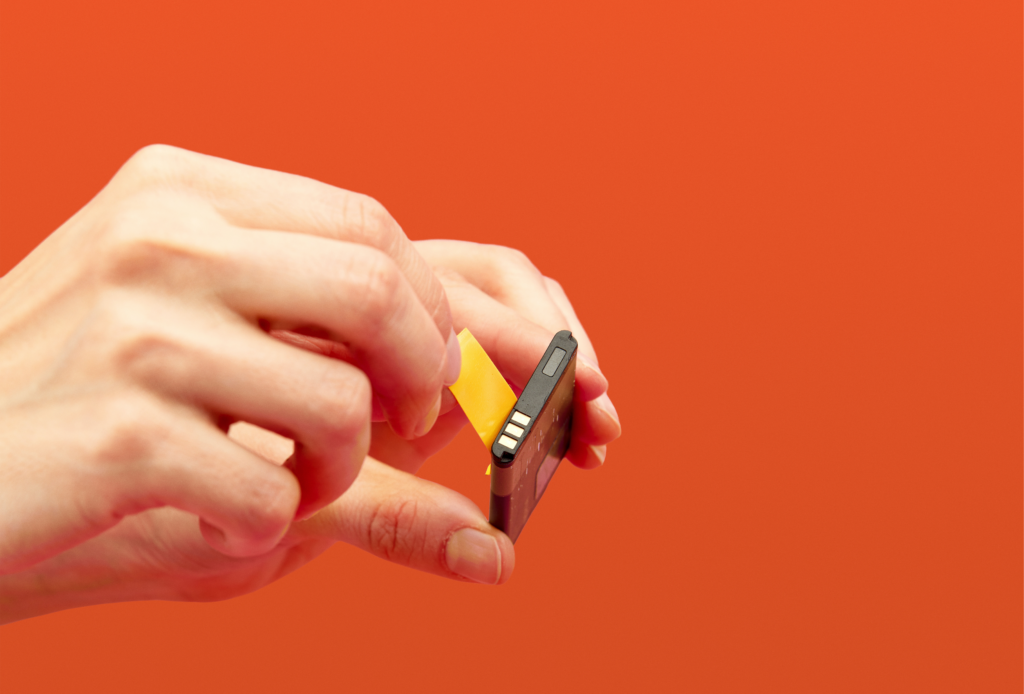
To avoid the risk of fire, the terminals of lithium batteries and all batteries containing a charge must be taped over immediately after they are removed from a device or taken out of use. You can recognise lithium batteries by the ‘Li’ marking.
Also remember to keep all batteries out of the reach of children and pets. Small button cells in particular can pose a choking and injury hazard if swallowed!
Where are the terminals on batteries?
There are almost as many different types of terminals on batteries as there are types of batteries themselves. The terminals on the most common types of batteries – namely AA batteries – are located at both ends, and both must be covered with tape. The surface of a button cell, on the other hand, is practically one continuous terminal, and so the entire surface must be wrapped in tape.
Even if only part of a terminal comes into contact with metal, this is enough to cause a short circuit. For example, the 9V batteries used in smoke alarms are one of the most critical battery types, as their terminals are situated side by side at one end of the battery, which increases the risk of a short circuit. The terminals on lithium batteries often resemble metal teeth.
Why should terminals for batteries be taped over?
Batteries that have been taken out of use usually still retain some electrical charge. If they come into contact with one another, they may short-circuit, which could result in a fire. The risk of fire can easily be reduced by taping the battery terminals to cover them as soon as the battery is removed from the device. Lithium batteries, in particular, are sensitive to contact with other batteries and metal objects, which is why it is important to tape the terminals of all batteries.
What sort of tape is suitable for covering the terminals of batteries?
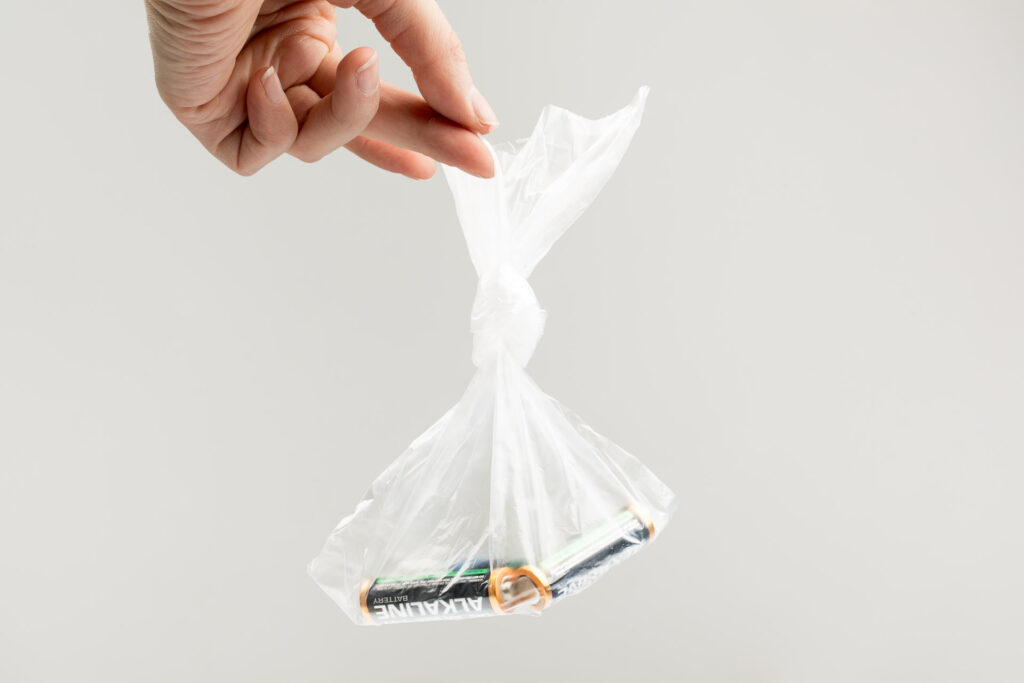
Ordinary adhesive tape or masking tape is perfectly adequate for covering the terminals of batteries. The best tape is one that stays firmly in place. The main thing is that the terminals are covered and cannot come into contact with one another. Alternatively, you can wrap the batteries individually in cling film, for example, or place them individually in small plastic bags.
Do all batteries need to have their terminals taped?
We recommend taping the terminals of absolutely all batteries. Lithium batteries, of which there is a wide variety, are the most prone to short circuits. Lithium-based power sources come not only in the form of standard finger and button cells, but also as rechargeable batteries in a variety of sizes. The best way to identify them is by the text ‘Li’ or ‘Lithium’ marked on the side. If you can identify lithium batteries and rechargeable lithium batteries amongst the rest, make sure to tape over at least their terminals.
Batteries are leaking. What should I do?
Place leaking batteries in a plastic bag and rinse any skin that has come into contact with the leaking fluid thoroughly with water to avoid skin irritation. Leaking batteries can be returned in a plastic bag to the collection bins at shops that sell batteries.
The batteries show signs of impact, are bent or otherwise damaged. What should I do?
Damaged batteries can be returned to collection points with the terminals taped shut inside a plastic bag and, where possible, handed to staff.
Further processing of batteries
What happens to the batteries taken to collection points?
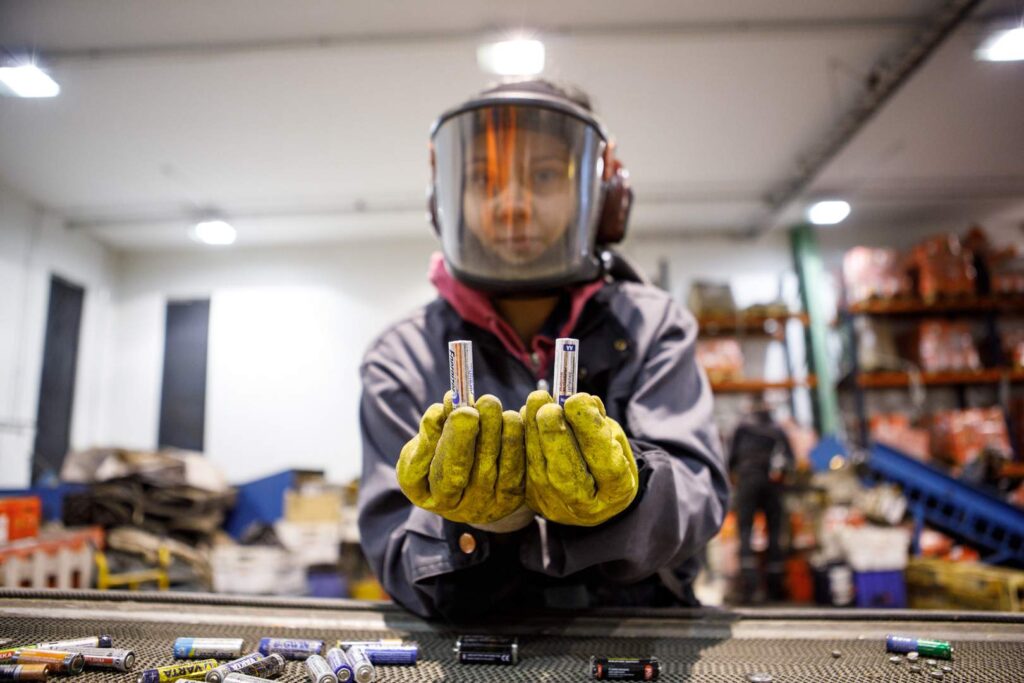
All batteries taken to collection points are transported to Akkuser Oy’s processing plant in Nivala. There, they are first sorted into different categories, as different types of batteries require different processing methods. From Akkuser, the different fractions or materials are sent on to partner organisations. For example, lithium-ion batteries used in mobile phones and laptops are crushed at Akkuser, after which the materials they contain can be separated mechanically.
One of the raw materials contained in lithium batteries is cobalt, which is refined from raw material into pure cobalt at Freeport Cobalt in Kokkola. In total, over 50 per cent of the raw materials contained in batteries can be reused.
What happens to adhesive tape and plastic bags during the recycling process?
Plastic bags are separated from batteries during the sorting stage and sent for plastic collection. Adhesive tape is used as a source of energy during the crushing stage, along with other organic material.