When a battery reaches the end of its service life
Take the used battery or battery to a collection point for recycling. Ensure safety by following the recycling instructions.
The safe use and storage of batteries help to prevent fires and other hazardous situations. With lithium-ion batteries in particular, it is important to follow the correct usage guidelines and ensure they are in good condition.
Using or charging the batteries contrary to the instructions may significantly increase the risk of fire.
Pay particular attention to the operating and charging temperatures, as temperatures that are too high or too low may damage the batteries and increase the risk of fire.
Using damaged devices may pose a risk of electric shock as well as a fire hazard. A swollen battery or external damage, such as a dent or crush mark on the battery casing, is particularly dangerous.
Ensure that the battery has no visible damage, such as dents or indentations. Damage may compromise the safety of the battery and increase the risk of a short circuit.
Ensure that the charger’s cables and casing are intact before use.
Slight swelling of the battery is normal as it nears the end of its service life, and it can be returned for recycling in the usual way, with the terminals taped over or placed in a separate plastic bag.
A battery that has swollen rapidly and significantly: Remove the swollen battery from use immediately and move it to a safe place where it will not pose a fire risk if it catches fire. Take the battery to a collection point as quickly as possible and hand it directly to a member of staff. Do not place it in a collection bin.
When returning batteries, please use local collection points, which are better equipped to handle damaged batteries.
Charge batteries in a place where there is as little flammable material around them as possible. Do not charge a battery near an escape route or exit, so that the route remains unobstructed and you can safely leave the building if necessary. Please also note that if a battery catches fire, burning parts may fly a considerable distance and start a fire.
Many user manuals recommend that batteries should not be charged without supervision. In practice, this is not always possible, so the charging area should be equipped with a working smoke alarm to detect the risk of fire in good time.
Battery fires can develop rapidly and produce large amounts of toxic fumes. For this reason, it is extremely important not to charge batteries in escape routes. This applies in particular to flats and loft flats, where the front door may be the only escape route.
In particular, keep button cells out of children’s reach. Swallowing a button cell can cause life-threatening internal injuries.
Remove flat batteries from devices, tape over the terminals immediately and take the batteries for recycling without delay.
If a battery smokes or catches fire, leave the room, close the door behind you and call the emergency number 112.
Do not put your own safety at risk by attempting to move or extinguish a burning battery. The fumes released from a burning battery can be extremely toxic.
If the battery is not smoking or on fire but you suspect it may be dangerous, seek guidance from your local emergency services if necessary.
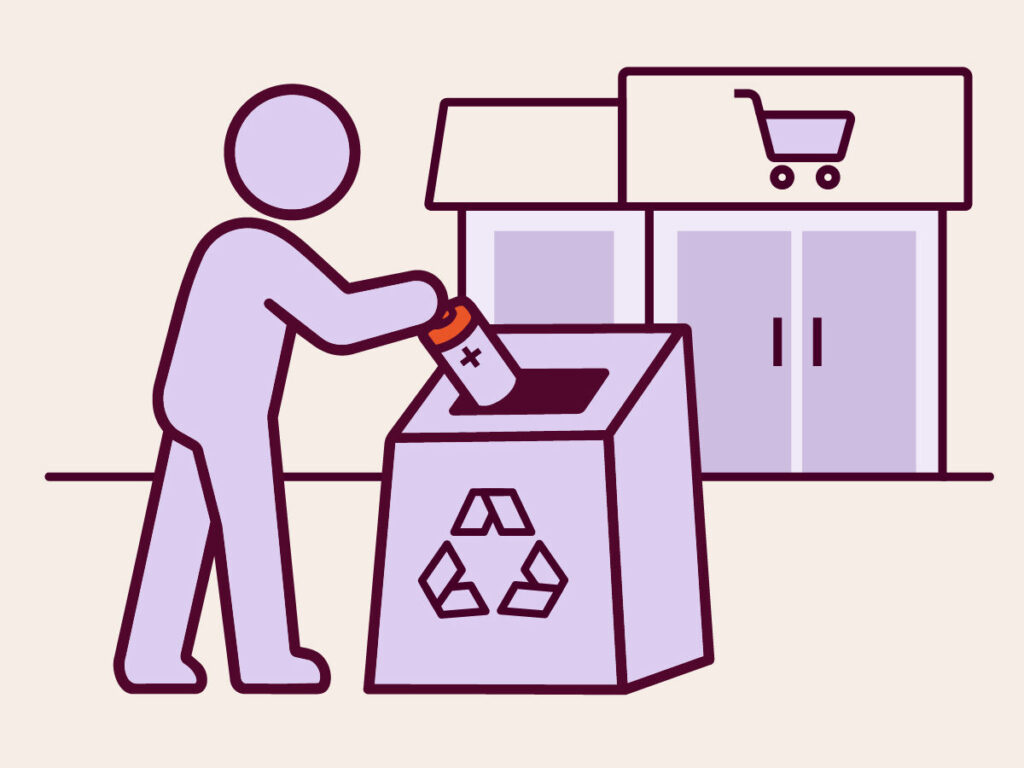
Take the used battery or battery to a collection point for recycling. Ensure safety by following the recycling instructions.

It might be lurking in a kitchen drawer, sitting at the back of a cupboard or forgotten inside an old appliance. A ‘zombie battery’ may look harmless, but it’s not worth leaving it to its own devices.
Find out where zombie batteries are hiding and how to handle them safely.
Visit the website of the Finnish National Rescue Organisation (SPEK) on fire safety for devices with batteries:
Spek.fi
How do you ensure that collection points, the logistics chain and those handling batteries also remain safe?
Find out more about our safety guidelines for the collection and recycling of batteries: