Dark colours use less energy on the screen than light colours. The theme colour does not affect the colours of videos or other media content. Keeping dark mode enabled helps save energy and may also be more comfortable on the eyes.

Display website images in lighter versions. Smaller image files make the website lighter to load.

Turn off animations and motion effects on the website. This gives you a simpler and calmer browsing experience.

The EU aims to tighten the collection rate of batteries and make the calculation methods more realistic
The EU aims to tighten the collection rate of batteries and make the calculation methods more realistic

By tightening the collection rate requirements, the aim is to protect the environment and improve the circular economy of batteries and accumulator, thereby also promoting the EU’s internal market.

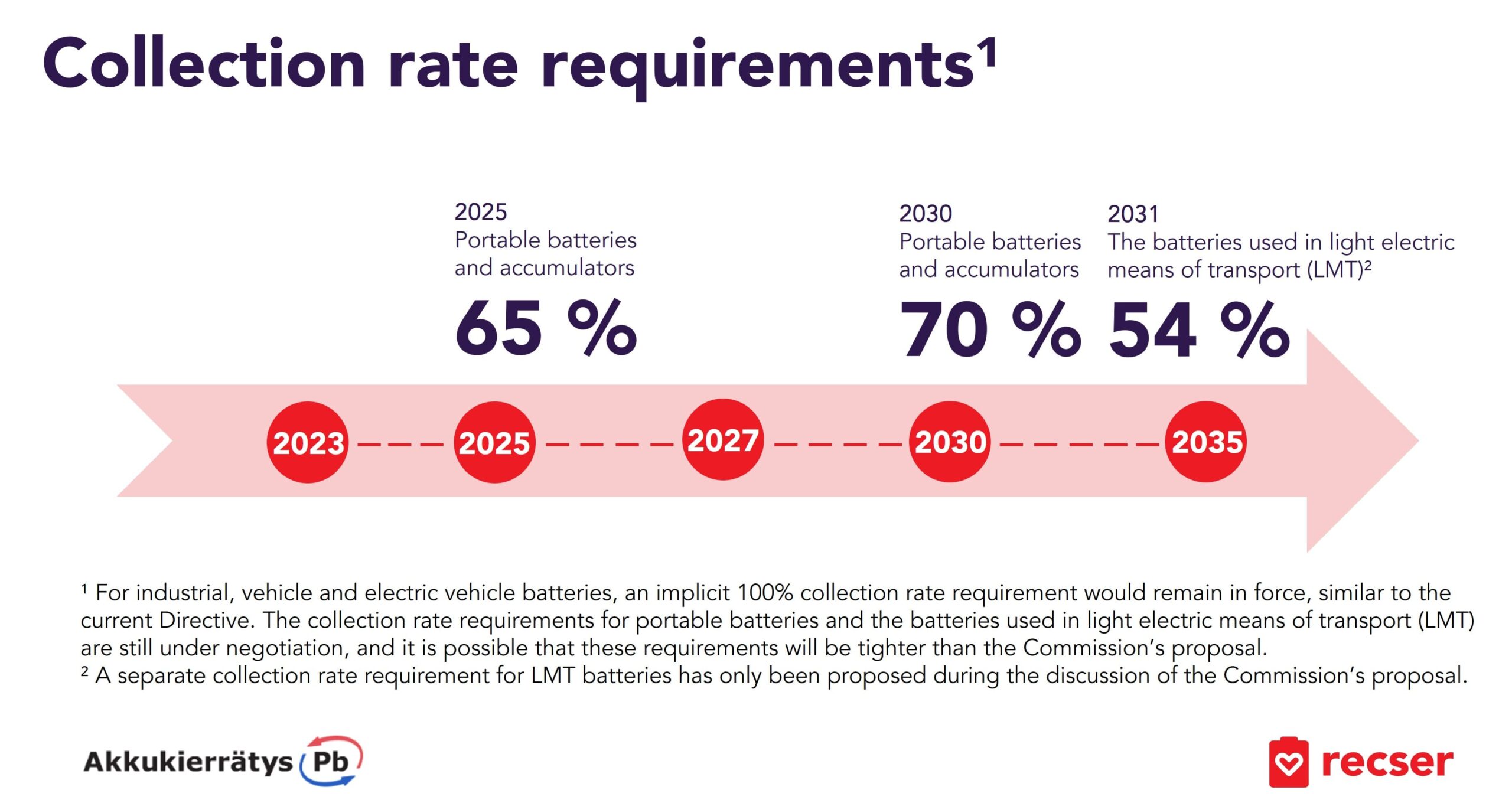
The proposed EU Batteries Regulation proposes significantly tighter collection rate requirements for batteries. The current collection rate requirement of 45% is proposed to be gradually increased to 70% by 2030. In addition, there is an intention to set a specific collection rate requirement for batteries used in light electric means of transport. The proposal implicitly states that other battery categories, i.e. batteries for vehicles and electric cars as well as industrial batteries, would continue to be subject to the 100% collection rate requirement. In practice, all batteries placed on the market should then be collected separately from other waste and recycled after disposal.
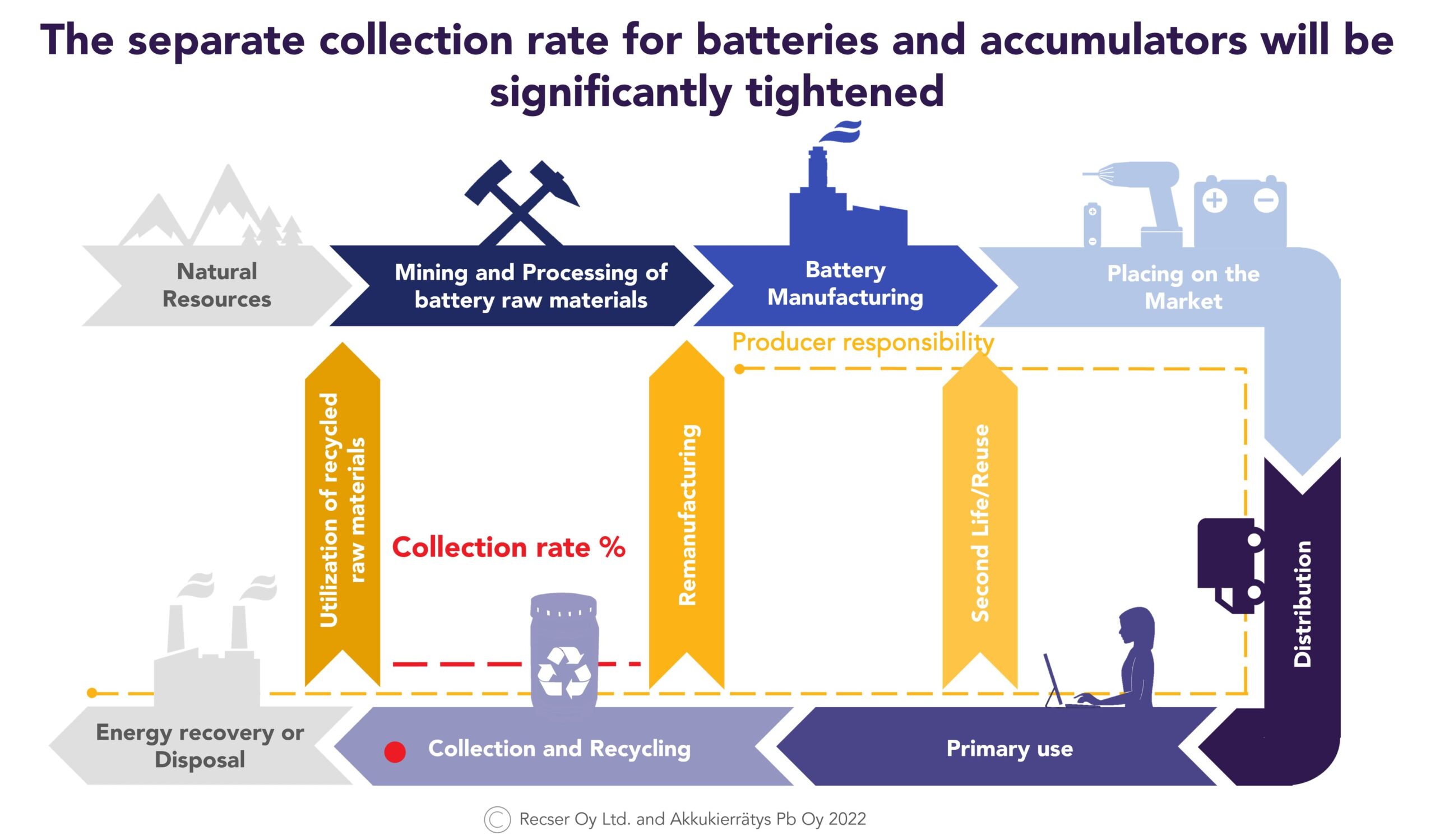
According to the impact assessment report of the regulation proposal, the higher collection rate requirements could achieve significant environmental benefits and emissions reductions,[1] especially for lithium batteries. In addition, the higher collection rate requirements could also create some new jobs, especially in the collection and transportation services.

Expenses of collecting and recycling are also highlighted

But will the tightening collection rate requirements have an impact on the cost of producer responsibility systems? According to the Commission’s impact assessment report, costs may double, or triple, compared to current levels.[2] However, it will depend on many factors, including the speed with which other measures can stimulate the market of recycled raw materials.
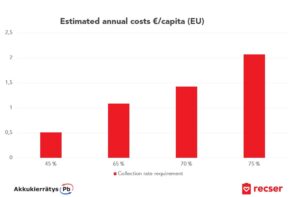
Image: Estimated annual costs of the higher collection rate targets per capita. Source: Commission’s impact assessment report p. 47. The current collection rate requirement of 45% is achieved in the EU at an annual cost of €0.23–0.51 per capita.

According to the Commission’s proposal, the collection rate would be calculated in the current way, on the basis of average annual sales over the previous three years (“batteries placed on the market”, “POM 3 years target”). In this way, the collection rate targets would be proportionate to the consumption of batteries in each Member State. However, this calculation method does not factor in the changes in the types, durability, service life and consumption patterns of batteries, and may, therefore, lead to unrealistically high collection rate requirements. In particular, the share of lithium batteries in the market is constantly growing, and they often have a much longer service life than the non-rechargeable batteries. During the discussion of the proposal, it has been suggested that the method of calculating the collection rate should be changed to consider the batteries that are actually available for collection during the year under review (“batteries available for collection”, AfC).[3]

A more realistic model for calculating collection rates

The AfC calculation model would factor in the increasing service life of batteries as realistically as possible. It would also factor in the batteries exported within electric and electronic devices for reuse or recycling in other countries. Their share is not yet taken into account in the statistics on waste subject to producer responsibility, and determining the actual number of them has presented a challenge.

As a result, the official collection rate does not show that the uncollected batteries end up in mixed waste.[4] According to the impact assessment report of the EU Batteries Regulation, it is estimated that around a quarter of uncollected batteries in the EU region may have ended up in mixed waste in 2015. The rest were either still in use, hoarded inside homes or ended up with electrical and electronic devices in other countries for recycling or reuse. This hoarding phenomenon means that devices are stored in homes as spare batteries or, for example, for nostalgia or security reasons, long after they have been discarded. Valuable electric and electronic devices and the batteries used in them often end up being hoarded.

This also delays the moment when it would be realistic to count the batteries as being available for collection. In order to provide more reliable data in the future on the number of batteries ending up in mixed waste, the Commission proposes an obligation for the Member States to carry out “mixed waste surveys” at least every five years at the expense of the producer organisations. Based on the results of these surveys, the authorities could order producer organisations to take corrective action by improving the coverage of the collection network or by communicating more effectively, for example.

Mixed statistics on collection volumes in the EU countries

According to statistics collected by Eurostat, the EU achieved a collection rate of 51% for portable batteries in 2019[5]. However, it is unclear how comprehensively and consistently sales and collection volumes are recorded across countries. For example, statistics show that Croatia has a collection rate of almost 90%, while Central European countries that have long developed collection systems only have a collection rate of 50–60%.

In Finland, the official collection rate was 49% in 2019. This figure is calculated on the number of batteries reported as placed on the market by the importers who are members of the producer communities and the separate collection volume reported by the producer communities. Therefore, the calculation of the collection rate does not factor in either the number of batteries placed on the market by “free riders” who do not take care of their producer responsibilities, or the number of batteries that end up in informal collection points or even in criminal hands. Changing the calculation methods of the collection rate to the proposed AfC model would also increase Finland’s collection rate, as about a third of portable batteries sold in Finland are lithium batteries with a lifespan of three years or more. In addition, quite significant quantities of electric and electronic devices are exported from Finland for reuse, so they never end up as waste here.

Realistic collection rates contribute to fairness

How realistic and achievable the collection rate requirements are will become increasingly important in meeting producer responsibilities. Under the proposed EU Batteries Regulation, collection rates would become specific to each producer organisation and a failure to achieve them could lead to the withdrawal of the producer organisation’s approval. That is why it is increasingly important for the position of producers that they retain the primary right to collect the waste for which they are responsible, and that the collection rate calculations are based on the batteries that can actually be collected.

Recser and Akkukierrätys Pb have raised these issues on several occasions during the discussion of the proposal for the EU Batteries Regulation, commenting on it to the representatives of the Ministry of the Environment, Commission and Parliament.
[1] SWD(2020) 335 final. COMMISSION STAFF WORKING DOCUMENT: IMPACT ASSESSMENT REPORT. Accompanying the document Proposal for a Regulation of the European Parliament and of the Council concerning batteries and waste batteries, repealing Directive 2006/66/EC and amending Regulation (EU) 2019/1020. (Commission impact assessment report).

[2] Commission impact assessment report p. 47.

[3] Huisman, J., Bobba, S., “Available for Collection” study on alternative collection targets for waste portable and light means of transport batteries, EUR 30746 EN, Publications Office of the European Union, Luxembourg, 2021.

[4] The Centre for Economic Development, Transport and the Environment (ELY Centre) of Pirkanmaa. Producer responsibility statistics (in Finnish): https://www.ymparisto.fi/fi-FI/Kartat_ja_tilastot/Jatetilastot/Tuottajavastuun_tilastot/Akku_ja_paristotilastot

[5] https://ec.europa.eu/eurostat/statistics-explained/index.php?title=Waste_statistics_-_recycling_of_batteries_and_accumulators

This article is a part of the joint communications of the battery and accumulator producer organisations Recser Oy and Akkukierrätys Pb Oy concerning the EU Batteries Regulation. You can also subscribe to our newsletter to receive the latest news on the subject.

EU Batteries Regulation processing schedule slightly delayed

EU Batteries Regulation processing schedule slightly delayed

Processing of the EU Batteries Regulation has resumed in Brussels after the summer recess. The latest estimate is that the regulation could be adopted and enter into force next spring.

At the International Congress for Battery Recycling ICBR in Salzburg on 14 September, Commission representative Cesar Santos estimated that it is possible that a political agreement on the EU Batteries Regulation will be reached in the trilogue before the end of this year. This would allow the regulation to be adopted and enter into force next spring. The next negotiation at the political level will be the trilogue scheduled for 11 October.

There is a slight delay in the processing schedule, as there are still some open issues that need to be addressed in order to find a compromise.

What are the obligations for the use of recycled raw materials?

During the negotiations under the French Presidency before the summer, the first part of the regulation was discussed, including the definitions, restrictions on hazardous substances and carbon footprint calculation requirements for larger batteries. In the discussions, the EU has also sought clarity on the types of batteries for which it is appropriate to set the blending obligation, i.e. a requirement to use recycled raw material. There has also been discussion about whether the recycled content would include only raw material recycled from used batteries. The Russian invasion of Ukraine and Europe’s drive to disengage from Russian fossil energy have made the raw material objectives of the EU Batteries Regulation even more topical and strategic. Promoting markets for recycled raw materials will help EU to become more self-sufficient in battery raw materials.

The removability and interchangeability rules for portable batteries will be extended to the batteries used in light electric means of transport (LMT). Replacement batteries should

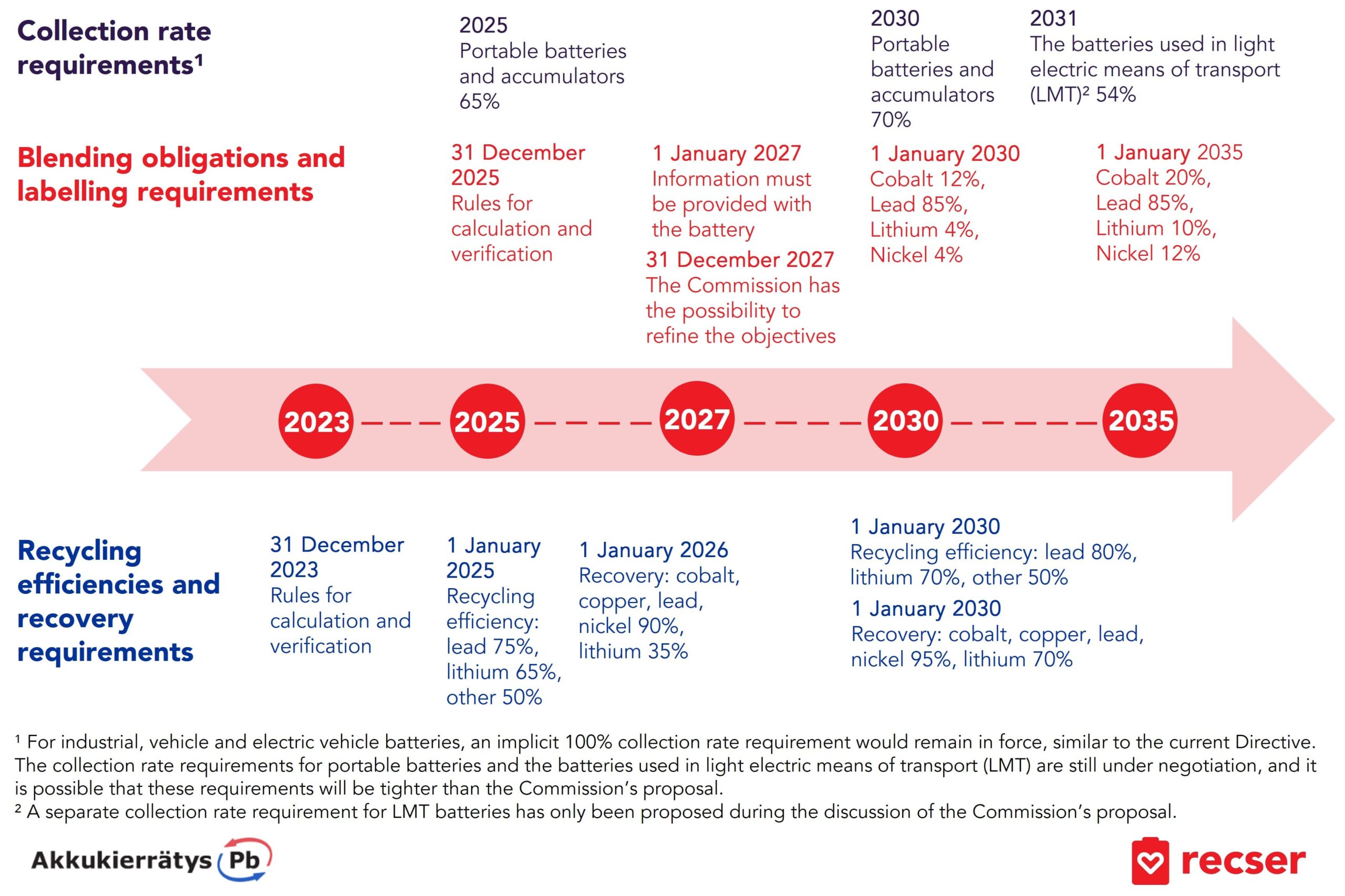
Now, in the autumn negotiations, the EU is also seeking compromises on issues regarding the later stages of batteries’ life cycles in Chapter VII, where aligned producer responsibility plays a key role in the transition to the circular economy. The chapter contains important articles on collection, recycling and material recovery requirements. As the calculations, especially for lithium batteries, are based on projections of future waste streams, the setting of sufficiently ambitious yet realistic targets is understandably challenging. The table below shows the current timetables and levels of requirements under the Commission’s proposal.

Image 1: The collection and recycling requirements and blending obligations presented by the Commission, with timetables for their application (Based on Cesar Santos’ presentation at the ICBR2022 conference on 14 September 2022)

Similar regulations are anticipated for other products as well

A wide range of people are interested in and affected by the proposed regulation, as it is the first concrete body of rules of the European Green Deal. European Green Deal is an EU Strategy to become climate-neutral by 2050 so that economic growth does not require an increase in resource use. Batteries play a key role in the implementation of this strategy, as a regulation that factors in the whole life cycle of batteries will serve as a guide for other product regulation in the EU.

Liisa-Marie Stenbäck is the Managing Director of Recser Oy, who organise the Paristokierrätys battery collection system.

This article is a part of the joint communications of the battery and accumulator producer organisations Recser Oy and Akkukierrätys Pb Oy concerning the EU Batteries Regulation. You can also subscribe to our newsletter to receive the latest news on the subject.

New labelling on batteries promotes safety and recycling

New labelling on batteries promotes safety and recycling

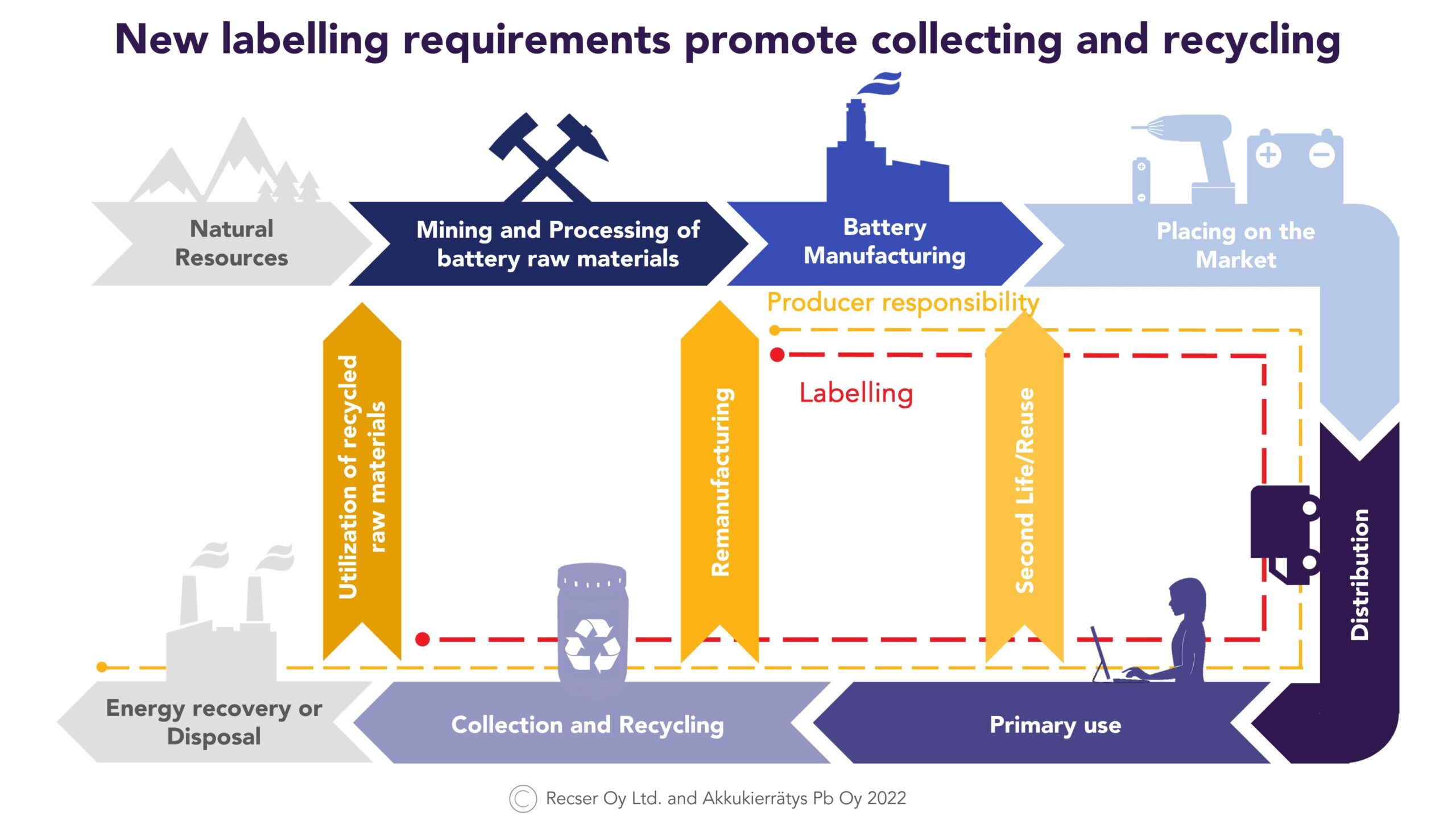
The EU Batteries Regulation brings new labelling requirements for the batteries released onto the market. The aim of the new labelling is to promote the collection and recycling of batteries.

The new EU Batteries Regulation will, most likely, require new kinds of labelling on batteries placed on the market. The regulation, which is still being drafted, proposes new safety and recyclability labelling for batteries.

The new labelling is particularly useful for consumers, as it will be easier to find out about the features of the batteries they use. Sufficient labelling should also make recycling easier.

Seppo Niemi, senior officer on electrical products at Tukes, comments that there are already strict requirements for batteries and their labelling on the EU market.

“Labelling requirements and precise transport regulations ensure that the batteries are as safe as possible to use. Currently, information on the capacity and manufacturer is required for batteries, but recycling-related labelling is already becoming more common. In the future, these will be highlighted even more,” describes Seppo Niemi.

Niemi adds that the labelling requirements would include information that a large proportion of battery manufacturers are already documenting, before the regulation has entered into force.

More data on batteries

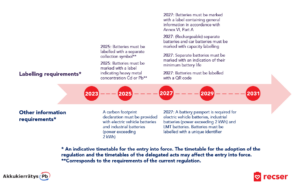
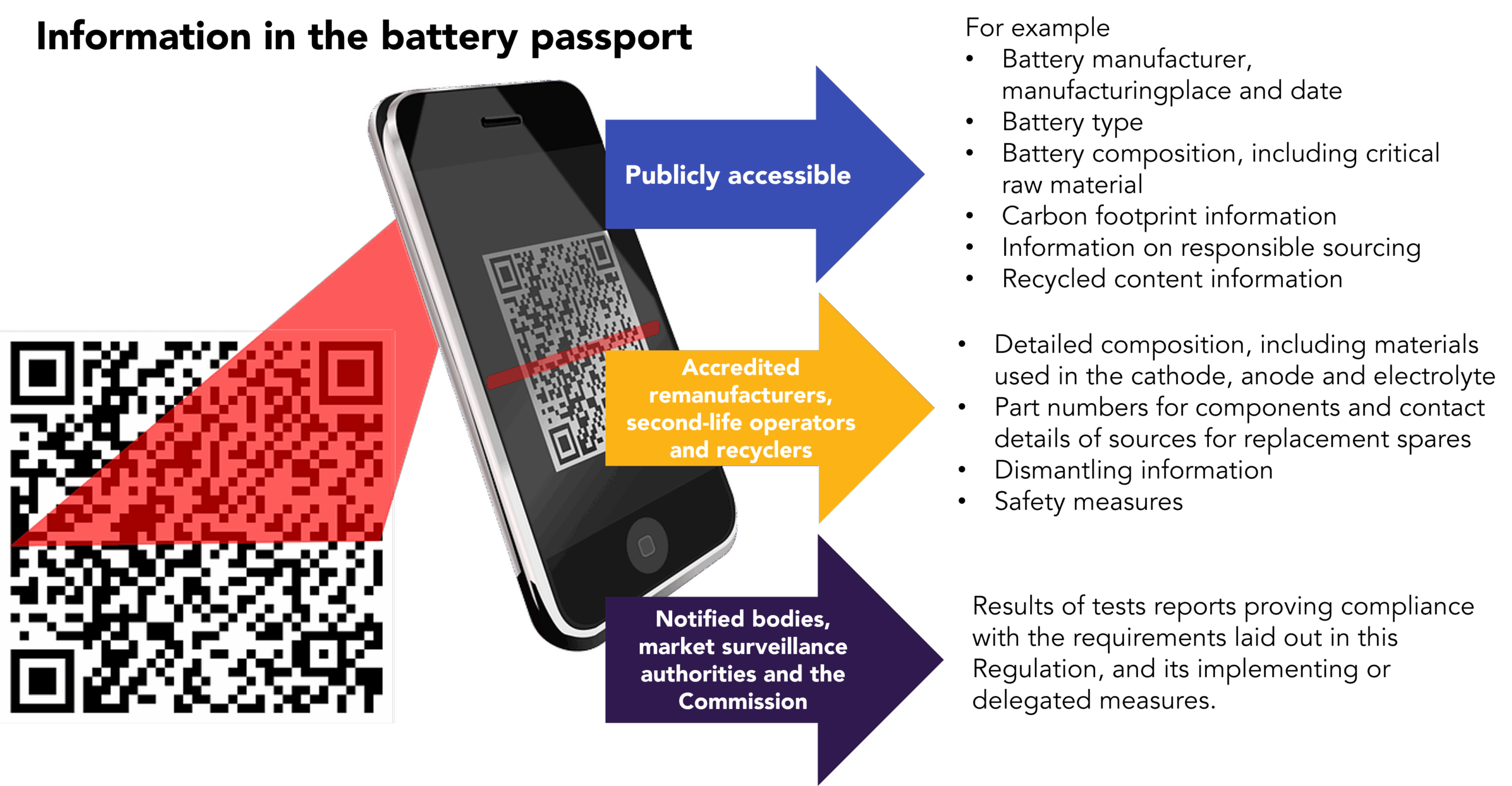
The regulation draft proposes that, from 2027 onwards, the labelling of batteries should indicate not only the main features of the battery, but also the battery’s service life, charging capacity, separate collection requirement, hazardous materials and safety risks. The battery information should be accessible via a QR code printed or engraved on the battery.

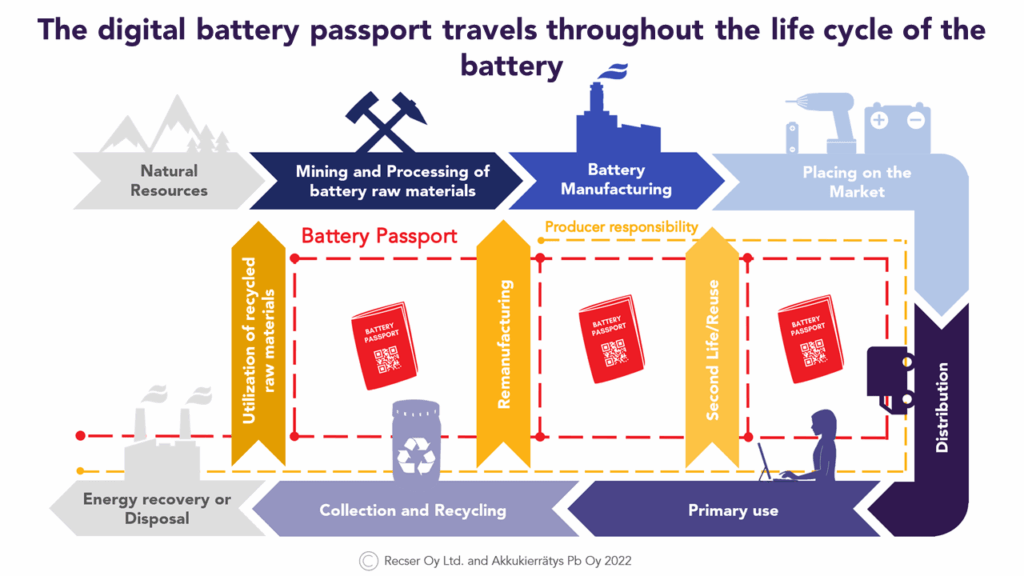
In addition, the regulation requires a digital battery management system for rechargeable industrial batteries and electric vehicle batteries. From the beginning of 2026, each battery should also have a unique, electronic battery passport with basic information on each battery type and model.

The regulation will create additional work for supervisory authorities across Europe.

The regulation draft and the transitional phases of the different requirements vary, so it is not yet known what the new regulation will mean for the workload of Tukes.

“In the end, the reform is a good thing, although it does create additional work for us as well. Some even more ambitious aspirations have been voiced, so the situation may still change. However, Tukes has a good, long transition period for this regulation draft,” Seppo Niemi says.

A good level of production safety has been achieved

Tukes is responsible for ensuring that the products placed on the Finnish market are safe and appropriate to the intended use. Tukes carries out random spot checks on batteries sold separately and batteries included in electrical devices, and they very rarely find any defective products.

“Indeed, a good level of production safety has been achieved for batteries,” states Seppo Niemi.

“We will target testing if, for example, particularly cheap products or brands enter the market and there are previously identified problems with their manufacturers. But most of the products on the market seem to be OK, and we have not seen anything too dramatic,” Niemi says.

Consumers also report defective products to Tukes from time to time, but these are usually isolated cases. Lastly, Seppo Niemi notes that adhering to the instruction manual for the electrical devices is of paramount importance.

“When the batteries are handled according to the manufacturer’s instructions, it reduces the risks. For example, indoor devices should not be taken out to the rain. Fortunately, there are relatively few potential dangers given how many batteries there are in the world,” Seppo Niemi comments.

Text: Riina Nygren / Noon Kollektiivi

This article is a part of the joint communications of the battery and accumulator producer organisations Recser Oy and Akkukierrätys Pb Oy concerning the EU Batteries Regulation. You can also subscribe to our newsletter to receive the latest news on the subject.
How Valmet Automotive is preparing for a digital battery passport

How Valmet Automotive is preparing for a digital battery passport

The upcoming EU Batteries Regulation proposes a digital product passport for accumulators that would feature individualised information about each accumulator’s manufacturer, raw materials and carbon footprint, as well as responsible procurement and recycled content. The passport would be a requirement for industrial and electric vehicle accumulators, the power of which exceeds 2 kWh.

The system resembles that of personal passports, and its objective is to provide reliable and transparent data about the lifecycle impact of accumulators. The purpose of the battery passport is to establish unified rules for all operators for indicating the social and environmental impacts of the value chain. Similar digital product passports are being planned for other product groups as well.

Valmet Automotive is hoping for one standardised model

Manufacturing automotive accumulators in Salo and Uusikaupunki, Valmet Automotive is carefully monitoring the progress and potential requirements of the Batteries Regulation.

“In practice, the battery passport means a QR code that is attached to the accumulator and used to send data to a cloud. The purpose of the data cloud is to collect information about the different stages of the accumulator’s lifecycle. There are various solutions on the market for implementing the passport, but a completely ready solution does not exist yet. Our hope is that one standardised model will be developed for the battery passport and used as a standard by all operators, even globally,” Sustainability Manager Sanna Puro from Valmet Automotive’s accumulator business department says.

Information to be sent to the data cloud on the blockchain principle

The idea of the battery pass is for every part of the supply chain to enter their own data into the system in accordance with the blockchain principle. The objective is for the information entered into the battery passport to be accurate, up-to-date and verifiable, with the party placing the accumulators on the market assuming responsibility for it.

In accordance with the Batteries Regulation, the EU Commission will establish an electronic information exchange system for accumulator data. The Commission will also determine the format of the data available in the system, as well as rules for using and sharing the data in the system. Current topics of discussion include questions such as who will have access to what data and how.

“First and foremost, the battery passport will require information management from the operators of the value chain. Here at Valmet Automotive, we already have the necessary information as regards our own operations. A bigger challenge will be to have the entire supply chain involved, as we are dealing with a global market,” Puro explains.

Data also for manufacturing more sustainable accumulators

Puro believes that the battery passport and the data collected onto it would also benefit accumulator manufacturers.

“In particular, data collected from the time that the accumulator is in use would be very valuable, as it could also be utilised in product development to manufacture better accumulators. This would mean collecting information on how the accumulator could be as long-lasting as possible,” Puro says.

Puro believes that the battery passport can give European producers a competitive advantage if the passport becomes a requirement in the EU market.

“Above all, the battery pass would facilitate efficient circular economy. For example, the passport could be used to monitor more precisely where accumulators end up for recycling. Furthermore, accumulators would come with information about what they contain and what their condition is, which would make their recycling and reuse easier,” Puro explains.

Indication requirements for other accumulators as well

The Batteries Regulation proposes new indication requirements that would promote circular economy, not just for industrial and automotive accumulators but for other accumulator types as well. For example, in the future, accumulators must have a QR code indicating the accumulator’s service life, charging capacity, separate collection requirement, hazardous materials and safety risks. The purpose of these indications is to provide users and recycling plants with information about safe and lifecycle-extending ways to handle accumulators and how they should be recycled.

According to preliminary information, the aim is to have the Regulation enter into force in early 2023, but there is a great deal of variation among transition periods with regard to different requirements. Regulation-level legislation is the EU’s most powerful tool, and it is applied unchanged in every member state once it has been approved in the EU. This means that the Batteries Regulation will unify the national legislation of different countries.

Valmet Automotive EV Power Oy is a member of Recser Oy as a producer of industrial accumulators.

Subscribe our newsletter on the EU’s upcoming Battery Regulation

* indicates required

The upcoming Battery Regulation of the EU emphasises producer responsibility and changes our way of using, manufacturing and recycling batteries

The upcoming Battery Regulation of the EU emphasises producer responsibility and changes our way of using, manufacturing and recycling batteries

Producer responsibility is in a key position in the new regulation, which is more ambitious in terms of circular economy than anything before in the product sector of the EU.

Europe is going through a shift in the transport and energy sector that aims at increased use of renewable energy and the electrification of transports. The change is significant and accumulators play a key role in it. However, the green transition will not be successful if accumulators are not designed and produced to be durable and recyclable. The role of producer responsibility is to ensure that the raw materials of accumulators are re-used.

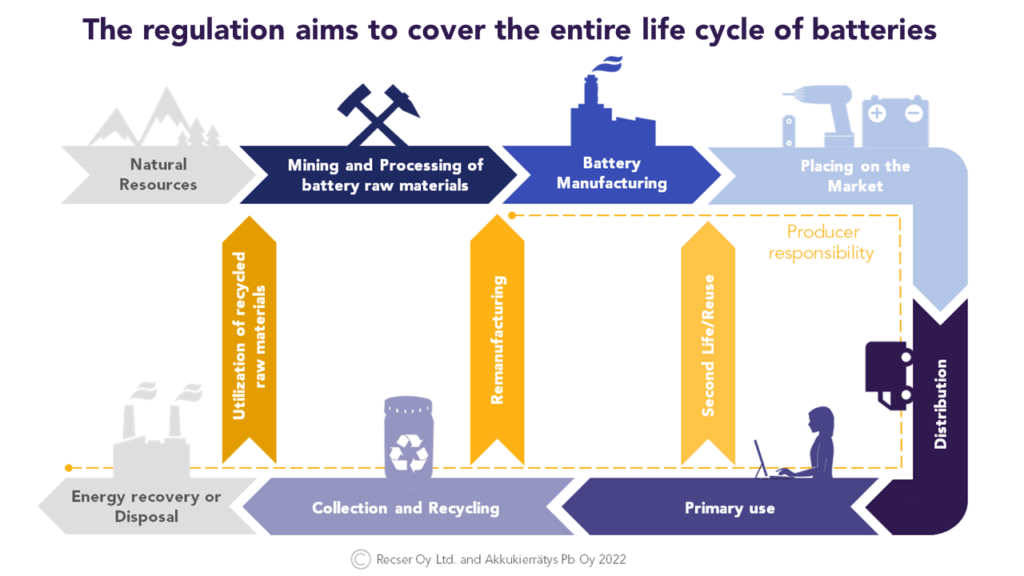
The aim of the new regulation is to ensure that the accumulator industry pays more attention to the environmental effects of accumulators throughout their life cycles as well as sustainable production from the mining of raw materials to manufacturing, recycling and re-using.

The regulation also aims to improve Europe’s self-sufficiency when it comes to raw materials. Although Europe is the world’s second-largest market of electric cars, it has a lot of catching up to do in terms of self-sufficiency related to the raw materials and supply chains of accumulators. In order to improve self-sufficiency, the sector needs clear and adequately demanding basic rules that encourage promoting the re-use of accumulators and replacing pristine raw materials with recycled raw materials. The Battery Regulation specifies that new accumulators should include recycled raw materials.

From now on, all batteries entering the EU market must be sustainable, efficient and safe throughout their life cycles. In order to be considered sustainable, batteries must be repairable, re-usable and easily recyclable, produced with minimal environmental impact and proven to have been manufactured from sustainably produced materials.

Pioneer in sustainable product policies

The Commission proposal for the Battery Regulation currently being processed by the EU has an effect on the entire life cycles of batteries and, unlike a directive, it is directly applicable legislation for all Member States.

The hope is that the Battery Regulation will be a pioneer in the global green transition and that it will pave the way for other instruments concerning sustainable product policies. One of the key instruments concerning product policies of the Battery Regulation is producer responsibility, which aims to promote circular economy and obligates the manufacturers and importers of batteries to look after the products once they are taken out of use.

In this article, we focus on why producer responsibility plays such an important part in accomplishing the goals of the green transition, what are the effects of the new regulation on producer responsibility and how the obligations of importers and distributors of accumulators will change as a result of the new regulation.

Increased significance on producer responsibility

The Battery Regulation will replace the directive from 2006, which has required Member States to obligate the producers of batteries, i.e. the importers and manufacturers, to ensure the waste management and recycling of their products. This “producer responsibility” has proven to be an effective means for promoting the re-use and recycling of products taken out of use.

In practice, producer responsibility is organised by producer organisations, such as Recser Oy and Akkukierrätys Pb in Finland. Producer organisations not only organise the collection and recycling of batteries and create statistics but make it possible to re-use collected accumulators and process complaints and arrange communications about the collection and recycling as well.

Since the directive of 2006 entered into force, the world and the accumulator markets have changed significantly. The variety and different types of accumulators have increased and they are needed increasingly more for energy storage and transportation. In the proposed Battery Regulation, requirements related to producer responsibility have been specified and extended from the current situation to promote the green transition. The aim is to ensure that the collection and recycling of lithium-ion accumulators that represent the latest technology would be even more efficiently and safely.

Accumulators important to the green transition are categorised into separate product groups, i.e. the accumulators used in light electric means of transport and electric cars. In the proposal, the producers of these accumulators and accumulators needed to store renewable energy are given as extensive producer responsibility as to the producers of other batteries and new collection and recycling requirements that become incrementally stricter in a tight schedule are proposed.

Financial incentives to design sustainable products for producers

Producer responsibility brings together different parts of the value chain of batteries—manufacturers, importers, distributors, users, waste management and re-use parties—to ensure the accomplishment of the EU’s Battery Regulation’s goals. In other words, producer responsibility can be seen as the spine of circular economy around which the entire collection and recycling system is built.

Through producer responsibility, the costs of collection and recycling after the service life of the products can be allocated in accordance with the “polluter pays” policy to the prices of products that generate these costs. Producers responsible for collection and recycling should have the primary right to collect all batteries and make their raw materials available for re-use. This ensures that the system is efficient, instead of cherry-picking.

Regulations concerning batteries have, thus far, missed important links, such as product design, users’ responsibility and the promotion of markets for recycled raw materials, which are now incorporated into one regulation for the first time.

This is important, as many significant effects on the environment, people and society in general are decided on already in the product design phase. Because of this, the Batteries Regulation aims primarily at the product design in which accumulators are designed to have a long service life and to be re-usable and as recyclable as possible. The “polluter pays” policy regarding the financial contributions of the producer responsibility specified in the proposed regulation provide incentive to design batteries with longer service lives and more recycled raw materials. In practice, it is financially profitable for producers to design products that comply with the principles of circular economy.

Increasingly demanding collection and recycling goals speed up the transition to circular economy

In order to ensure the sufficiency of raw materials used in accumulators and to improve the EU’s self sufficiency, the collection and recycling rates of batteries will be increased significantly. In addition to Member States, the rates are also proposed to be more clearly binding to the producers, i.e. each producer or producer organisation representing them must fulfil the increasingly demanding requirements.

At the moment, the requirement is to collect at least 45% of the portable batteries released to the market during the three previous years for recycling. According to the proposed Battery Regulation, this so-called collection rate will be increased incrementally—first to 65% by 2025 and to 70% by 2030. Improving the collection rate is important, but in order for it to be entirely reliable, the calculation formula should also be changed. The current formula does not take the long service life of accumulators or batteries to be exported and re-used in the market of another country into account.

The rapidly increasing demand for accumulators in the markets and the higher collection requirements will also lead to a higher collection rate in the next few years. The number of lithium-ion accumulators ready for recycling is expected to increase 700-fold between 2020 and 2040, which will make it easier to use recycled materials in the production of accumulators.

The regulation sets rapidly increasing, material-specific collection goals for important raw materials. Producers must comply with these goals and ensure that more than 50% of cobalt, nickel and copper will be re-used by 2030. In order to make the use of collected materials more attractive than mining pristine metals, a suggestion to add an obligation to use a minimum amount of recycled raw materials, in addition to pristine materials, into the proposed regulation has been made. The requirement applies to cobalt, lead, lithium and nickel. Accumulators are the first product group to have EU-level regulations obligating the use of recycled raw materials in order to promote circular economy.

Higher demands for distributors and consumers in the Battery Regulation

With regard to the recycling activity of end users, it is essential how easy the recycling of used batteries is. Because of this, the proposed regulation obligates the distributors, i.e. the sellers of products, to promote circular economy together with the producers. Previously, only the distributors of portable batteries have been bound by the collection obligation, whereas now, the Battery Regulation would extend the obligation to apply to accumulators used in industry, vehicles and electric bikes. The Batteries Regulation obligates an increasingly large group of battery and accumulator distributors to collect batteries taken out of use.

The aim of the extended reception obligation is to make the selective collection of accumulators safer and easier than before. This is important, as the system will not work if users do not return batteries taken out of use to be re-used. The regulation will also obligate the end users to sort the used batteries and deliver them to the collection points provided by producers. This is a historical and highly anticipated step in legislation, as incorrectly sorted batteries pose a major fire hazard. The goals of the regulation cannot be achieved without active end users, as more than 25% of portable batteries taken out of use remain in storage in households. At the level of the entire EU, this corresponds to the amount of raw materials used in hundreds of thousands electric car accumulators, and the amount is continuing to grow.

The distributors of batteries will also have an obligation to verify that the manufacturer or importer of the products to be sold has registered as a producer and that the batteries are accompanied by the required documents. This is a welcome addition to the supervision of producer responsibility, as authorities do not have comprehensive registers of parties that bear the responsibility. Producer organisations have also expressed their interest in a requirement to comply with producer responsibility requirements in public procurements in order to reduce freeloading. Freeloading means that a company that bears a producer responsibility fails to comply with the responsibility, willingly or unwillingly, leaving the costs to be borne by other companies.

Finalisation of the Battery Regulation

The proposal has advanced to the final stage of the EU decision-making process, a trialogue between the Council, the Commission and Parliament, where a compromise can be expected as soon as this autumn. With regard to chapter VII about producer responsibility, a two-year transition period has been suggested, which means that its requirements would be applicable two years after the regulation enters into force.

The Batteries Regulation is the first concrete regulation package of the so-called EU Green Deal policy, which aims to prevent a loss of biodiversity and mitigate the impacts of climate change. A regulation that has such a significant impact on the entire life cycles of batteries also paves the way for regulations concerning other products.

As producer organisations, we want to actively support our members and other stakeholders in complying with the new requirements in practice.

This article is the first part of the joint communications of the battery and accumulator producer organisations Recser Oy and Akkukierrätys Pb Oy concerning the EU’s Batteries Regulation. The next article is about the battery passport proposed in the regulation, the aim of which is to provide specific information about industrial and automotive accumulators, at least, and their raw materials, carbon footprint, safety and recyclers.

Liisa-Marie Stenbäck is the Managing Director of Recser Oy, who organise the Paristokierrätys battery collection system.
Johanna Alakerttula is the Managing Director of Akkukierrätys Pb Oy, a producer organisation in charge producer responsibility related to lead-acid accumulators.

Read more about how the producer responsibility over batteries, i.e. their collection and recycling, is organised at the moment: https://www.paristokierratys.fi/blog/2022/04/08/kierrossa-nain-kaytetyista-akuista-ja-paristoista-kierratetaan-uusia-akkumateriaaleja-ja-jopa-lannoitetta/

EU Commission website on the Batteries Regulation: : https://ec.europa.eu/environment/topics/waste-and-recycling/batteries-and-accumulators_en

Subscribe our newsletter on the EU’s upcoming Battery Regulation

* indicates required

Recycling batteries supports the circular economy effectively

Recycling batteries supports the circular economy effectively

The producer organisations’ battery webinar provided a comprehensive overview of the current state of the recycling of batteries and the changes that will be brought about by the Batteries Regulation.

The webinar, aimed at the boards and owners of producer organisations, provided an insight into the current state and future of battery and accumulator recycling and highlighted the importance of cooperation amidst the changing regulations. The webinar was organised in cooperation between the battery and accumulator producer organisations Recser Oy and Akkukierrätys Pb Oy.

The aim of the webinar was to provide representatives of the boards and owners of the producer organisations with the most up-to-date and comprehensive information possible on the current state of battery and accumulator recycling before the Batteries Regulation is ratified.

“Through their activities, the producer organisations have made the recycling of batteries safer and more efficient,” said Seppo Tokola, Chairperson of Recser Oy, who chaired the event.

“The aim of the producer organisations is to make it as easy as possible for producers to meet the requirements, and Recser and Akkukierrätys Pb have done a great job in this regard. All board members should recognise the challenges that need to be tackled in the future and the critical role that producer organisations play in this,” Tokola said.

Number of batteries is increasing

It was stated several times during the webinar that, in general, the number of batteries on the market is constantly increasing. It is estimated that the electrification of vehicles will lead to a 14-fold increase in the number of accumulators between 2018 and 2030.

The legislation groups batteries into three different categories: portable, automotive and industrial. Industrial batteries include e.g. traction batteries and electric vehicle batteries. The webinar presented import statistics, which are compiled on the basis of import volumes reported by members.

“According to statistics, the import volumes of industrial batteries in particular are on the rise,” says Johanna Alakerttula, Managing Director of Akkukierrätys Pb.

“Most lead-acid batteries are imported as automotive batteries. Collection volumes are good, with around 20,000 tonnes of accumulators being recycled each year. However, the grey economy poses risks to the achievement of the recycling targets for lead-acid batteries,” Alakerttula said.

The recycling system is evolving

The number of collection points is no constraint on the recycling of batteries. There are collection points for lead-acid and lithium-ion batteries and primary batteries throughout the country, and the joint awareness-raising efforts of the producer organisations will also improve the flow of side streams into the recycling system.

“Indeed, this is essential as recycling targets tighten and legislation becomes stricter,” says Liisa-Marie Stenbäck, Managing Director of Recser.

“Raising awareness on the risks associated with batteries and cooperation with parties such as producer organisations for electric and electronic equipment are key in the hunt for the ‘lost kilograms.’ Recycling batteries supports the circular economy effectively: last year we recovered 9,000 kilos of cobalt, enough for more than half a million mobile phone batteries. The quantities of recycled raw materials may seem small, but the numbers are growing all the time,” said Stenbäck.

The main gap in the collection systems concerns large portable accumulators in consumer use. Currently, the collection of these 10–25-kg lithium batteries falls on the shoulders of individual producers. Another problem is that there is no collective collection system for large industrial lithium batteries, leaving importers responsible for their collection. So far, their collection has worked fairly well.

Innovation and development

The webinar also gave the partners of the producer organisations the opportunity to present their activities and share their views on the future of the battery and accumulator industry.

Timo Saarelainen of Kuusakoski Oy and Jaakko Jäntti of Suomen Akkukeräys Oy described the special features of handling and transporting lead-acid batteries, and Tommi Karjalainen of Akkuser Oy explained the process of sorting the material flow of batteries. Lasse Rautio from Tracegrow Oy explained how the zinc and manganese in alkaline batteries can be processed for reuse in agriculture. The CeLLife project at Tampere University, which aims to promote the reuse of battery cells, also sparked some discussion from the perspective of the future Batteries Regulation.

Juha Kenraali from Finnish Car Recycling Ltd presented the collection of traction batteries and compared the current state and future of their recycling. “With the proliferation of electric cars and the reuse made possible by the Batteries Regulation, it may be that batteries will no longer end up at the scrapyard with the cars,” Kenraali said.

“The Batteries Regulation is based on the premise that when a battery is used for a different purpose than the original, producer responsibility is also transferred. It could be that, in the future, batteries will continue their life as energy storage after the end of their use as traction batteries, for example.”

Working together towards new regulation

Recser and Akkukierrätys see advocacy as very important and have actively participated in the discussions and commenting on the amendment of waste legislation and the Batteries Regulation as producer organisations and through the Advisory Board of producer organisations (TYNK). In the webinar, Liisa-Marie Stenbäck and Johanna Alakerttula took a close look at what the battery and accumulator industry will look like in the near future, with the EU’s Batteries Regulation expected to be adopted during the second quarter of the year.

“Hopefully, we will be able to tell you more about the content of the regulation in the summer. At the end of the year, we will also organise a seminar for producers to explain the new requirements,” Stenbäck promised.

Ilmo Hakkarainen, Chairperson of the Board of Akkukierrätys Pb Oy, summed up the interesting themes of the webinar by focusing on cooperation between the boards of the producer organisations and increasing safety at the operational level. Seppo Tokola of Recser Oy echoed the same sentiments.

“Effective realisation of producer responsibility will become increasingly critical with the new requirements. The authority guidelines and rules are constantly tightening, and the new challenges can only be overcome through good cooperation,” Tokola summed up.

Text: Riina Nygrén / Noon Kollektiivi

Number of fires caused by ‘zombie’ batteries on the rise in Finland – sort your waste to avoid hazards

Number of fires caused by ‘zombie’ batteries on the rise in Finland – sort your waste to avoid hazards

Batteries that have been incorrectly disposed of will come back to life when damaged, and they result in disastrous fires every month in homes and during waste management.

Since the start of 2020, rescue departments have registered 20 fires caused by zombie batteries, i.e. mishandled chargeable and non-chargeable batteries. However, this figure does not include the numerous close calls where the rescue departments’ help was not needed.

Waste management operators and the authorities are worried that the problem will become worse without swift action, because the number of lithium-ion batteries is estimated to increase up to 14-fold by 2030. For example in the UK, the number of fires caused by zombie batteries during waste management rose by 25 per cent within a year.

Batteries into their own receptacles after use

Everyone can prevent batteries from coming back to life by handling them according to the instructions, taping the battery terminals after use and placing them in appropriate recycling containers, located in shops that sell batteries and municipal collection centres for hazardous waste.

‘Batteries are transported from the collection centres to undergo a safe recycling process, which allows up to 90 per cent of the raw materials to be reused,’ says Liisa-Marie Stenbäck from Paristokierrätys.

Impacts increase likelihood of fires

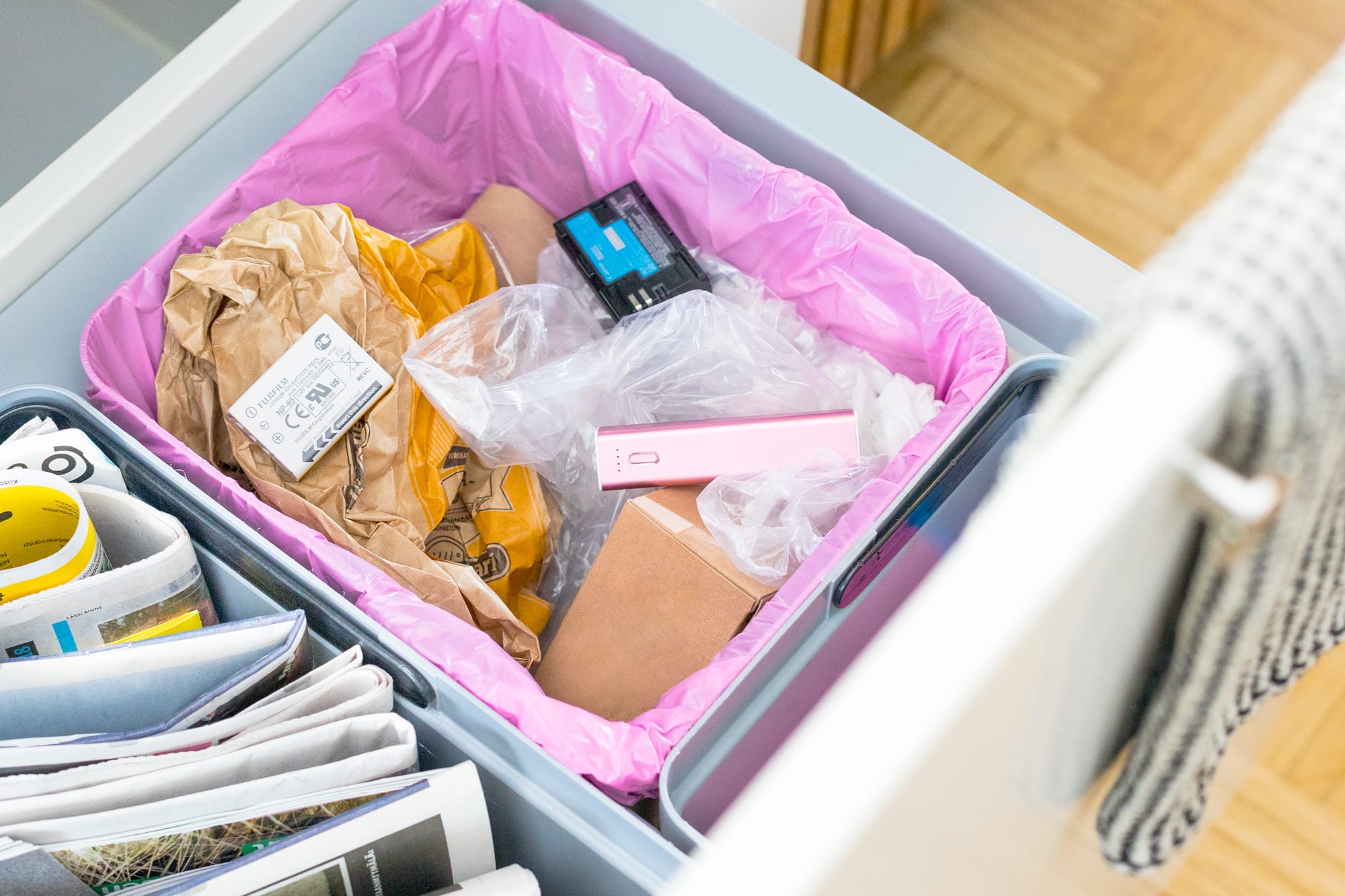
A zombie battery is a dead chargeable or non-chargeable lithium-ion battery that comes back to life and begins to bulge, heat up or emit a weird noise due to an impact, for example. They have caused fires in private homes and during waste management. A typical case involves a Li-ion battery that has been deposited into a container intended for general waste or used electrical equipment and electronics, and has become damaged due to an impact, causing a fire that is difficult to put out.

‘It takes large amounts of water to put out a Li-ion battery fire. These fires also release toxic gases, which can create strong flames. Moreover, burning battery fragments can also become airborne,’ says Senior Officer Karoliina Meurman from the Finnish Safety and Chemicals Agency (Tukes).

Expert organisations of the sector have put together useful instructions on what to do in case of a dangerous situation, located on the Zombie Battery campaign website, zombiakku.fi (in Finnish and Swedish).

About the Zombie Battery campaign

The Zombie Battery campaign is a joint effort of the sector’s expert organisations to promote the safe recycling of batteries. It is run by producer associations Recser (Paristokierrätys), SERTY, ERP Finland and Elker (represents producer associations SELT and ICT Producer Co-operative), as well as public waste management representative Suomen Kiertovoima KIVO, the Finnish Environmental Industries (YTP), the Finnish Scrap Dealers’ Federation, the Finnish Commerce Federation, the Finnish Grocery Trade Association (PTY) and Finance Finland.

The campaign is funded by STEK, a centre for promoting electrical engineering and energy efficiency. Additionally, the campaign partners include the Finnish Safety and Chemicals Agency and the Finnish National Rescue Association (SPEK).

www.zombiakku.fi

More information:

Liisa-Marie Stenbäck, Recser Oy (Paristokierrätys), tel. 010 249 1704, email: liisa-marie.stenback(a)recser.fi.

Study: Fires caused by batteries mixed in with general waste and case examples of fires (in Finnish).

Video: How to put out a lithium-ion battery fire, Tukes.

A New Waste Act entered into force in July – what changes for producers?

A New Waste Act entered into force in July – what changes for producers?

The long-prepared extensive reform of the Waste Act was approved and entered into force in Finland on 19 July 2021. The most significant change introduced by the reform concerns producer responsibility obligations, which now also extend to distance sellers, such as foreign online retailers that sell their products to Finland.

The reform also made it possible to take care of producer responsibility on another party’s behalf, i.e. an operator comparable to a producer that operates in another country can now take on the obligations of a producer operating in Finland by signing an agreement with Recser Oy.

You can find the instructions for distance sellers and operators comparable to a producer here: https://www.paristokierratys.fi/en/for-producers/producer-responsibility-in-legislation/.

Stricter requirements for product properties

The prohibitions and duties of care (section 9) also became stricter: Batteries placed on the Finnish market must be resource-efficient and durable in terms of their life span and working life, among other things. In addition to this, the producer must ensure that spare parts, user instructions, technical specifications and other equipment, devices and software that enable the high-quality repair and safe re-use of the product are made available. You can find the up-to-date Waste Act here (in Finnish): https://www.finlex.fi/fi/laki/ajantasa/2011/20110646.

Obligation to belong to a producer corporation

In principle, all producers must join or establish a producer corporation by the end of the current year in order to fulfil their producer responsibility. This also applies to the majority of producers of actual industrial accumulators (batteries produced solely for industrial or professional use), who have, until now, been allowed to register directly with a producer register administrated by the responsible authority and take care of their obligations independently. The authority supervising producer responsibility sent a letter about the matter to the producers accepted into the producer register in autumn.

New requirements also for producer corporations

The reform of the Waste Act also incorporated the minimum requirements laid down for producer corporations in the Circular Economy Package approved by the EU in 2018 into Finnish legislation. These minimum requirements include a specified obligation to provide information to consumers in order to reduce the harmful nature and amount of waste, as well as new reporting and disclosure obligations, an in-house control obligation and an obligation to cooperate more closely with other producer corporations to reduce the administrative burden of producers.

Online retailers selling batteries to customers in Finland must take care of their producer responsibility by the end of 2021

Online retailers selling batteries to customers in Finland must take care of their producer responsibility by the end of 2021

The long-prepared extensive reform of the Waste Act was approved and entered into force in Finland on 19 July 2021. The reform entails that in the future, the obligations of producer responsibility will also pertain to so-called distance sellers, i.e. operators such as foreign online retailers that sell their products to customers in Finland. At the same time, the minimum requirements concerning producer responsibility included in the Circular Economy Package approved by the EU in 2018 became part of national legislation.

Producer responsibility now pertains not only to Finnish businesses that release batteries onto the market professionally, but also to all foreign businesses that sell batteries directly to customers in Finland. Producer responsibility will continue to cover separate batteries as well as batteries belonging to electric and electronic devices and batteries contained in vehicles. Businesses registered in foreign countries can take care of their obligations in Finland either by directly joining a producer organisation or by appointing an authorised representative to take care of its obligations. Distance sellers must take care of producer responsibility in Finland by 31 December 2021.

Going forward, producer responsibility can be taken care of on behalf of another business. For example, internationally operating major businesses can choose to take care of producer responsibility concerning batteries on behalf of all Finnish businesses that import their products. The administrator of a foreign online sales platform can also take care of producer responsibility on behalf of Finnish online retailers operating on the platform, provided that it has been authorised in writing by the online retailer.

Instructions for distance sellers:

a) Foreign distance seller, such as an online retailer:

If you distance sell batteries* covered by Recser Oy’s producer responsibility directly to customers in Finland, e.g. through a foreign online retailer, you can transfer your producer responsibility obligations to Recser Oy by registering as a producer here. We will send an agreement filled out based on the information given upon registration for the producer’s contact person to approve and sign once the agreement and its terms have been updated to correspond with the definitions and requirements of the reformed Waste Act. You can request a price list by e-mail at: info@recser.fi.

Instead of registering, you can also choose to appoint a Finland-based authorised representative to make an agreement with Recser Oy regarding the fulfilment of the producer responsibility obligations. In that case, please ask your authorised representative to contact Recser: info@recser.fi.

b) Finnish distance seller, such as an online retailer:

If you distance sell batteries directly to customers in another country, you must take care of your producer responsibility obligations in that country, e.g. by joining a local producer organisation. European producer organisations for batteries are listed on websites such as: https://www.eucobat.eu/about-us/members.

Instructions for taking care of producer responsibility on behalf of another business:

a) Operator comparable to a producer, such as a major international brand name

If you are a foreign operator comparable to a producer that delivers products to the Finnish market by means other than distance selling, you can assume the producer responsibility obligations of a Finland-based producer by making an agreement with Recser Oy. You can start the agreement process by filling out the registration form where applicable here.

In the ‘Additional information’ field of the form, enter the name(s) of the Finland-based producer(s) whose obligations you want to assume responsibility for (name and business ID of the producer). We will send an agreement filled out based on the information given upon registration for the operator’s contact person to approve and sign once the agreement and its terms have been updated to correspond with the definitions and requirements of the reformed Waste Act.

You can request a price list by e-mail at: info@recser.fi. An operator choosing to take care of producer responsibility on behalf of another party must notify the producers and the producer organisation that would otherwise be responsible for the producer responsibility obligations of the fulfilment of the obligations, any changes therein or any cancellations thereof.

You can also choose to authorise a Finland-based representative to make the aforementioned agreement with Recser Oy. In that case, please ask your authorised representative to contact Recser: info@recser.fi.

b) Online sales platform administrator:

The administrator of an online sales platform can assume responsibility for the obligations of distance sellers operating on the platform on their authorisation as described in section a). In order to do so, the administrator of the online sales platform must be authorised in writing by the distance seller operating on the platform.

Read more:

Ministry of the Environment Press Release 15 July 2021 (in Finnish)

Up-to-date Waste Act 646/2011

Producer responsibility pages of the Centre for Economic Development, Transport and the Environment (in Finnish)

Previous articles regarding the Waste Act reform: https://www.paristokierratys.fi/en/blog/2021/04/12/national-waste-legislation-imposes-new-obligations-on-international-e-commerce/ and https://www.paristokierratys.fi/blog/2020/06/25/jatelakiuudistus-etakauppa-mukaan-jakamaan-tuottajavastuun-kustannuksia-vuonna-2021/ (in Finnish).

* Producer responsibility for all batteries whose size allows for easy manual carrying and/or batteries sold to consumers can be taken care of through Recser Oy. Read more about the classifications here: https://www.paristokierratys.fi/en/for-producers/producer-responsibility-in-legislation/.

National waste legislation imposes new obligations on international e-commerce – new statutes will enter into force in July 2021

National waste legislation imposes new obligations on international e-commerce – new statutes will enter into force in July 2021

The most significant changes for battery and accumulator producers are the inclusion of international online retail in the producer responsibility scheme and the overarching obligation to join a producer responsibility organisation.

The proposal for a legislative reform that was circulated for comment in spring 2020 has finally reached parliamentary proceedings. As the reformed Waste Act is intended to enter into force on 1 July 2021, the parliamentary proceedings are expected to process the proposal in short time. When the Finnish Parliament has passed the act, the act is submitted to the president for approval. The Government is currently preparing complementary decrees, which will be circulated for comment during the spring.

Sales platforms to manage producer responsibility

In terms of producer responsibility, no significant revisions were made to the proposal based on the consultation. Many of the statements supported the inclusion of distance selling, e.g. foreign online retailers, in the producer responsibility scheme. The Finnish Council of Regulatory Impact Analysis also considered it important that the producers’ position remains fair as online retail becomes stronger.

The Government deemed that it would be appropriate to discuss the role of international sales platforms at the EU level. Nevertheless, the national rules allow international sales platforms to manage the producer responsibility obligations of the retailers operating on their platform through a PRO or an authorised representative.

PROs promoting one-stop services

The new act obliges producer responsibility organisations, i.e. PROs, to provide more information and consulting services to the public. The act also sets the organisations new reporting and disclosure obligations, in-house control obligations and an obligation to consider the life cycle environmental impacts of batteries in their decisions on recycling fees. In addition, PROs of various sectors must promote producers’ access to one-stop services (‘one-stop shop principle’). PROs have been promoting the one-stop shop principle through mutual agreements for quite some time. Therefore based on the comments, the proposal was modified in a more lenient direction. Due to the new requirements, PROs shall apply for the approval of their operations by 30 June 2022.

If you are a battery and accumulator producer (e.g. importer of goods containing batteries), take the following changes into account:

1. Duties of care and prohibitions concerning products become stricter (section 9)
In order to reduce the amount and harmfulness of waste and promote reuse, the party releasing batteries onto the market shall ensure, insofar as possible, that the product is resource-efficient, durable in terms of its life span and working life and updatable, and that any product containing critical raw materials is re-usable and recyclable as waste. In addition to this, the producer must ensure that spare parts, user instructions, technical specifications and other equipment, devices and software that enable the quality repair and safe re-use of the product are made available.

2. Mandatory PRO membership (section 62)
All producers must either join or establish a PRO in order to fulfil their obligations. This also applies to the majority of industrial accumulator producers (batteries produced for industrial or professional use), who have, until now, been allowed to register directly with a producer register administrated by the responsible authority and take care of their obligations independently. The proposal obliges producers to either join a PRO or cooperate with other producers and establish a PRO by the end of 2021.

3. Inclusion of distance selling in all producer responsibility sectors (sections 46, 48, 62 and 66 a)

a) Finnish distance seller:
Producer responsibility also applies to products sold directly to consumers at a distance, e.g. via an online store. An operator established in Finland who distance sells products that fall under the product responsibility scheme to users in other countries shall be responsible for the implementation of its producer responsibility obligations in the country in question e.g. by joining a PRO or through an authorised representative.

b) Foreign distance seller
Producer responsibility also applies to products sold directly to consumers at a distance. In order to fulfil its obligations, a producer shall join a PRO approved in Finland or cooperate with other producers to establish their own PRO.

4. Other operators implementing producer responsibility on producers’ behalf (section 66)

a) Operator comparable to a producer
An operator that is comparable to a producer operating in another country, who supplies the Finnish market with goods through other means than distance selling, may appoint an authorised representative based in Finland to take care of its obligations instead of a producer based in Finland or, for the same purpose, conclude a contract with an approved PRO. Such operators include significant international brands who supply producers (resellers) based in Finland with their products.

b) Sales platform administrator
The same right is granted to a sales platform administrator who has been authorised to take care of the producer responsibility obligations of the distance sellers operating on the platform.

We will keep our website up to date with new information for foreign distance sellers and operators comparable to producers during the spring. If you want to receive our newsletter and learn the latest information without delay, please send us your name, the name of the company you represent and your email address: info@recser.fi.

Read more:

Government Bill HE 40/2021 vp (in Finnish)

Ministry of the Environment Press Release 25 March 2021 (in Finnish)

Recser Oy’s news article on the Waste Act reform 26 June 2020