Recycling process
What happens to the batteries that are returned?
All batteries returned to shops and other collection points are sent to Akkuser Oy in Nivala, a facility specialising in their processing. Up to 90 per cent of the materials in batteries are recycled into secondary raw materials.
The batteries processing process at Akkuser Oy
Batteries are transported from collection points to Nivala
Almost all batteries collected in Finland are sent to Akkuser Oy in Nivala for sorting. Only large industrial batteries are sent directly to larger processing plants, as their recycling is handled on a case-by-case basis.
1. Receipt of goods at Akkuser
Batteries for recycling arrive at the facility, where they are unloaded from the lorry.
2. Weighing and recording
All materials received are weighed and the weights recorded. Some of the material arrives already weighed.
3. Temporary storage
The materials are transferred to temporary storage to await further processing.
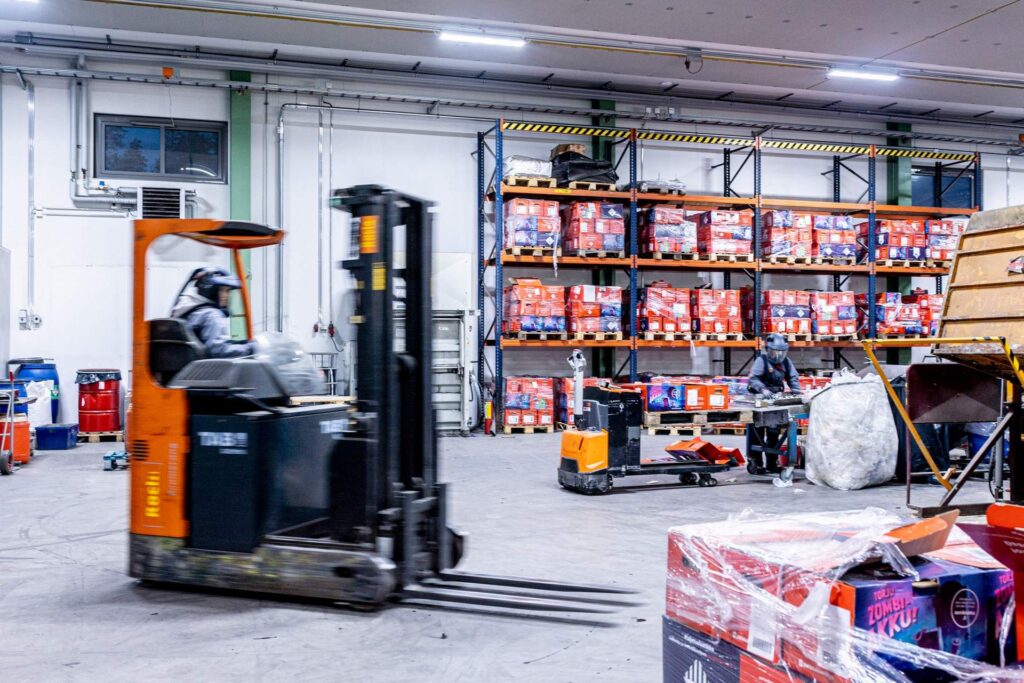
4. Removal of excess material
On the sorting lines, other recyclable materials – such as plastic, electronics and other waste – are separated from the batteries and recycled appropriately. Electronic waste is sent for SER recycling to recover materials, whilst plastics, amongst other things, are sorted into clear, coloured and hard plastics.
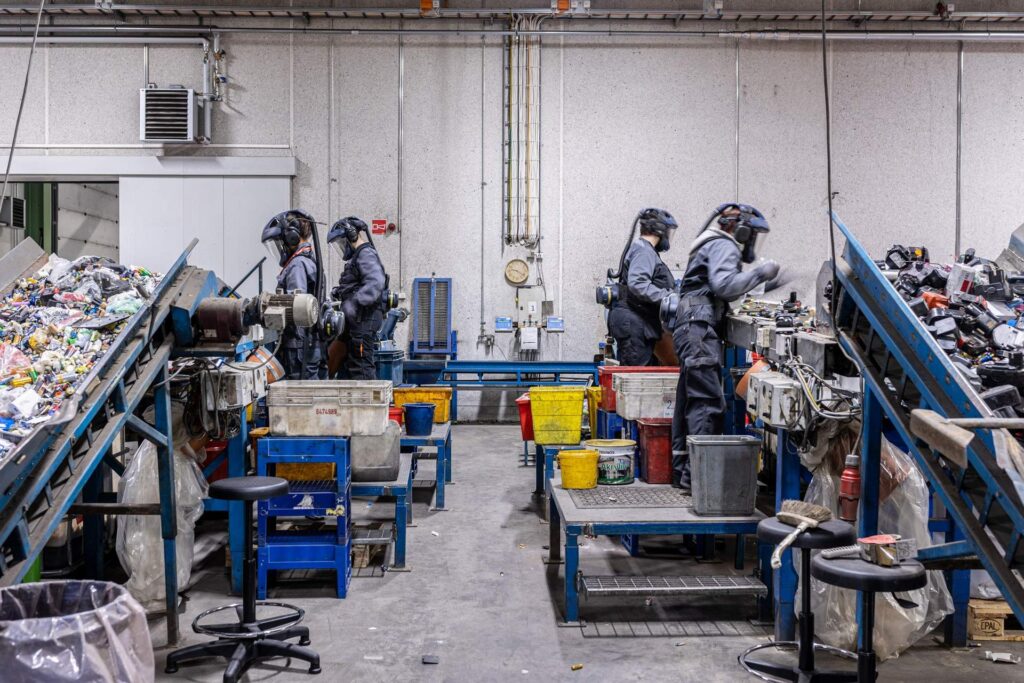
5. Sorting of batteries
Batteries are sorted manually according to their chemical composition. They pass along a conveyor belt, and staff pick out all batteries other than alkaline and button cells from the material. After this, button cells are separated from alkaline batteries by screening, and the remaining alkaline batteries are weighed automatically. Alkaline batteries account for approximately 84 per cent of the material received. The screened button cells are transported for high-temperature treatment of hazardous waste. The process is designed for hazardous waste, and the flue gases generated during processing are carefully treated.
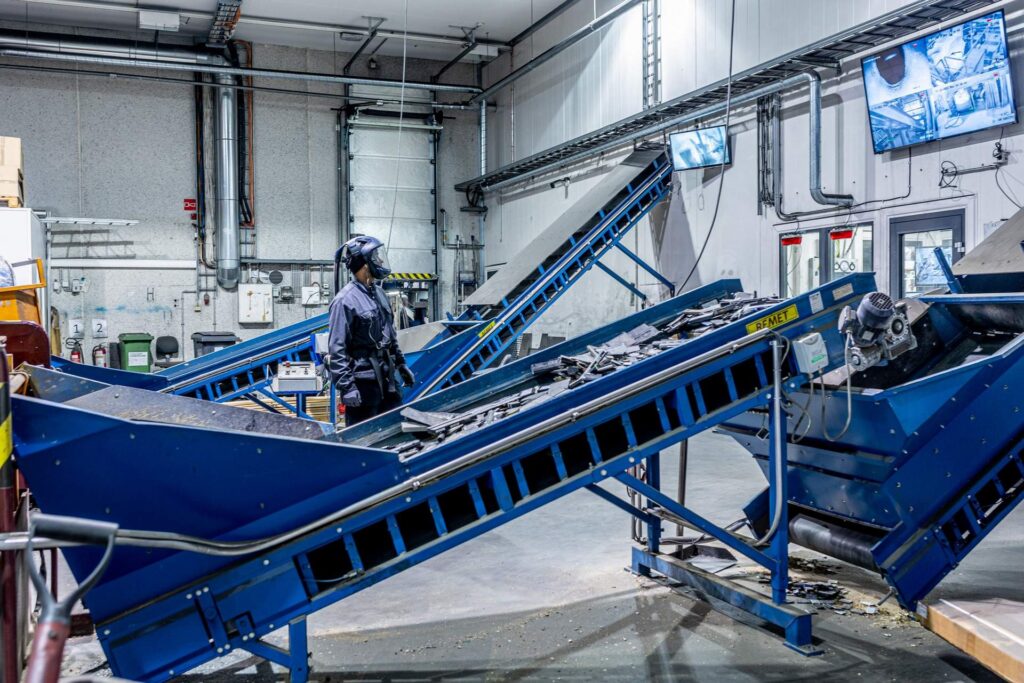
6. Mechanical treatment processes
- Single-stage processing: Involves single-stage crushing and magnetic separation, used for alkaline batteries and nickel-metal hydride batteries.
- Multi-stage processing: Involves multi-stage crushing, screening and magnetic separation, used for lithium-ion batteries.
7. End products
The materials obtained as a result of the recycling process are sent on for further recycling and recovery.
What specific products are manufactured from recycled raw materials?
Alkaline batteries, recycling rate 52 per cent
The iron recovered from the steel casings of alkaline batteries is delivered to steelworks, where it is smelted and supplied in the required form to organisations that use steel as a raw material.
Steel is used, for example, in cars, industry and building structures. (For example, one kilogramme of steel can be used to make around 70 forks (weighing 14 g each).)
Zinc is suitable for use in, for example, the construction, automotive and pharmaceutical industries.
The black mass containing zinc and manganese that remains after iron has been recovered from alkaline batteries can alternatively be processed, using a Finnish circular economy innovation, into fertiliser suitable for organic farming (link: www.tracegrow.com). In this case, the recycling rate is higher, at up to 78 per cent.
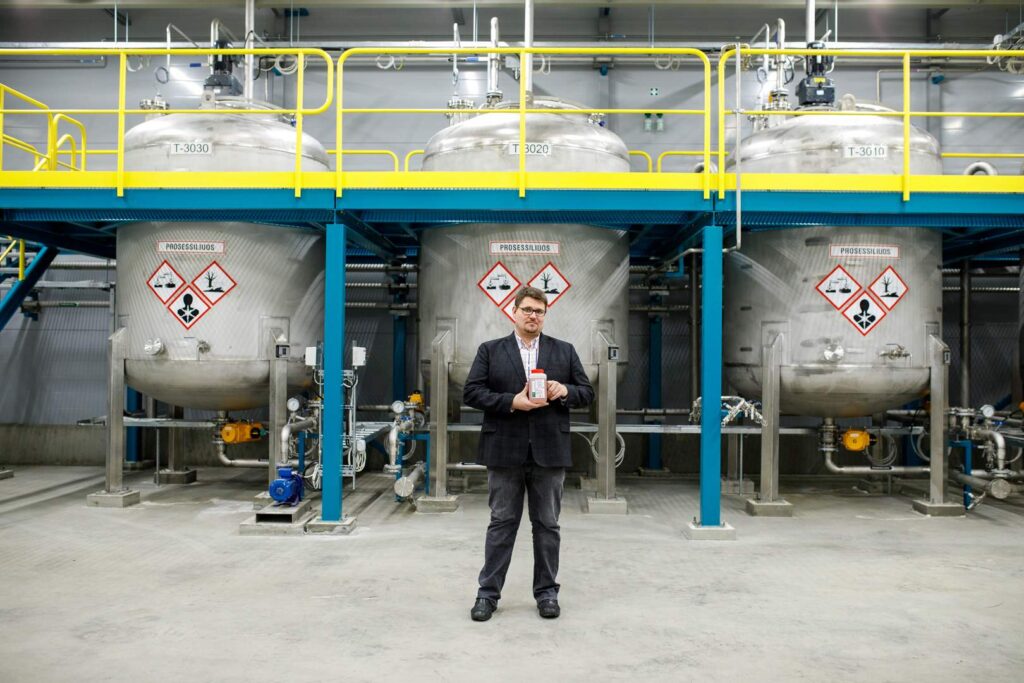
Lithium batteries (Li-ion, Li-Pol), recycling rate 69 per cent
Lithium batteries yield fractions containing 20–30 per cent cobalt and 15–20 per cent copper, which are supplied to industry as secondary raw materials.
Recycled cobalt can be used as a raw material for new batteries. The cobalt-rich black mass is delivered to Jervois Finland Oy in Kokkola, home to one of the world’s largest cobalt refineries. Recycling cobalt not only saves energy but also conserves virgin cobalt, the mining of which is associated with environmental and human rights issues. Recovering the cobalt contained in lithium-ion batteries that are now being taken out of service is also critical in terms of ensuring sufficient supplies of battery raw materials needed for the green transition. Cobalt is listed at EU level as one of the critical raw materials that are of great economic importance and whose availability is subject to risks.
Recycled copper can be widely utilised, for example, in the electronics industry, construction and solar panels. The use of recycled copper saves energy and natural resources and effectively reduces carbon dioxide emissions. According to estimates, as much as half of the copper used in Europe is already recycled.
Iron recovered from steel slag is delivered to steelworks, where it is smelted and supplied in the required form to organisations that use steel as a raw material. Steel is used, for example, in cars, industry and building structures. The use of recycled steel saves energy and natural resources and effectively reduces carbon dioxide emissions. According to a study commissioned by Recser, the climate impact of recycled iron is 85 per cent lower than that of virgin iron.
Nickel-cadmium (NiCd) batteries, recycling rate 66 per cent
Ferronickel, which accounts for 50 per cent of the materials contained in batteries, is recycled for use in steel production. This process saves energy and reduces the need for virgin material.
Nickel is used, for example, in the manufacture of stainless steel. The use of recycled nickel saves energy (estimated at up to 75 per cent compared to the extraction of virgin material) and natural resources, and effectively reduces carbon dioxide emissions.
Cadmium is a heavy metal that is harmful to the environment and human health, which is why its use in batteries is now restricted by legislation. However, it is found in old power tool batteries, and cadmium is safely recovered during the recycling process.
Nickel-metal hydride (NiMH) batteries, recycling rate 52 %
These batteries are used to recover nickel and cobalt, which are used, amongst other things, in the manufacture of stainless steel and smartphone batteries. The iron contained in the batteries is also recovered.
Nickel is used, for example, in the manufacture of stainless steel. The use of recycled nickel saves energy (estimated at up to 75 per cent compared with the extraction of virgin material) and natural resources, and effectively reduces carbon dioxide emissions.
Crushed material containing nickel and cobalt, produced from nickel metal hydride batteries, is delivered to a nickel and cobalt refiner.
Lead-acid batteries (Pb), recycling rate 71 per cent
Lead-acid batteries contain 65–90 per cent lead. Recycled lead is used, for example, in the manufacture of new lead-acid batteries. Battery recycling conserves natural resources, as recycled lead can replace virgin raw materials, thereby reducing the environmental impact of mining. The use of recycled lead also reduces greenhouse gas emissions from lead production. Lead can be recycled almost indefinitely, as every effort has been made to prevent any deterioration in its quality during the recycling process. Lead is, in fact, one of the most widely recycled metals. The responsible collection and recycling of lead-acid batteries is very important, as lead is a heavy metal and must be prevented from ending up in the natural environment.
Recycling is definitely a climate action
According to a study commissioned by Recser Oy, metals recovered from recycled batteries reduce greenhouse gas emissions by up to 98 per cent compared with metals mined from virgin sources. Recycling is a genuine climate action, and it can make a significant contribution to combating climate change.