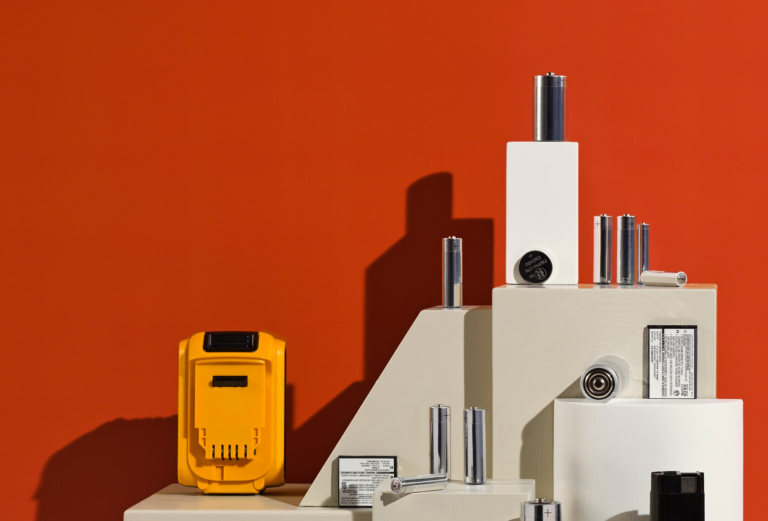
New collection point
How do I start accepting batteries?
If you are interested in accepting batteries at your premises, or if you otherwise accumulate batteries, please read the points below and register as a collection point.
Eligibility as a collection point
Premises that sell or otherwise distribute batteries
Businesses that distribute batteries have a statutory obligation to accept them.
This means that businesses which distribute – that is, sell, give away free of charge or exchange – batteries or rechargeable batteries as part of servicing must also accept them free of charge without requiring the purchase of a new product. Batteries contained within products are also covered by this obligation.
The same take-back obligation also applies to operators running online shops. If an online shop sells batteries or rechargeable batteries but does not have a physical outlet where they can be returned, the online shop must clearly state on its website the recycling instructions for batteries, as well as where used batteries can be returned.
All distributor premises subject to the collection obligation have the option to register as one of our collection points. Registration takes place via our ordering system (detailed instructions on how to register can be found below).
Other voluntary collection points
As well as shops, collection points may also include, for example, offices, government agencies, educational institutions, healthcare facilities, or industrial production or storage premises. Housing associations or property management companies may act as collection points only for specific reasons. Collection containers must not be placed in residential properties.
When you register, we assess whether your premises are suitable as a collection point for batteries. The most important factor is that collection can be carried out safely and appropriately at the premises, in accordance with our terms of use.
The minimum collection quantity of 30 kg per year for batteries, as set out in our terms and conditions, has been established because batteries may start to leak over time, and for safety reasons it is not advisable to store them for very long periods.
If you are able to carry out the collection of batteries in accordance with our Terms of Use, you are welcome to register as one of our collection points.
We already have a Recser collection container, but we don’t know how to arrange for it to be collected?
To arrange a collection, you’ll need your collection point’s ID number.
Check the ID number via the chatbot. Provide the name and address of your location, and the chatbot will check whether the number is in our system.
If the number cannot be found, please register as a collection point by following the instructions below. We will process your request and email you the existing or new ID number.
Once you have received your ID number, you can arrange for the collection bin to be collected via the booking system.
Choosing a collection container
When you register as a collection point, you can choose the collection container that best suits your needs. When selecting a collection container, you should assess the quantity and type of batteries that will be collected. A battery box is well suited to small quantities of batteries and small rechargeable batteries, but if the material collected consists predominantly of lithium batteries, you should choose a UN-approved collection container.
The battery categories you accept will influence your choice of collection container
Your collection obligation also influences the choice of collection container. The collection obligation is determined by battery category. You are obliged to accept batteries from those categories whose products you distribute. Distribution includes sales, free products and the replacement of batteries carried out as part of servicing.
If you are unsure which collection container to choose, you can register based on your best estimate and provide us with details in the ‘Additional information’ section regarding the types of batteries you accept and the quantities involved; we will then make the final decision on the most suitable collection container.
Examples of different collection volumes
Please note that the battery classification is the primary factor in determining the choice of collection container. The battery classification determines how the collection must be organised to ensure fire safety and how large a collection container is required to accommodate batteries of that classification. After this, the quantities to be returned are examined and the choice is adjusted if necessary.
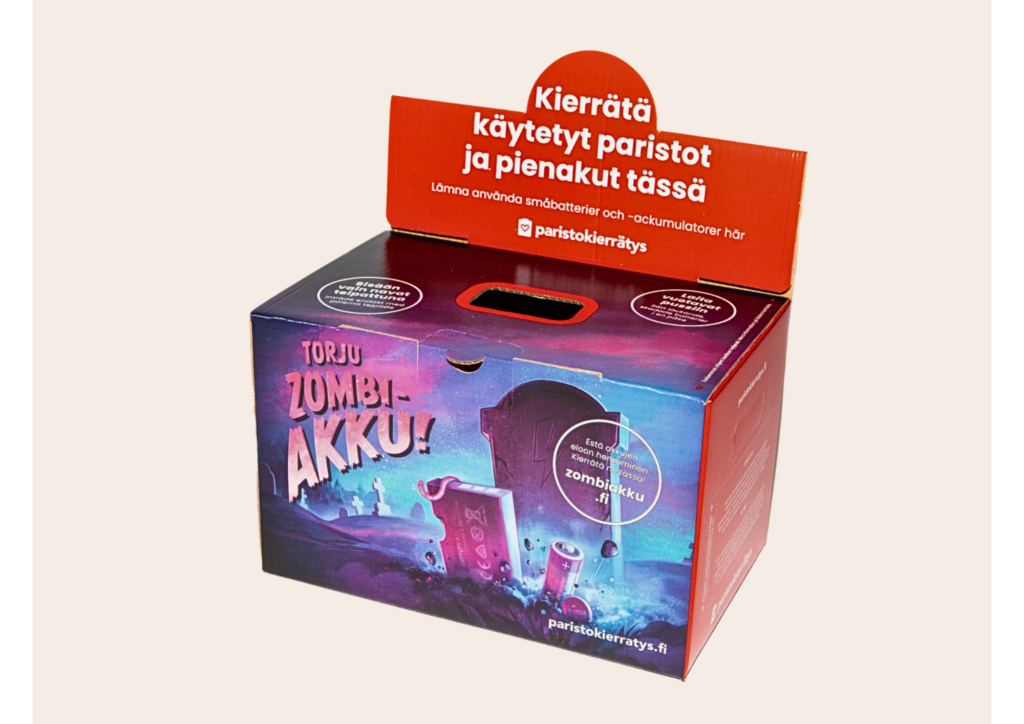
We collect small quantities of mixed batteries, less than 150 kg per year
If you have a lot of small batteries and the odd small electronic battery to return, our battery box is the perfect solution for you! You can order a battery box for your use and request a replacement whenever it starts to fill up.
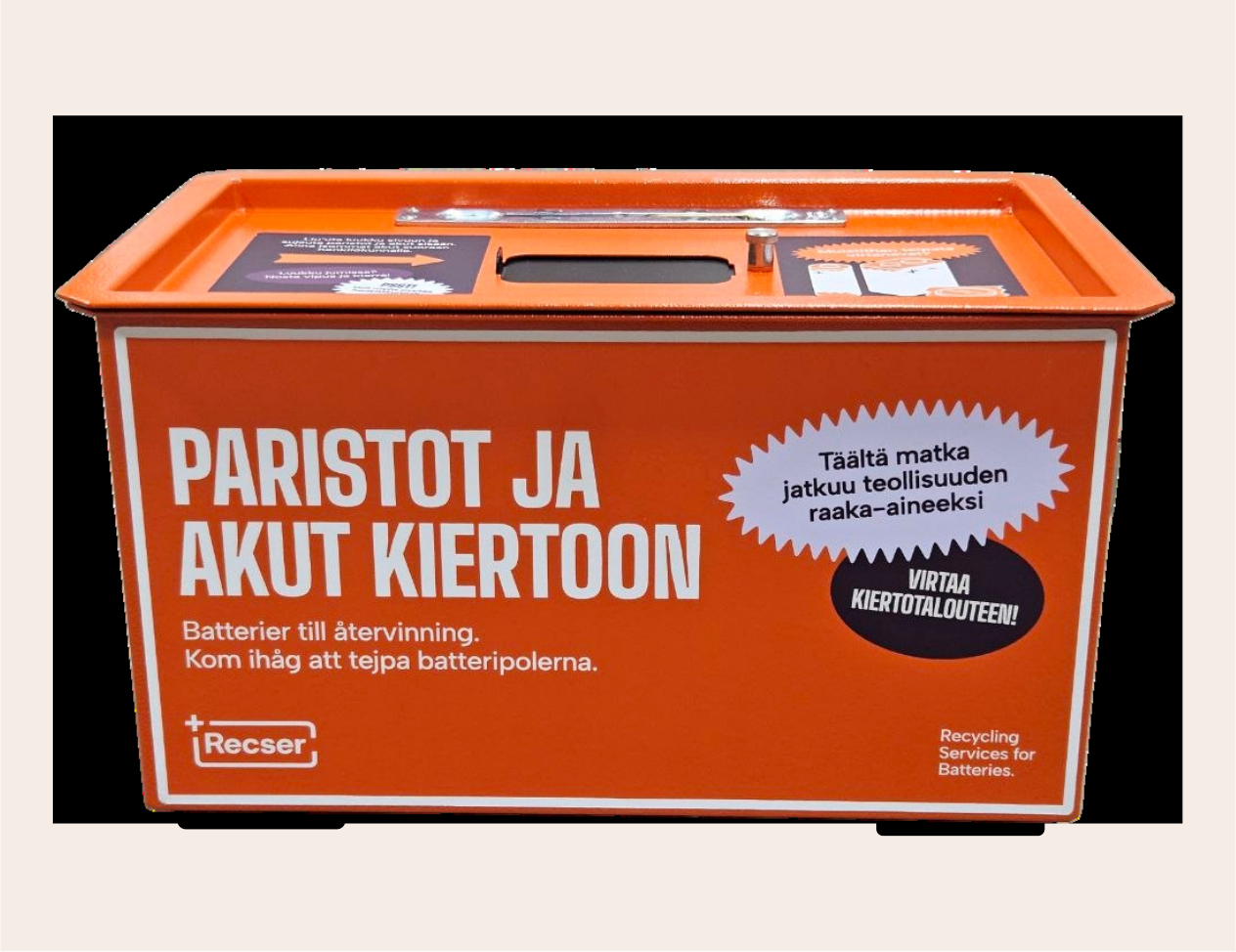
We collect small quantities, but the majority of these are rechargeable batteries
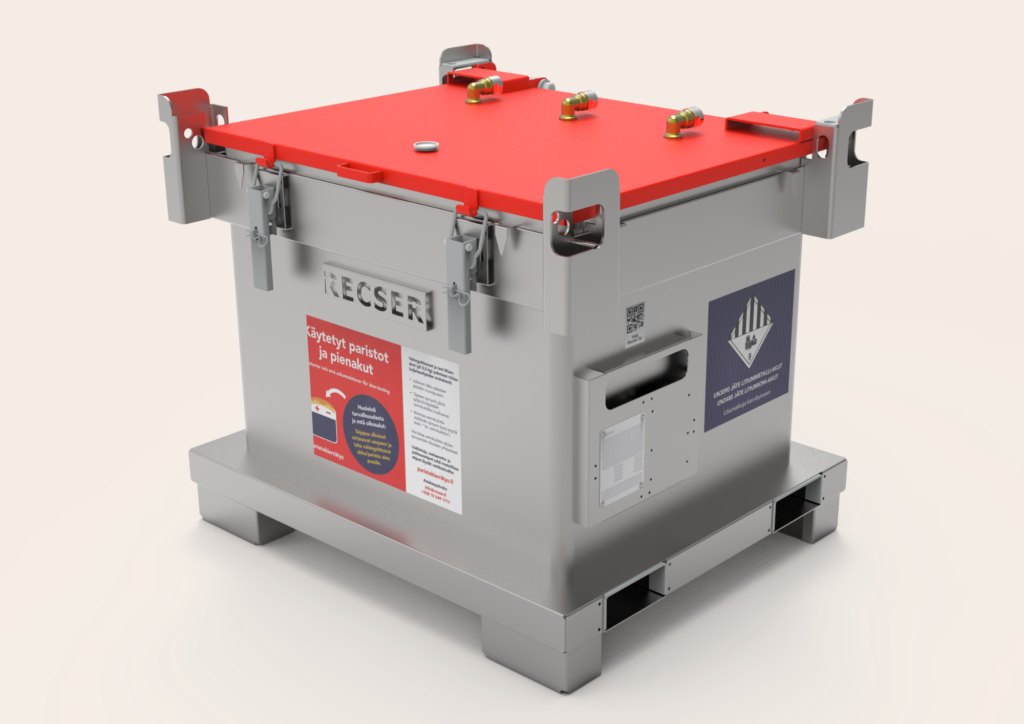
You must choose a UN-approved, fire-safe collection container. For example, a single metal Drum will certainly do the job! We are also currently running a pilot trial of a smaller collection container, the MiniBax, which may be the right solution for you once it is rolled out more widely.
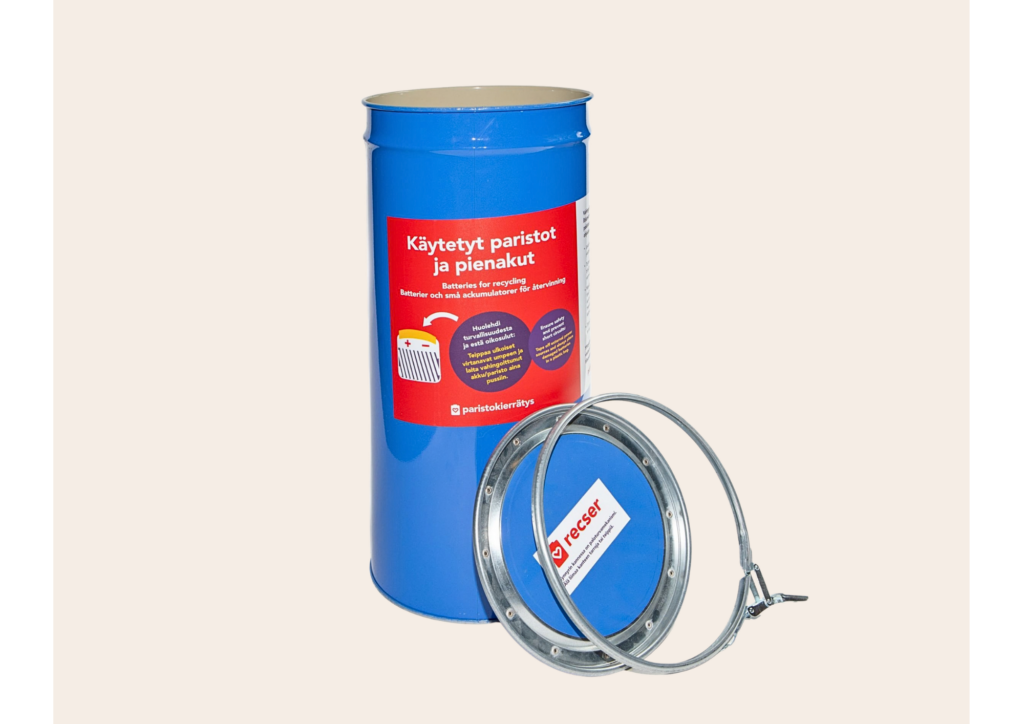
We collect over 150 kg of mixed battery and accumulator material
We recommend using a battery drum. A battery drum is suitable for collection points that accumulate large quantities of battery and accumulator material – at least 1–2 drums’ worth per year, but no more than one pallet per month. For larger quantities, we recommend using the Baxi600 container, which is an even larger and more fire-safe option.
Our operations generate a great deal of recyclable battery material, or our collection volumes are otherwise very large
Our largest collection container, the Baxi600, is an excellent choice for large-scale collection volumes. It is our safest collection container in terms of fire safety!
How do I register as a collection point?
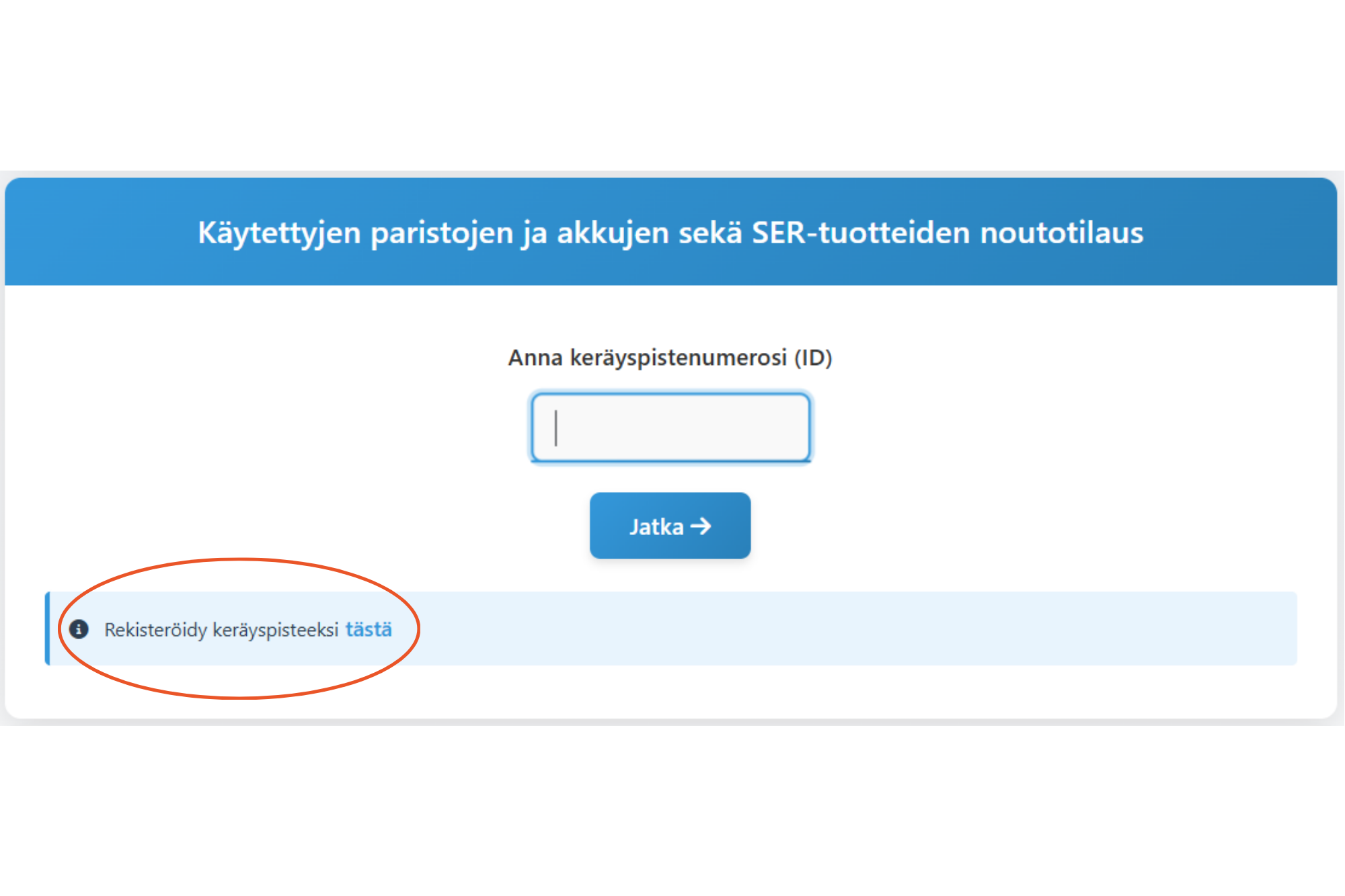
Go to the ordering system and open the registration form
Registration takes place via our ordering system under ‘Register as a collection point’.
The ordering system has been developed in collaboration with SER Collection, and the same form also allows you to register as a SER collection point.
Basic form details
First, fill in the company details on the form as they appear in the company register.
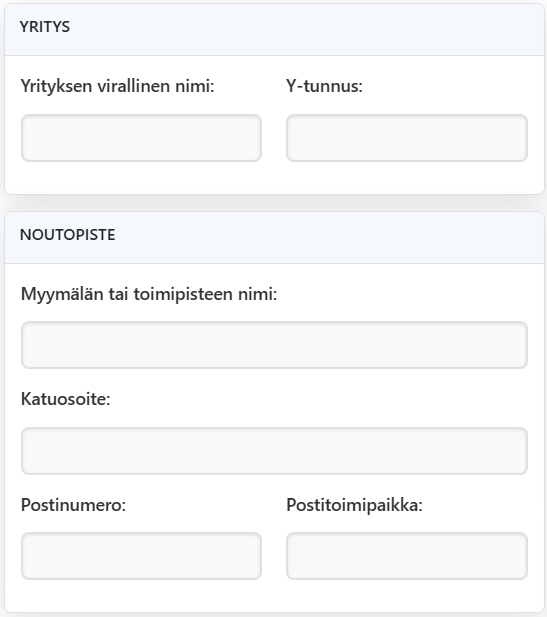
In the ‘Collection point’ field, enter the name of the site so that the driver can identify it. The branch address is the location from which batteries will be collected in future.
You can complete the section concerning the SER collection if you are also starting to accept SER items at your branch.
Information on the collection of batteries on the form
Collection obligation
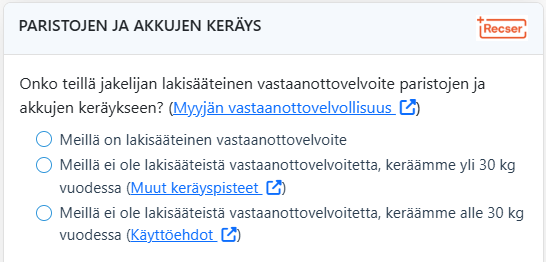
The first question concerns your collection obligation. In other words, are you legally obliged to accept batteries at your premises? If you’re not sure, find out about distributors’ collection obligations here. (link)
Psst! If your outlet sells batteries, you’re likely to have a take-back obligation.
Battery classifications
The next question concerns the types of batteries you accept. In other words, the products you sell determine which batteries you are required to accept. Voluntary collection points may accept portable-sized batteries.

Choosing a collection container
The final question concerns your choice of collection equipment. In the ‘Additional information’ section, you can tell us about your operations. We will assess the suitability of the collection equipment for your operations and, if necessary, adjust your selection.
Please read and accept the Terms of Use before submitting the form.
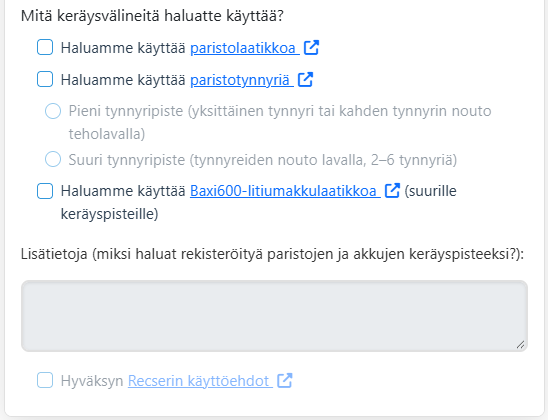
Email address and branch ID number to be provided on the form
The form asks for an email address. We will send your branch’s ID number to this email address, which you can use to order the collection equipment you need and arrange for the collection of batteries.
We process registrations manually and may request further information by email if necessary. It may take a few working days to process the form.

I’ve registered – what next?
ID number
After registering, you will receive your ID number by email. The ID number is specific to each branch and can be used to order a collection container and arrange for it to be collected from the registered location. If you have multiple branches, each one must be registered separately, and a unique ID number will be generated for each one.
If you forget your ID number, you can retrieve it using the chatbot. Our chatbot is AI-based and can retrieve your ID number using the name and address of your branch. If the number cannot be found, please contact us by email at kuljetukset@recser.fi.
Placing an order
Orders for collection equipment and collection requests are placed via our ordering system. You log in using your ID number.
Collection point updates
The email address provided when placing an order is automatically added to our mailing list. We therefore recommend using the company’s general email address when placing orders.
You can unsubscribe from the mailing list if you wish, but we recommend that you remain on the list and read our updates. Our updates contain important, up-to-date information regarding the collection of batteries.
You can subscribe to our collection point updates at the bottom of the page.
Setting up a collection point
Placing the collection container
The collection container must be kept in a supervised, dry location at room temperature, close to a fire and/or smoke alarm system.
Different collection containers are also subject to their own slightly differing instructions, which you should familiarise yourself with.
Customer information materials
Print or order guidance materials for the collection scheme. Display the materials at the point of sale for batteries, as well as at the collection point.
Encourage customers to tape over the terminals of batteries
Place a roll of tape near the collection bin for taping over the terminals of batteries.
Maintenance of the collection point
Keep the collection point tidy and safe.
This means that collections must be arranged frequently enough to prevent batteries from piling up around the collection point. If maintaining the collection point starts to feel too labour-intensive, switch to a larger collection container, which will extend the time between collections. You can request a change to the collection container via the ordering system under ‘change your details’.
Check regularly that there are no foreign objects or rubbish in the battery box.
At the same time, ensure that the terminals of rechargeable batteries, in particular, are taped over. The tape prevents any residual charge in the battery or accumulator from discharging in the collection container (this can happen if a terminal comes into direct contact with metal or the terminal of another battery).
Keep an eye on our announcements for updated collection point materials.
Please keep our latest guidance materials to hand, as we update them as and when necessary to ensure they comply with legal requirements and are as practical as possible for the needs of collection points.
How should staff advise customers?
Shops selling batteries have a duty to inform customers of the option to return them free of charge.
Customers may also ask further questions, such as where the batteries go, whether there is a charge for returning them, or whether they might receive a refund for a rechargeable battery.
We recommend that staff familiarise themselves with our website and our frequently asked questions, so that answering these questions during a service interaction is straightforward.
Our chatbot can also help when you’re in a tight spot, and your staff can quickly find the answer to a customer’s question directly whilst serving them.
Staff training
Provide your staff with instructions on how to place an order.
Display the staff guidance poster in the staff room and near the collection point so that the latest instructions are easily accessible.
It is important to learn how to handle lithium-ion batteries safely, and video training material on this is available on the akkuopas.fi website. We recommend that all staff members familiarise themselves with the site.
In the event of a battery fire, the most important thing is to call 112 and evacuate the premises immediately. The fumes produced by a battery fire are extremely toxic. Emphasise in your instructions that extinguishing a battery fire is the responsibility of the fire service, not the staff.