Battery producer organizations Akkukierrätys Pb and Recser Oy, together with VTT’s FINNPASS project, organized a workshop on the battery passport for their members and regulatory authorities on October 22, 2024. The goal of the workshop was to bring together stakeholders from different phases of the battery value chain to deepen understanding of the significance and opportunities of the battery passport, which will become mandatory under the new Battery Regulation, and to discuss best practices for data management.
The workshop examined the battery passport from the perspectives of various battery types, including industrial batteries, traction batteries, and e-bike batteries. This approach provided practical insights into preparing for the implementation of the battery passport and its use for these specific battery types. A total of 23 representatives from the battery value chain were invited, including importers, manufacturers, reuse preparers, distributors, recycling operators, battery passport data users, and regulatory authorities. This was the first workshop of its kind jointly organized by battery producer organizations. The discussions were lively, and the need for sharing knowledge, experiences, and ideas was evident.
During the workshop, participants discussed what information the battery passport will include, who is responsible for providing this data, and how different stakeholders can utilize the information contained in the battery passport. We also explored what potentially useful data might be missing from the battery passport and the various roles stakeholders will play in contributing to and using its data. The results of the workshop will be presented in our Battery Passport Webinar on December 4.
The Battery Passport
The battery passport is a digital information tool that contains key details about batteries, such as manufacturing processes, material composition, lifecycle, and recycling-related information. Under the new EU Battery Regulation, the battery passport will be required starting in February 2027 for batteries in light electric vehicles, electric vehicle traction batteries, and industrial batteries with a capacity of over 2 kWh.
Distributors of batteries, are you aware of your new responsibilities?
The EU’s new Battery Regulation imposes additional obligations across the entire battery value chain. Battery producer organizations Recser Oy and Akkukierrätys Pb Oy, in collaboration with the Finnish Commerce Federation, organized a webinar specifically addressing the responsibilities of distributors—retailers and resellers of batteries. We’ve compiled the key insights from the webinar into this article as a concise information package.
The “Distributor Responsibilities” webinar was held on October 23, 2024. It was the third part of a webinar series organized by producer organisations focusing on the Battery Regulation, attracting over 250 representatives from various organizations. Interest was high, and the discussion in the webinar’s chat was very active. These webinars aim to support businesses in complying with the new requirements of the Battery Regulation. Links to recordings and summary articles of previous webinars can be found at the end of this article.
“In preparing for this webinar, I looked at my desk and noticed that within a four-meter radius, I had nine items containing batteries,” illustrated Petri Käyhkö, chairman of the Finnish Commerce Federation’s Safety Committee, highlighting the prevalence of batteries.
The number of batteries is expected to double within the next two to three years. This makes the Battery Regulation and battery safety increasingly important.
The EU’s new Battery Regulation applies to the entire life cycle of batteries. Distributors are responsible for conducting checks and verifications before products are placed on the market. The obligation to accept used batteries is expanding to include all batteries sold by the distributors. Additionally, the regulation requires distributors to provide information on the prevention of battery waste and waste management.
Products must have proper labeling
The Battery Regulation defines separate responsibilities for distributors, manufacturers, and importers. A distributor refers to a company that sells products manufactured in the EU or previously imported into the EU market. Distributors include retailers, wholesalers, and second-hand goods dealers who operate as businesses.
Seppo Niemi, a senior expert from the Finnish Safety and Chemicals Agency (Tukes), explained the definition and obligations of distributors from a market surveillance perspective in the webinar.
“From a market surveillance perspective, the obligation of distributors of batteries is to ensure that the product has the required labeling, model and batch identifiers, and contact information of the manufacturer and importer, along with relevant documentation. User instructions must be available in Finnish and Swedish, although documents submitted to Tukes can be in English,” Niemi stated.
Distributors must also ensure that transportation or storage does not jeopardize product compliance, and they must take action if they encounter non-compliant products. Distributors must retain information on companies within the distribution chain for ten years.
Inventory acquired before the Battery Regulation takes effect can be sold without changes.
Defining a distributor can be challenging.
Products sold under a private label are considered to be manufactured by the distributor if the original manufacturer no longer claims the product, for example, due to a change in the product’s features. In such cases, the distributor assumes the responsibilities of a manufacturer.
Expanded distributor obligations in communication and battery waste collection
Starting in August 2025, the Battery Regulation will introduce new obligations for distributors at the end of the battery lifecycle.
“The Battery Regulation includes highly ambitious collection and recycling goals: the aim is to recover and reuse materials,” said Kati Suomalainen, Senior Specialist at the Ministry of the Environment, in the webinar.
Distributors are responsible for accepting waste batteries in their product categories from end-users without charge or obligation to purchase a new battery. This collection obligation also applies to online sellers.
“Guidelines for organizing the collection are being prepared. For example, there will be instructions on the article section that mandates the acceptance of portable batteries at retail outlets or in their immediate vicinity,” Suomalainen said.
Distributors must hand over waste batteries to producers or producer organisations, or to waste management operators designated by them, for processing.
Collection safety is a shared responsibility
In his speech, Petri Käyhkö from the Finnish Commerce Federation’s Safety Committee emphasized the fire risk associated with accepting returned batteries. Defective or mishandled items returned by customers can ignite at retail locations. Fires involving lithium-ion batteries are challenging to manage due to smoke, even if the battery is small.
However, the safe collection of used batteries and products containing them is entirely feasible.
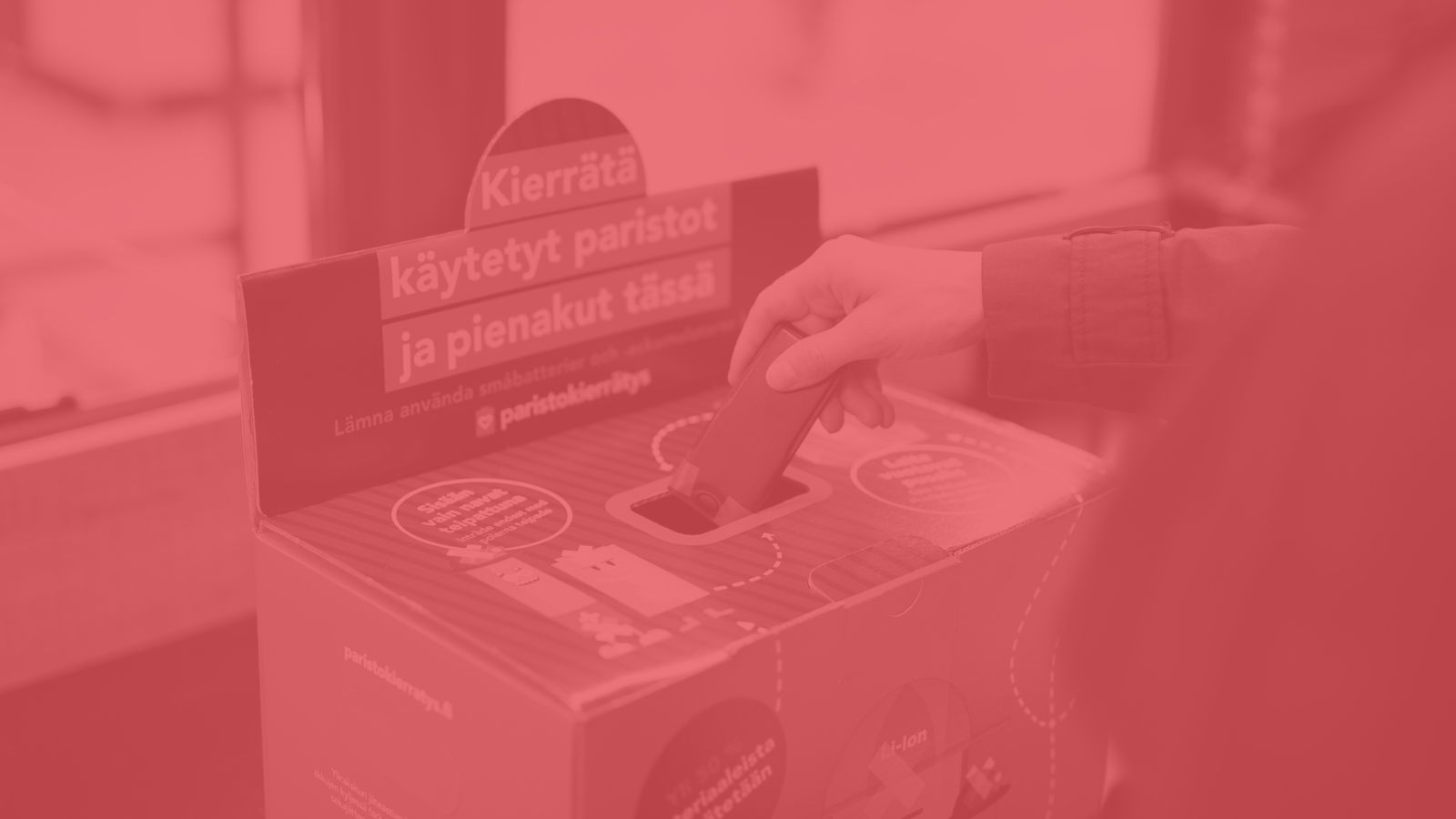
“The most important considerations are the placement of recycling bins and assigning responsibility for their monitoring. It is helpful to offer taping supplies for customers returning batteries. Attention should also be given to the location of separate containers for the received batteries. Safety can be significantly enhanced through fire detectors and technical and structural solutions related to the space,” Käyhkö advised.
He stressed that training employees on the risks associated with batteries is vital in the retail and logistics sectors. He also noted that research indicates consumers still need clear and easily understandable information on this topic.
Checking producer responsibility is easy!
The Battery Regulation requires distributors to verify that they are dealing with battery producers who are registered in the producer register and fulfill their producer responsibilities.
Producer responsibility means that certain product manufacturers, importers, remote sellers, and packagers are legally obliged to arrange for the waste management of their products once they are no longer in use. The easiest way to fulfill producer responsibility is to join a producer organisation.
“In Finland, the producer register is available on the Waste Management Compass. It is best to search using the company’s business ID,” advised Senior Inspector Jaana Mäenpää from the Pirkanmaa Centre for Economic Development, Transport, and the Environment (ELY Centre) during the webinar. The Waste Management Compass can be found at jätehuoltokompassi.fi.
The ELY Centre for Pirkanmaa supervises producer responsibility nationwide across mainland Finland. Supervision ensures a sufficiently wide and dense collection network. On the ELY Centre’s website, there is a report form to notify about entities neglecting their producer responsibilities. If a company under producer responsibility has not fulfilled its obligations, the Pirkanmaa ELY Centre may impose a penalty.
National implementation of the Battery Regulation is well underway
Kati Suomalainen from the Ministry of the Environment also reviewed the progress of the national implementation of the Battery Regulation in Finland during the webinar. National implementation involves amending laws that conflict with the Battery Regulation and repealing sections covered by it.
“We are already well underway with implementing the Battery Regulation,” Suomalainen said.
The first phase is complete, with a new chapter added to the Waste Act addressing conformity assessment bodies for batteries, now in effect. No organizations have yet been approved or notified to the commission. Information on applying for notified body status is available on the Ministry of the Environment’s website.
The second and third phases of national implementation are currently in progress.
“The government proposal on market surveillance related to the Battery Regulation was submitted to Parliament in September. The preparation of the government proposal on battery and battery waste management and producer responsibility has been initiated. Stakeholder meetings will be held throughout the autumn, and the proposal will be sent for consultation at the beginning of the year,” Suomalainen said.
The Commission, for its part, has initiated the preparation of regulations and guidelines related to the Battery Regulation.
“All stakeholders involved throughout the life cycle of batteries should follow the progress of the Commission’s preparation of regulations and guidelines related to the Battery Regulation. Once they are finalized, they are as they are, and those will be the rules we follow. Field practitioners may have valuable insights on how certain aspects should be expressed in the regulations or guidelines—now is the time to influence,” Suomalainen encouraged.
Currently under preparation by the Commission are, for example, guidelines on the removability and replaceability of portable batteries and batteries for light means of transport. A public consultation on the supplementary regulation regarding the key recycling efficiency and material recovery goals of the Battery Regulation has recently concluded. Responses to this consultation are available in the “Have Your Say” portal, where a public consultation on changes to battery waste classification is also underway.
A draft guideline on due diligence policies is also expected from the Commission. The Ministry of the Environment will inform stakeholders when the Commission releases new proposals.
See the Ministry of the Environment’s, Tukes‘ and The Centres for Economic Development, Transport and the Environment (ELY Centres) presentations (in Finnish):
Webinar Provides Answers: How does the battery regulation change the obligations of manufacturers and importers?
The focus of the second battery producer organisations’ battery regulation webinar was obligations imposed on battery manufacturers and importers by the new EU battery regulation.
The EU’s battery regulation is part of a new type of EU regulation that covers the product’s entire life cycle from raw materials to recycling the product. The regulation strengthens the functioning of the EU’s internal market, promotes the circular economy and reduces the environmental and social impacts of batteries.
The theme of the second battery regulation webinar held by Akkukierrätys and Recser Oy on 21 May 2024 was chapters 4–8 of the regulation, which focus on the obligations of battery manufacturers and importers. With these webinars, we battery producer organisations want to provide our members with support in fulfilling the obligations.
The webinar was attended by 260 participants, of which nearly half were importers of either portable batteries or electrical and electronic equipment.
What does due diligence mean?
One of the obligations of the battery regulation is related to due diligence. Economic operators must fulfil the due diligence obligations and implement the related policies by August 2025.
The aim of due diligence is, first and foremost, to prevent the occurrence of adverse effects on people, the environment and society. Companies must ensure that human rights and the environment are upheld and valued at every part of the production chain. The obligation also applies to subcontractors and subsidiaries.
The principle of due diligence was further explained in the webinar by Senior Specialist Johanna Routio from the Ministry of the Environment. She reminded the participants that companies cannot yet be provided with a comprehensive list of the actions required to implement due diligence policies. The Commission is currently preparing due diligence guidelines that are due to be published in February 2025. In addition, the Commission has the power to adopt delegated acts.
“It requires a lot of effort from companies to have all the required documents and operating methods ready by August 2025. After this, the implementation of policies is an on-going process,” said Routio.
Battery conformity
With the battery regulation, batteries must meet stricter requirements than before in order to be released to the EU market. The aim is to ensure people’s safety, health and property and to protect the environment.
“According to the battery regulation, the manufacturer is responsible for the battery’s conformity,” said Senior Specialist Kati Suomalainen from the Ministry of the Environment in the webinar.
The new requirements are related to the sustainability, safety, labelling and information requirements for batteries.
For example, manufacturers must ensure and demonstrate with tests that their batteries meet the requirements of the battery regulation. If a product is in conformity with the requirements, a declaration of conformity will be drawn up and a CE marking will be affixed to it. The product must have clear, understandable and readable instructions and safety information.
“The declaration of conformity must be updated as the new requirements of the battery regulation enter into force,” said Suomalainen.
Find out whether your company is a manufacturer or an importer
Finnish Safety and Chemicals Agency’s Senior Adviser Tiia Salamäki emphasised in the webinar the obligation of all battery manufacturers and importers to ensure that only products that comply with the battery regulation will be available in the market in the future.
However, the obligations are different for manufacturers and importers, and it is important to determine the role of each company.
Although the roles are generally clear, importers might have to fulfil the obligations of manufacturers if they release batteries labelled with their own trade name to the market. Operators who prepare products for re-use, for example, are also considered manufacturers.
Salamäki answered the participants’ questions in the webinar. She explained, for example, that the product labels required by the battery regulation can be affixed to the product packaging if they are too large for small-sized products. Which labels need to be primarily affixed to the product is still unclear.
Producer responsibility is also facing changes as a result of the battery regulation
Importers, manufacturers, remote sellers and distributors are responsible for the recycling and waste management of batteries. This is called producer responsibility and it ensures that recycling is free of charge to the end user.
The Centre for Economic Development, Transport and the Environment of Pirkanmaa is the supervisory authority for producer responsibility in Finland. Senior Inspector Jaana Mäenpää explained in the webinar how the battery regulation is changing the producer responsibility requirements.
The battery regulation affects the producer responsibility for batteries in many ways. Companies are not allowed to release products to the market in an EU country if the producer responsibility obligations are not fulfilled in the country in question. The obligation also applies to remote sellers, who are now required to appoint an authorised representative for producer responsibility separately for each country.
The classification of batteries is also changing as a result of the battery regulation, as the batteries of electric means of transport and traction batteries of electric cars are separated into distinct categories. Different battery categories are subject to different obligations and targets, which should be studied carefully.
The battery regulation also sets stricter collection, recycling efficiency and material recovery targets.
The regulation encourages producer organisations to improve the efficiency of their operations. Joining a producer organisation is the easiest way to fulfil the producer responsibility obligations also when the new battery regulation enters into force.
The webinar series continues in the autumn—share your ideas with us
If you want to suggest your ideas for the topics, please contact us by email: info(a)akkukierratyspb.fi tai info(a)recser.fi.
See the Ministry of the Environment’s, Tukes‘ and The Centres for Economic Development, Transport and the Environment (ELY Centres) presentations (in Finnish):
The webinar gave additional information about the requirements of the Battery Regulation
The webinar by Akkukierrätys and Recser Oy introduced the new durability, safety, labelling and information requirements of the EU Batteries Regulation.
The EU Batteries Regulation entered into force in August 2023, and it began to be applied in February of the current year. The regulation strengthens the functioning of the EU’s internal market, promotes the circular economy and reduces the environmental and social impacts of the battery industry.
The battery regulation has brought new requirements for the entire life cycle of batteries. The first part of the webinar series by Akkukierrätys Pb and Recser Oy delved into the first chapters of the regulation. What kind of new durability, safety, labelling and information requirements does the regulation bring to batteries?
During the transition period, there will be regulatory overlap
The battery regulation requires actions from manufacturers, importers and distributors of batteries. In the future, batteries may only be placed on the market or put into use if they meet the requirements of the battery regulation.
Senior Specialist of the Ministry of the Environment Johanna Routio reminded, however, that the implementation of the battery regulation involves many transition periods.
“Legally, we are in a challenging transition phase. In the transition phase, both the battery regulation, national legislation and the old battery directive will be applied partly at the same time,” Routio stated.
After the transition periods, the battery directive is repealed and only the new battery regulation will remain in effect. There will be supplementary regulation in the national legislation, but all legislation that conflicts with the battery regulation will be repealed.
Tukes supervises, but also supports the implementation of the battery regulation
Since the battery regulation has only started to be applied in February, answers to many practical questions are still being sought. More guidance on the details of the application of the regulation is forthcoming from the Commission.
Tukes’ leading expert in chemical products Tiia Salamäki and a leading specialist in electrical products, Seppo Niemi, brought the authorities’ perspective to the webinar.
In their speech, they emphasised, among other things, that an important part of Tukes’ marketing supervision is advice. The role of counselling is especially emphasised now that the battery regulation is new.
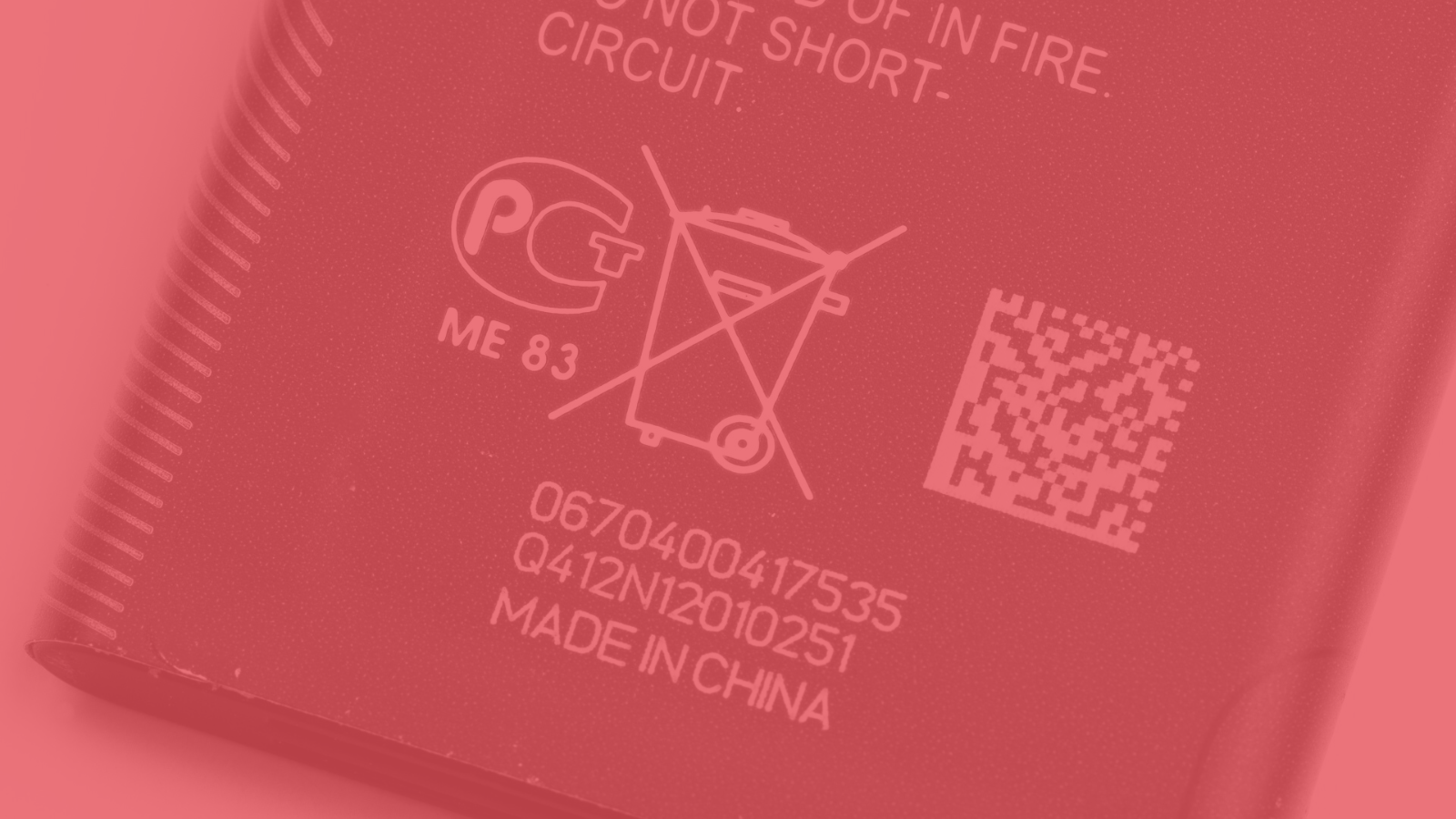
Regarding the tightening labelling requirements, Salamäki and Niemi highlighted the CE marking of batteries, which will come into effect in August of this year. With the CE marking, the manufacturer assures that the product meets the requirements of the relevant EU directives and regulations. Other future labelling requirements include e.g. a QR code and a “non-rechargeable” text for batteries.
However, Seppo Niemi reminded participants that the battery regulation is not retroactive legislation. Products already on sale do not need to be removed from stock, even if they do not meet the labelling requirements of the new regulation.
Kesko plays many roles in the battery value chain
Kesko has been preparing for the entry into force of the battery regulation for a long time. Cooperation has been done with e.g. producer associations and manufacturers. As a battery operator, Kesko acts in different roles as an importer and distributor, and through its own brands as a manufacturer.
Sustainability Manager for Kesko’s Building and technical trade Tiina Kotipelto is satisfied that the battery regulation promotes the longevity, adaptability and recyclability of products at the EU level.
In the implementation of the battery regulation, Kotipelto emphasises the importance of high-quality data and data management, so that the product information meets the requirements of the regulation.
She pointed out that high-quality data requires accuracy in all stages of the battery value chain.
“Even the data that ends up in producer organisations is only as good as what is produced by the weakest link in the value chain,” Kotipelto said.
The webinar series continues in May
Our next webinar on battery regulation will be held on 21 May. At that time, our topic is the obligations of importers.
In the webinar, EU compliance, CE markings, the obligations of battery manufacturers and importers, and extended producer responsibility obligations for companies will be examined, among other things. You are welcome to join us! The presentations of the seminar and a link to the recording will be distributed to all who participated in the seminar.
The updated guide regarding battery passports has been released
The updated guide takes into account the final content of the EU Battery Regulation that came into effect in August 2023, along with the requirements regarding battery passports. The guide assists in the implementation of battery passports.
In the EU’s new Battery Regulation, certain batteries are required to have a digital product passport containing detailed information about the battery manufacturer, raw materials, carbon footprint, as well as responsible procurement and recycled content.
The digital battery passport is described in Article 77 of the EU Battery Regulation. The battery passport will be mandatory for Light Means of Transport (LMT) batteries as well as industrial batteries with a capacity exceeding 2 kWh. Additionally, the battery passport must be attached to electric vehicle batteries placed on the market or put into use within the EU. The responsibility for the battery passport lies with the economic operators placing the batteries on the market.
Battery Passport is mandatory after 18 February 2027.
The guide supports the implementation of battery passports and provides tips for the circular economy
The digital product passport for batteries is a new requirement in the battery industry. To support the implementation of battery passports, a guide has been published, prepared by a wide range of battery experts. The guide was originally released in April 2023, and it has now been updated. The updated guide takes into account the final content of the EU Battery Regulation that came into effect in August 2023, along with the requirements regarding battery passports.
The guide provides comprehensive instructions on reporting requirements for responsible economic operators and other stakeholders in the battery value chain. In addition to the battery regulation, the guide also examines other key regulations in the battery industry, such as the Ecodesign Directive. Furthermore, the guide offers suggestions for practices that promote sustainability and the circular economy.
The guide consists of four separate documents: Main Content Guidance, Data Attribute Longlist, Carbon Footprint Rules, and End-of-Life Allocation Analysis.
The battery passport promotes responsible battery production and the green transition
Responsible battery production is a key factor in the sustainable implementation of the green transition The digital battery passport helps us to take a significant step closer to this goal.
Important information, such as the carbon footprint or details regarding the sourcing of raw materials, battery repairability, and recyclability, is stored in the battery passport This information is then accessible to various stakeholders throughout the lifecycle of the batteries, from raw material extraction to reuse and recycling.
With the implementation of the digital battery passport, the European Commission aims to support a sustainable and circular economy-oriented value chain for batteries.
The application of the EU Battery Regulation begins on 18 February 2024 – preparations in Finland
The application of theEU Battery Regulation, which came into effect on 17 August, will largely start after a six-month transition period in February of the next year. For requirements related to waste management and producer responsibility, there is a two-year transition period, meaning that producer responsibility systems must comply with the new requirements by August 2025. Although the regulation is applicable as it is in all member states, it also includes matters to be decided upon at the national level. The content of the Battery Regulation was discussed for the first time in Finland during our anniversary battery seminar held at the end of September, which brought together experts and producers in the field.
National implementation
In order to implement the Battery Regulation, a multidisciplinary government working group has been established in Finland, with Jouni Nissinen, a specialist from the Ministry of the Environment, serving as its chairperson. National legislation needs to be modified to align with the Battery Regulation, and any provisions in conflict with the Regulation must be repealed. Additionally, necessary regulations, such as those concerning competent authorities and sanctions, will be added to national legislation.
The working group coordinates the consultation of relevant stakeholders and provides updates on the progress of implementing the Battery Regulation. The first proposed amendment to the national waste act (in Finnish), addressing the requirements of the EU Battery Regulation regarding the approval and designation of conformity assessment bodies for batteries, is expected to be reviewed by the parliament in the near future. The progress of the implementation project can be followed on the project website (in Finnish): Akkuasetuksen toimeenpano (valtioneuvosto.fi).
Our anniversary battery seminar was a success!
In late September, we brought together battery industry experts for the first time to discuss the new requirements at our 15th-anniversary battery seminar. The seminar, held at Heureka, saw the participation of nearly 300 experts both in person and remotely. The seminar offered perspectives on the future of battery recycling from parties such as the Ministry of the Environment; the Pirkanmaa Centre for Economic Development, Transport and the Environment, which also acts as the supervisory authority of producer responsibility; the Ministry of Economic Affairs and Employment; Business Finland; battery and car importers; and reuse and recycling operators.
Johanna Alakerttula, Managing Director of Akkukierrätys Pb Oy, Juha Kenraali, Managing Director of Suomen Autokierrätys Oy, and Liisa-Marie Stenbäck, Managing Director of Recser Oy, are delighted with the success of the anniversary battery seminar. On the same day exactly 15 years ago, EU-regulated producer responsibility for batteries was implemented in Finland. At the time, Recser Oy was founded as the producer organisation of portable batteries and Akkukierrätys Pb Oy as the producer organisation of lead-based starter batteries and industrial batteries. Later on, Suomen Autokierrätys Oy joined in after being accepted as the producer organisation of traction batteries of electric vehicles in 2018.
We compiled the atmosphere and discussions from the seminar into our articles, which you can read through the links below. Be sure to check out the video interview (in Finnish) where speakers and participants share their thoughts on the new regulation. If you wish to receive the presentations from our battery seminar, please contact us at info(a)recser.fi.
The seminar received a lot of positive feedback from participants, and similar events or shorter informative sessions were requested for the future. We warmly thank all those who attended the seminar and, especially, the knowledgeable speakers for a successful day! We gathered questions from the attendees during and after the event related to the Battery Regulation to be sent to the Ministry of the Environment. Watch here what questions the battery regulation has raised elsewhere. We will provide answers in our upcoming newsletters.
Liisa-Marie Stenbäck is the Managing Director of the producer organisation Recser Oy, who coordinate the Paristokierrätys battery collection system.Johanna Alakerttula is the Managing Director of Akkukierrätys Pb Oy, a producer organisation in charge producer responsibility related to lead-acid batteries.
The parliament adopted the new Battery Regulation on 14 June 2023—what next?
The European Parliament adopted the EU’s Battery Regulation, which was prepared for already a couple of years, with the overwhelming majority voting for it. After the final vote by the plenary meeting, the Council of the European Union must adopt the text officially, which is expected to take place in a meeting on July 10.
The adoption of the final results of the negotiations was supported by 587 representatives of the Parliament. Only 9 representatives voted against it, with 20 representatives abstaining. The regulation will enter into force 20 days after it has been published in the Official Journal of the EU. It is directly applicable in all Member States six months from its entry into force unless decreed otherwise by transitional provisions.
“All operators face new requirements that must be met quickly throughout the life cycles of batteries, so now is high time to roll up your sleeves and find out which requirements apply to your company. First and foremost, the regulation provides responsible operators with a variety of opportunities,” says Recser Oy’s Managing Director Liisa-Marie Stenbäck.
Key measures provided for in the regulation:
The regulation pertains to all batteries, which will be divided into five categories in the future:
1. Portable batteries
2. Batteries for light means of transport (LMT), including, for example, electric bikes and electric scooters
3. Electric vehicle (EV) batteries
4. Industrial batteries
5. Starting, lighting and ignition (SLI) batteries
New CE marking and QR code requirements as well as requirements concerning safety, durability and performance for all batteries released to the EU market
Clearer provisions regarding the reuse, remanufacturing and repurposing of batteries
Mandatory carbon footprint declaration and label for EV and LMT batteries as well as rechargeable industrial batteries with a capacity of more than 2 kWh
Requirement to design battery-powered devices so that the battery can be removed and replaced easily (portable and LMT batteries)
Digital Battery Passport for LMT batteries, industrial batteries with a capacity of more than 2 kWh and EV batteries
Due diligence policy for processing social and environmental risks
Stricter battery collection targets: collection rate of 45% by 2023, 63% by 2027 and 73% by 2030 regarding portable batteries. First collection targets specifically set for LMT batteries: 51% by 2028 and 61% by 2031
Specific recycling targets for the materials of the batteries: lithium 50% by 2027 and 80% by 2031, cobalt, copper, lead and nickel 90% by 2027 and 95% by 2031
Blending obligation, i.e. the requirement to use recycled raw materials in new batteries will enter into force eight years from the entry into force of the regulation. After this, new batteries must include the following amounts of recycled raw materials: 16% for cobalt, 85% for lead, 6% for lithium and 6% for nickel. 13 years after the entry into force of the regulation, the levels required increase as follows: 26% for cobalt, 85% for lead, 12% for lithium and 15% for nickel.
EU’s Green Deal provides impetus
The new Battery Regulation will cover the entire life cycle of batteries from the mining of raw materials to the end of their service life for the first time while taking into account the technological development of batteries and future challenges of the industry. As transport becomes increasingly powered by electricity and the portion of renewable energy rises, new solutions regarding batteries are needed and the aim of the new regulations is to ensure that the demand can be met with more environmentally friendly batteries made sustainably from recycled materials. Consequently, the regulation can improve Europe’s energy security, promote the green transition in line with EU’s Green Deal and develop the circular economy of batteries.
“As producer organisations, we want to actively support our members and other stakeholders in complying with the new requirements in practice. If you haven’t subscribed to our newsletter, now is the time to do so as we will provide information about future events and useful materials that will help understand the content of the regulation,” says Akkukierrätys Pb Oy’s Managing Director Johanna Alakerttula.
The text adopted by the Parliament is available here in Finnish and here in English.
Liisa-Marie Stenbäck is the Managing Director of the producer organisation Recser Oy, who coordinate the Paristokierrätys battery collection system.Johanna Alakerttula is the Managing Director of Akkukierrätys Pb Oy, a producer organisation in charge producer responsibility related to lead-acid batteries.
Celltech believes that the EU’s Batteries Regulation will boost the competitiveness of responsible suppliers – “By taking care of our responsibility obligations, we increase customer loyalty”
Commitment to responsibility obligations can improve the company’s reputation and increase the innovativeness of the battery market while simultaneously reducing the negative environmental impact – these are just some of the positive aspects of the EU’s Batteries Regulation that are mentioned by Managing Director of Celltech Anders Blomqvist.
“By taking care of our responsibility obligations, we increase customer loyalty. This also brings business profits,” says Blomqvist.
Celltech is a designer and manufacturer of battery systems and an importer of standard and special batteries. Celltech is a leading operator in this field in Finland. From its position at the forefront of the industry, the company has long followed the progress of the Batteries Regulation and taken on an active role in communicating the changes to others.
The EU’s Batteries Regulation, which is expected to be officially approved this summer, will introduce new requirements for all phases of the production and use of batteries as well as their recycling and entire lifecycle. The new requirements are based on the European Green Deal. Its aim is to conserve natural resources, prevent severe environmental and human rights issues and improve the service life, quality and safety of products.
For producers, the new legal provisions will introduce new obligations, such as CE markings, QR codes, transparent supply chains and stricter collection and recycling requirements. Compliance with these obligations will bring both challenges and opportunities.
Besides manufacturers and importers, the stricter requirements will also apply to companies that import batteries for their own use or as part of the products they offer. According to Celltech, this may lead to some companies discontinuing the import of batteries to Finland because then they are not required to carry out responsible supply chain monitoring, for example. Nevertheless, Blomqvist believes that the changes will be beneficial in many ways.
“In the future, the regulation will prevent poor-quality batteries from entering the EU, which will also benefit all consumers.”
The goal is to reduce negative environmental impacts
According to Blomqvist, one of the most important positive aspects of the EU’s Batteries Regulation is that it will reduce negative environmental impacts. The Batteries Regulation takes into account the importance of a closed recycling system.
“Through the new Batteries Regulation, the EU seeks to further increase the recycling rate. Both the collection targets and material recovery targets will be increased,” Blomqvist says.
“The aim is to process battery minerals, such as cobalt and lithium, for reuse instead of continuously mining and consuming more virgin raw materials.”
In addition to recycling materials, another purpose of the new rules laid down by the regulation is to promote the reuse and reconditioning of batteries. For example, a battery installed in a personal vehicle that no longer meets the power or performance requirements for its original purpose of use can be utilised in second-life energy storage for a solar panel system.
We will take into account the importance of the second life concept and pursue a higher recycling rate.
The changes will boost technological development
As the Eldorado of the battery industry, Finland boasts a high level of general expertise in minerals and their processing. Finland increasingly emphasises the need for efficient recycling, and several companies are actively researching methods to implement it. One superb example mentioned by Blomqvist is the Finnish company Tracegrow Oy, which manufactures fertilisers from old, crushed alkaline batteries.
Although research and development is continuously being carried out to develop more sustainable and recyclable batteries, a fully renewable battery material is not yet available – not in Finland or anywhere else in the world.
“It’s apparent that even though we are seeking new, alternative battery technologies, traditional lithium-ion batteries will continue to dominate as an energy storage solution for a long time to come,” Blomqvist predicts.
Preparations are also being made for social risks
The procurement of the materials required for lithium-ion batteries involves its own challenges, however. For example, human rights violations, such as the use of child labour, have been identified in cobalt mining in the Democratic Republic of the Congo.
“According to EU authorities, we must all identify the specific mine, enrichment plant and smelting plant from which the battery minerals used in our products originate. This poses a major challenge, as it takes time and resources, but it’s also necessary to promote the wellbeing of humanity,” says Blomqvist.
With the entry into force of the new regulation, distributors will also become obligated to conduct an ethical assessment of their entire raw material production chain. The purpose of this is to ensure that each of the parties involved in the market take due account of human rights.
In the future, the obligations concerning the responsible production chain will also apply to smaller batteries instead of being limited solely to large industrial batteries or energy storage for electric vehicles. However, the legal provisions will not be applied to importers with an annual turnover below EUR 40 million.
“We hope that all operators, regardless of their due diligence responsibility, recognise the importance of ethical conduct and make well-thought-out decisions when concluding international agreements,” says Blomqvist.
Due diligence takes time and resources, but it’s also necessary to promote the wellbeing of humanity.
“We believe that informed customers will buy batteries from responsible suppliers in the future.”
It is also important to note that the significance of the origin of minerals has been highlighted in public procurements. The winner is no longer solely the tenderer that offers the lowest price but the tenderer that takes its environmental and social obligations seriously.
Growing role of producer organisations
In light of the EU’s new regulation, Blomqvist emphasises the growing role of producer organisations, as it may be difficult for individual battery importers to meet the requirements imposed on them alone.
“To ensure the success of our business, I believe that it’s now more important than ever to have a functional producer organisation that builds the collection network and takes care of recycling on our behalf,” says Blomqvist.
We need a functional producer organisation that will build the collection network and take care of recycling on our behalf.
“Producer responsibility has covered industrial batteries for a long time. However, we’ve been able to conclude a separate agreement with the customer regarding the costs of their recycling when the matter has become relevant. In the future, we’ll be required to provide this price tag in advance.”
Blomqvist hopes that the EU’s upcoming Batteries Regulation will serve as an incentive for the development of the existing recycling methods for batteries. For the time being, there are no recycling services available in Europe for batteries such as low-cobalt lithium iron phosphate batteries, which are becoming more common in large modes of transport and energy storage.
Managing Director of Celltech Anders Blomqvist believes that the EU’s new Batteries Regulation will boost the competitiveness of responsible suppliers.
Photos: Celltech Oy
This article is a part of the joint communications of the battery and accumulator producer organisations Recser Oy and Akkukierrätys Pb Oy concerning the EU Batteries Regulation. You can also subscribe to our newsletter to receive the latest news on the subject.
Remanufacturing prolongs the service life of batteries
Reuse and remanufacturing of batteries improves the availability of battery materials. The Electrical Fingerprint method developed by CeLLife Technologies is able to quickly tell which battery cells and modules can be used for remanufacturing.
The purpose of the EU’s new Batteries Regulation is to promote the battery value chain, which would cover the entire life cycle of batteries from raw materials to the production of battery cells as well as the reuse and recycling of batteries. What plays a key role in the new regulation is the procurement of raw materials for batteries as sustainably as possible and the precise utilisation of these raw materials.
The life cycle of batteries can be prolonged in many ways. The new Batteries Regulation takes more account of the reuse and remanufacturing of electric vehicle batteries and industrial batteries as well as the change in the purpose of use of batteries.
The preparation of batteries for reuse refers to full or partial reuse of the battery for its original purpose of use. If the battery can no longer be used for the same purpose, it may be possible to change its purpose of use. For example, electric vehicle batteries at the end of their service life can still be used for energy storage.
Used batteries may also go through remanufacturing. In remanufacturing, the discarded battery is dismantled into battery cells or modules, from which suitable components are selected for further use. The saved battery cells and modules can then be used to build a new battery with at least 90 per cent of the original capacity. As a result, the producer responsibility for these batteries is transferred to the party that places the battery back on the market.
Tool for quick condition analysis
Before initiating remanufacturing, the remanufacturer must find out which components of the used battery are still usable. The Electrical Fingerprint method developed by CeLLife Technologies Oy allows poor and hazardous batteries to be identified from among useable battery cells and modules.
This is important, as even a single poor battery cell can make the entire battery unusable, explain the founders of CeLLife Technologies Tuomas Messo and Roni Luhtala.
“The method helps select only the working and mutually compatible batteries for reuse. Selecting battery cells that are similar in condition ensures that the battery package is as good as new in terms of the performance and service life.”
Under the Batteries Regulation, operators that remanufacture batteries are obligated to ensure the quality and safety of the batteries and take care of their safe testing, packaging and transport. They must also ensure that the remanufactured battery complies with legislation and technical requirements when placed on the market.
Founders of CeLLife Technologies Tuomas Messo and Roni Luhtala.
Reuse reduces the carbon footprint
The carbon footprint of a remanufactured battery is only a fraction of the carbon footprint of a battery made of virgin materials. In practice, the carbon footprint of a reused battery only comprises encapsulation, connectors, the thermal management system and electronics. Some of these components could also still be reused, further reducing the carbon footprint, remark Messo and Luhtala.
There are strong incentives for the reuse of batteries from both environmental and economic perspectives. More than half of the battery cells that currently end up being crushed could still be reused in the energy reserves of the electric grid or the charging stations of electric cars, for example, state Messo and Luhtala.
“There is no sense in crushing fully usable battery cells. The availability of materials and components has decreased in recent years, and their production is strongly concentrated outside of Europe.”
The sector hopes that the new Batteries Regulation will facilitate the reuse and remanufacturing of batteries as well as changing their purpose of use. At least the Battery Passport introduced by the regulation includes more precise labelling requirements, which increases the transparency of battery operators.
“The data contained in the Battery Passport on the raw materials used for the battery and the quantities describing the battery’s performance will facilitate the assessment of the potential for reuse,” explain Tuomas Messo and Roni Luhtala.
This article is a part of the joint communications of the battery and accumulator producer organisations Recser Oy and Akkukierrätys Pb Oy concerning the EU Batteries Regulation. You can also subscribe to our newsletter to receive the latest news on the subject.
Batteries Regulation promotes responsibility in car industry: ‘environmental debate on cars easy to start from batteries’
The electrification of transport and environmental friendliness of batteries is a hot topic amongst car manufacturers and consumers, but Toyota wants to tackle the carbon challenge more holistically. ‘The Batteries Regulation, entering into force in June, is one of the things that affect the car industry’s responsibility trends,’ says Pekka Karvinen from Toyota Auto Finland.
The European Union is adopting a new Batteries Regulation, which will harmonise the regulations on the entire lifecycle of batteries across the EU. The legislation will also finally include requirements on product design, the end users’ role and promotion of recycled raw material markets.
Toyota Auto Finland’s Communications Manager Pekka Karvinen believes that the new Batteries Regulation will help the car industry work towards circular economy and responsibility. The importer’s parent company that represents Toyota and Lexus, Toyota Motor Europe, has taken part in preparing the EU regulation through communities that look after the interests of the industry.
‘Toyota is a big player in Europe, and others tend to listen to it in these sort of matters. We have been paying a lot of attention to the new battery regulation and have looked into various options of adopting a battery passport, for example,’ Karvinen says.
‘When it comes to the work carried out by the Finnish importer and retail network, the new regulation will have the most concrete impact on the handling of faulty and damaged high-voltage batteries. The regulation will provide new guidelines for these instances for repair shops and scrapyards,’ Karvinen continues.
Carbon, not the internal combustion engine, is the enemy
According to the European Commission’s policies, all new cars entering the market must be zero-carbon ones from 2035 onwards. In other words, consumers are directed away from fossil fuels towards vehicles that run on electricity or hydrogen.
‘This is a challenge that the car industry will begin to tackle in the next few years. Toyota has been talking about the electrification of transport since the end of the 1990s, but the current debate seems to focus too heavily on just one part of the problem,’ Karvinen says.
‘None of us is hoping that the zero-carbon legislation will be cancelled, but we are happy to take part in discussing the timeframe and how realistic it is. Even if we manufacturers were able to produce zero-carbon cars, society’s preparedness must also be taken into account,’ Pekka Karvinen concludes.
‘As fully electric cars have become more common, the debate about the natural resources used for their batteries has also heated up. Batteries provide an easy argument on how responsible cars are, because they are so valuable but at the same time harmful to the environment,’ Karvinen says. He explains that different options are considered as a whole at Toyota, not by valuing one over another.
‘Our message is that the enemy is carbon, not the internal combustion engine. Reducing the amount of carbon, for example with biofuels or synthetic alternatives, might have some potential, but developing these alternatives is not viable unless legislation encourages it.’
Lead-acid and small batteries will remain necessary
‘In addition to the starter and traction batteries, cars contain several smaller batteries as well. The most familiar ones for the consumers are the button cell batteries in car keys. They will not disappear anywhere, at least in the near future, even though the technology already exists for getting rid of physical keys,’ Karvinen says.
‘Lead-acid batteries also remain victorious: regardless of the propulsion system, every Toyota and Lexus that leaves the factory has a 12-volt lead-acid battery,’ says Karvinen.
‘Lead-acid batteries offer a lot of benefits: they are inexpensive and reliable. Unless they are specifically banned, they will remain in use for a long time to come.’
Pekka Karvinen says that the current debate emphasises the recyclability of the larger components, but the smaller power supplies are not associated with any major problems either. The small batteries of control units have been designed to last until the end of a car’s lifespan, and the lithium-ion battery of a key is easy to replace at a car dealership.
The Batteries Regulation sets recycling targets for different battery categories, but also the main raw materials used in batteries. This means that the increasing number of batteries entering the market and stricter recycling requirements will lead to a rise in the collected volumes of batteries in the next few years.
‘The customers of Toyota’s Finnish network can trust that the batteries they return to shops will be recycled correctly – the audits required by the manufacturer guarantee this,’ says Karvinen.
‘What is particularly nice about lead-acid batteries is that their collection rate in Finland is in practice 100%. However, in Europe, it will take some effort to raise the recycling rate of low-voltage batteries, and the Batteries Regulation will play an important role in that,’ Karvinen continues.
New battery types expected to be light and recyclable
The development and research work on batteries is yielding battery types that are completely new. Finding increasingly good options is in the interests of all manufacturers that use batteries, but the car industry, in particular, is interested in this development. The car industry has a constant need for recyclable, sustainable and energy-dense batteries that are simultaneously compact in size.
Karvinen gives an example: instructions on a fuel-efficient driving style advise drivers to remove all unnecessary items from the car in order to lessen the load, thereby saving fuel. The batteries in fully electric cars are large, and it takes a significant amount of energy to get them moving. Reducing the battery size would also reduce the amount of power required.
‘New battery types have been designed for years, but some of them are not the most suitable for cars. A solid-state battery could be the next step in that area of development. We at Toyota have been studying this type and will continue to do so going forward,’ Karvinen explains.
In recent years, car manufacturers have begun to realise their environmental responsibilities increasingly well. For example, bumpers use recycled plastic and synthetic alternatives have been adopted for the upholstery. ‘However, for an average consumer, it is the zero local emissions that matter the most, as it usually means low fuel consumption,’ Karvinen says. ‘The debate on the propulsion system options does have merit, but sometimes it seems that people forget that a responsible approach involves multiple elements,’ he says.
‘In an ideal world, 100 per cent of car parts could be recycled, from boot to bonnet. However, we cannot reach this goal if we only focus on the problems of one component,’ Pekka Karvinen concludes.
Text: Riina Nygren / Noon Kollektiivi
This article is a part of the joint communications of the battery and accumulator producer organisations Recser Oy and Akkukierrätys Pb Oy concerning the EU Batteries Regulation. You can also subscribe to our newsletter to receive the latest news on the subject.