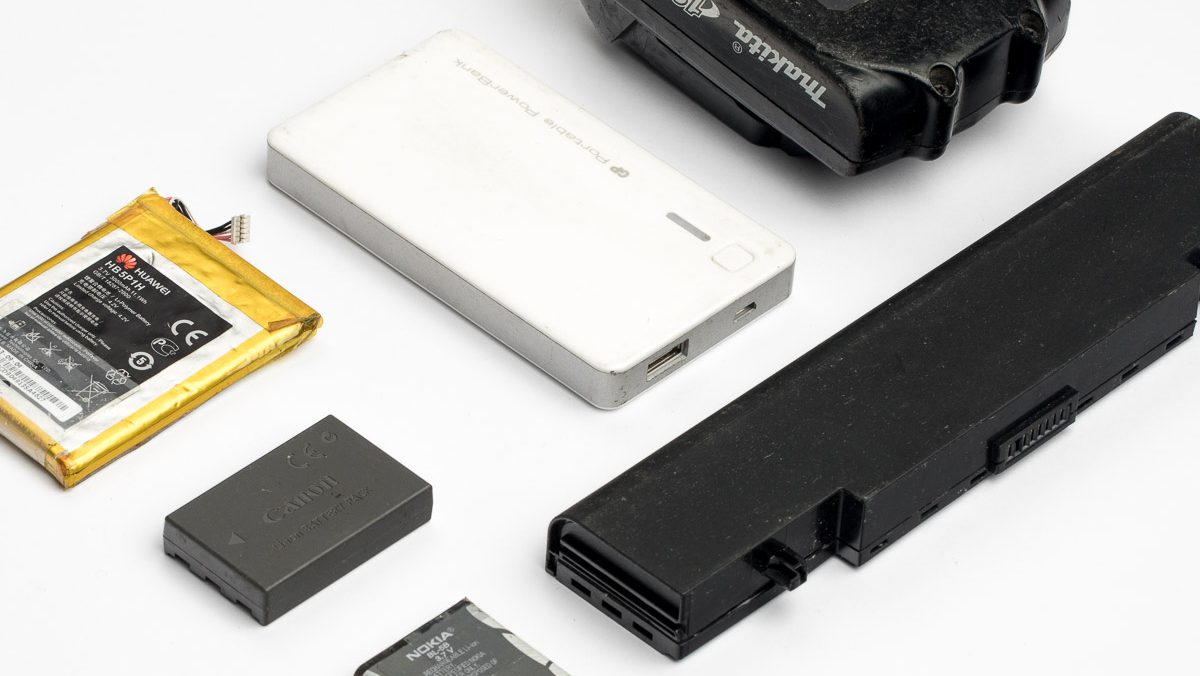
Significantly higher standards set for the collection and recovery rates of batteries and their environmental impact throughout their life cycles in a new European Commission proposal
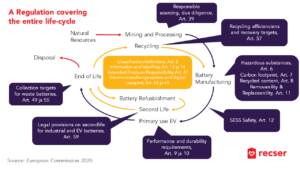
The proposal, published on 10 December, aims to bring Europe towards a climate-neutral and competitive economy of accumulator material based on the principles of circular economy. The new regulation concerning batteries has an effect on their entire life cycles, and it is directly applicable in all Member States.
From now on, all batteries entering the EU market must be sustainable, efficient and safe throughout their life cycles. In order to be considered sustainable, batteries must be repairable, re-usable and easily recyclable, produced with minimal environmental impact and proven to have been manufactured from sustainably produced materials. The regulation on batteries will repeal the 2006 directive 2006/66/EC, and it is the first concrete step forward in the EU Circular Economy Action Plan.
Batteries have an important role in the efforts to accomplish the climate goals of the European Green Deal. For example, as a result of the electrification of mobility, it is estimated that the global demand for batteries is set to increase 14-fold by 2030 in comparison with the demand in 2018. Because of this, the sustainability of batteries has become a critical theme in the proposed regulation. The regulation will show the way for future policies regarding products in the EU and, hopefully, the whole world.
Mandatory carbon footprint declaration for certain types of accumulators
The proposal sets mandatory requirements for all batteries sold in the EU. There are certain requirements regarding due diligence in the use of sustainably acquired materials, minimum levels of recycled content, carbon footprint, safety, performance, durability and provision of information.
Declaring the carbon footprint of industrial batteries and electric vehicle batteries will become mandatory already on 1 July 2024. Other requirements concerning the provision of information enter into force at the beginning of 2027. The information must be made available through scanning a QR code.
In addition, the Commission also proposes that the current restrictions concerning mercury and cadmium in the use of hazardous substances in all types of batteries be retained. The sales of non-rechargeable batteries (portable primary batteries) will not be limited by the regulation, at least until 2030, but they must fulfil all of the quality criteria set for portable batteries released to the market from 2026 onwards. The Commission will specify the accurate minimum levels for the quality criteria presented in Annex III concerning e.g. performance and durability by the end of 2025. In addition, the lifetime of batteries is aimed to be improved through a requirement similar to one included in the current regulation that they must be easily replaceable by the end user or by independent operators.
Minimum collection target to increase to 65% in 2025
The collection rate targets for used batteries set for the Member States will be increased incrementally. For example, the collection rate target for portable batteries will increase from the current level of 45% to 65% in 2025 and 70% in 2030. The batteries of light means of transport (cf. the last paragraph) are not included in the calculation of the collection rate of portable batteries. The Commission will study the need for setting a separate collection rate target for these batteries by 2030. The aim is to collect all of the larger industrial and electric vehicle batteries. An additional requirement is to produce a battery passport for these batteries, which is a digital record of the battery’s specification sheet and operation history throughout its life cycle.
The information of individual battery passports will be uploaded to a new “battery database,” which can be accessed to retrieve the battery’s information throughout its life cycle. A clear infrastructure for re-using industrial and electric vehicle batteries will be established. For example, electric vehicle batteries can be re-used for energy storage purposes.
Minimum recovery rate of cobalt, nickel and copper of 90% by 2026
The rapidly increasing number of batteries and the higher collection standards will also lead to the rapid increase in waste volumes. The number of lithium batteries ready for recycling is expected to increase 700-fold between 2020 and 2040, which will make it easier to use recycled materials in the production of batteries.
The regulation sets material-specific recovery rate targets for valuable materials. The recovery rate targets for 2026 are 90% for cobalt, nickel and copper and 35% for lithium.
In 2030, the material-specific recovery rate targets for cobalt, nickel and copper will increase to 95%, whereas the new target for lithium will be 70%. The Commission will later provide detailed rules for calculating the higher recovery rate targets.
The market for recycled materials is boosted by setting a requirement that industrial batteries, electric vehicle batteries and automotive batteries must contain a minimum share of materials recovered from waste from 2030 onwards. According to the regulation, this requirement will apply to cobalt, lead, lithium and nickel.
Changes in the specifications of batteries
The Commission proposes expected changes to the obsolete classifications and definitions of batteries. The proposed maximum size of portable batteries is 5 kg. In addition, the batteries of electric means of transport previously classified as industrial batteries will be given a new definition in the regulation.
According to Article 2(9) of the regulation, the battery of a light means of transport is a battery used in wheeled vehicles that have an electric motor of less than 750 watts, on which travellers are seated when the vehicle is moving and that can be powered by the electric motor alone or by a combination of motor and human power. According to Article 2(12) of the regulation, an electric vehicle battery means any battery specifically designed to provide traction to hybrid and electric vehicles for road transport.
According to Article 2(11) of the regulation, an industrial battery means any battery designed for industrial use and any other battery excluding portable batteries, electric vehicle batteries and automotive batteries.
Higher standards for distributors and consumers
For the manufacturers of batteries, the new regulation will mean significantly stricter requirements concerning the products as well as the collection and recycling of decommissioned batteries.
The distributors of batteries will have an obligation to verify that the manufacturer or importer of the products to be sold has registered as a producer and that the batteries are accompanied by the required documents. In addition, the distributor’s obligation to take back batteries applies to all decommissioned batteries currently or previously sold by the distributor.
End users are now required to deliver discarded batteries for separate collection.
Previous directive to be repealed altogether
The previous, obsolete directive specified the minimum level for minimising the environmental impacts of batteries by focusing on the later stages of their life cycles. The EU has no existing legislation that extensively regulates the production and use of batteries in terms of e.g. performance, durability, greenhouse gas emissions or sustainable material procurement. Because of this, the previous directive will be repealed altogether with the directly applicable regulation. The regulation will be used instead of the directive to avoid the fragmentation of the internal market, guarantee legal certainty and boost investments in the battery markets throughout the EU.
The Commission aims to enact the regulation in a rapid schedule. In the next phase, the regulation draft is commented on by the governments of the Member States and the European Parliament.
Read more:
European Commission press release 10 December 2020
Ministry of the Environment Press Release 10 December 2020 (in Finnish)