Distributors’ obligations
Ensure that your distributor network is aware of its obligations
Distributors also have obligations under the EU Battery Regulation and the Waste Act. As a producer, you should be aware of these obligations and ensure that your distributor network has sufficient information to comply with them.
Distributors include, for example, retail shops, online shops, wholesalers and other businesses that sell batteries or products containing batteries to consumers or other end-users.
Provide your distributor network with guidance, particularly on obligations relating to the collection of batteries, checking producer responsibility, communication and product compliance.
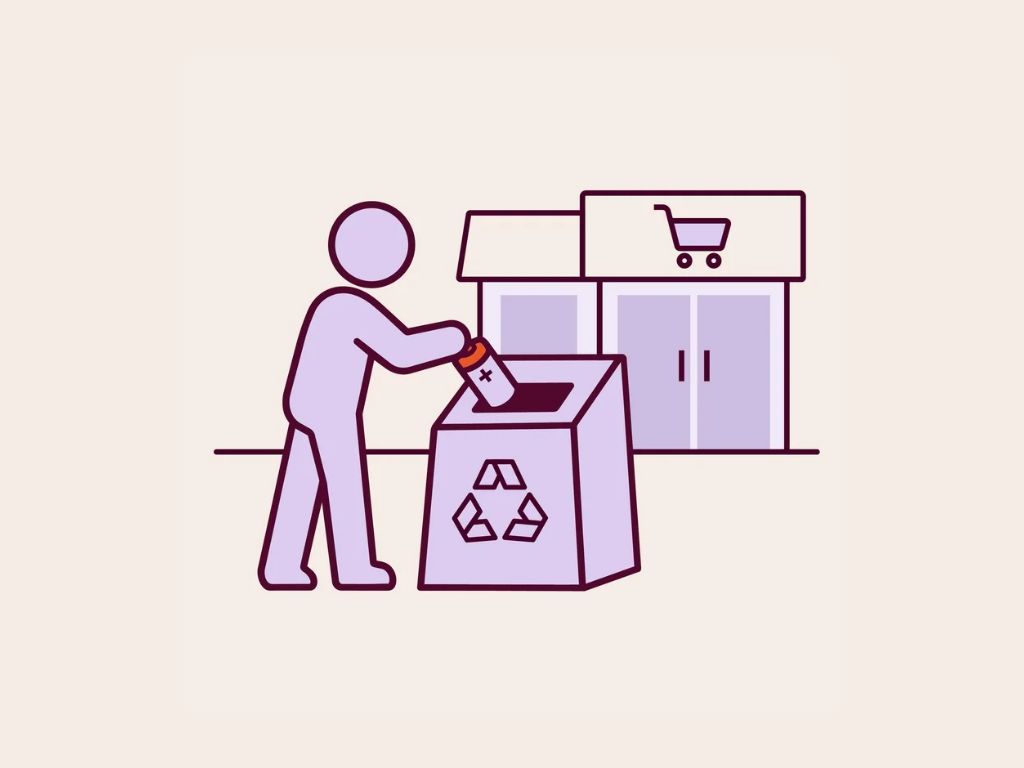
What does a distributor need to know?
As a producer, you can support your distributor network by ensuring that the necessary product, registration, collection and communication guidelines are readily available. Distributors are themselves responsible for complying with the obligations laid down in legislation.
A brief summary of some of the key obligations of distributors is provided below. Distributors are responsible for identifying and complying with the relevant legal requirements.
1. The distributor must check the information relating to the product and the producer
Before placing a battery or accumulator on the market, the distributor is obliged to check the information relating to the product and its supplier.
For example, the distributor must check that the product bears the required markings and identification details, the CE marking, and the necessary information on the manufacturer and importer. The instructions and information required by law must also be available. The distributor’s obligations prior to making a battery available on the market are set out in Article 42 of the EU Battery Regulation.
The distributor must also, where possible, ensure that the producer of the product has fulfilled their producer responsibility. In Finland, registration status for batteries can be checked on Recser’s ‘Registered Producers’ page, and for all products subject to producer responsibility, in the Waste Management Compass’s producer register.
As a producer, you can make your distributor’s job easier by providing the necessary product and registration details clearly in your communications with them.
2. Distributors are obliged to accept end-of-life batteries corresponding to the Battery categories they sell
The distribution of batteries also involves obligations to take back end-of-life batteries. In principle, this take-back obligation applies to those Battery categories for which products are available in the distributor’s range.
Producers should therefore ensure that their own distributor network is aware of the relevant collection obligation and knows how to channel the collected batteries and portable batteries appropriately for recycling.
3. Distributors must know how to communicate about collection
Simply organising collection is not enough; customers must also be aware of the return options.
As a producer, you can support your distributors by providing ready-made guidelines and communication materials for, for example, shops, online stores and other sales channels. This ensures that return instructions are presented to customers in a consistent manner across the entire distributor network.
As a producer, ensure that your distributors are aware of:
- how compliance with producer responsibility can be verified
- what needs to be checked regarding the product and its compliance
- which batteries they are required to accept
- how collection should be organised in practice
- how customers should be informed about the return option
- where the collected batteries are sent
- where they can find more detailed instructions and materials.
Share these instructions with your distributors
The page intended for distributors contains more detailed information on distributors’ obligations and how to fulfil them in practice.
When can a distributor also be a manufacturer?
A distributor’s role may change if, for example, the company sells a battery under its own name or trademark, or modifies the product in a way that may affect its compliance with requirements.
In such cases, the company may be subject to the obligations laid down for manufacturers, either instead of or in addition to the distributor’s obligations.